Crypto investor loses $6M in a possible fat-finger mishap
Crypto investors and speculators are no strangers to various technical mishaps that can cost them fortunes of all sizes. This time, one mistake cost a crypto user a hefty $6 million.


 Follow us
Crypto investors and speculators are no strangers to various technical mishaps that can cost them fortunes of all sizes. This time, one mistake cost a crypto user a hefty $6 million.
Yesterday, a holder of the cardano (ADA) token swapped 14.4 million ADA for 8,470,000 USDA, a USD-pegged stablecoin issued on the Cardano blockchain.
However, according to blockchain sleuth ZachXBT, who was first to report the incident, due to liquidity issues during the transaction, the price of USDA spiked sharply, resulting in a more than $6 million loss for the holder, as they had to pay far more for the token than they would have in normal liquidity conditions. The lower the liquidity, the more the price moves during a transaction, especially a large one.
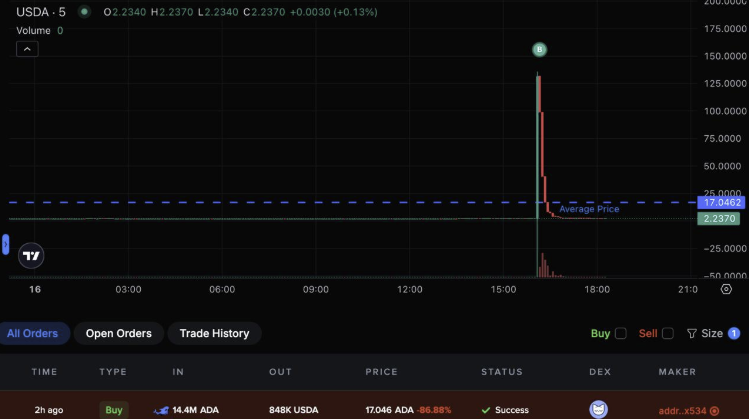
Meanwhile, the funds that were unsuccessfully swapped hadn’t been moved for the past five years.






Currently, the ADA address shared by the analyst shows a balance of 4,441 ADA ($2,188).
It’s unclear why the holder executed this specific transaction and whether it might be a so-called “fat finger” mistake, for example, if they mixed up different tickers of tokens they wanted to swap.
In either case, similar mishaps continue to affect crypto users. For example, just last week, someone tried to send 1 BTC and paid almost all of it in fees by accident.






"Usually this means someone built the transaction manually and forgot to add a 'change' output to send the rest of the bitcoin back to their own address," bitcoin developer @mononautical, who flagged the transaction, explained back then.
Earlier this fall, someone erroneously overpaid 5 BTC in fees in a week. In some of these cases, BTC users are able to recoup their losses, as miners who collect the fees agree to send the overpaid sum back if the user is able to prove it’s theirs.
Meanwhile, a substantially larger “fat finger” occurred in October: stablecoin issuer Paxos admitted that it mistakenly minted excess PayPal USD (PYUSD), or PayPal’s stablecoin, as part of an internal transfer. The “excess” reached $300 trillion back then. However, the company said that these tokens were immediately destroyed.
Unlock more exclusive Cybernews content on YouTube.