Scammers have created 54,000 fake stablecoins to trick crypto users
As stablecoins gain wider adoption across major payment firms and fintechs, scammers are creating fake tokens to trick unsuspecting users.

Stablecoin coins with fake ones. Image by Cybernews.

 Follow us
As stablecoins gain wider adoption across major payment firms and fintechs, scammers are creating fake tokens to trick unsuspecting users.
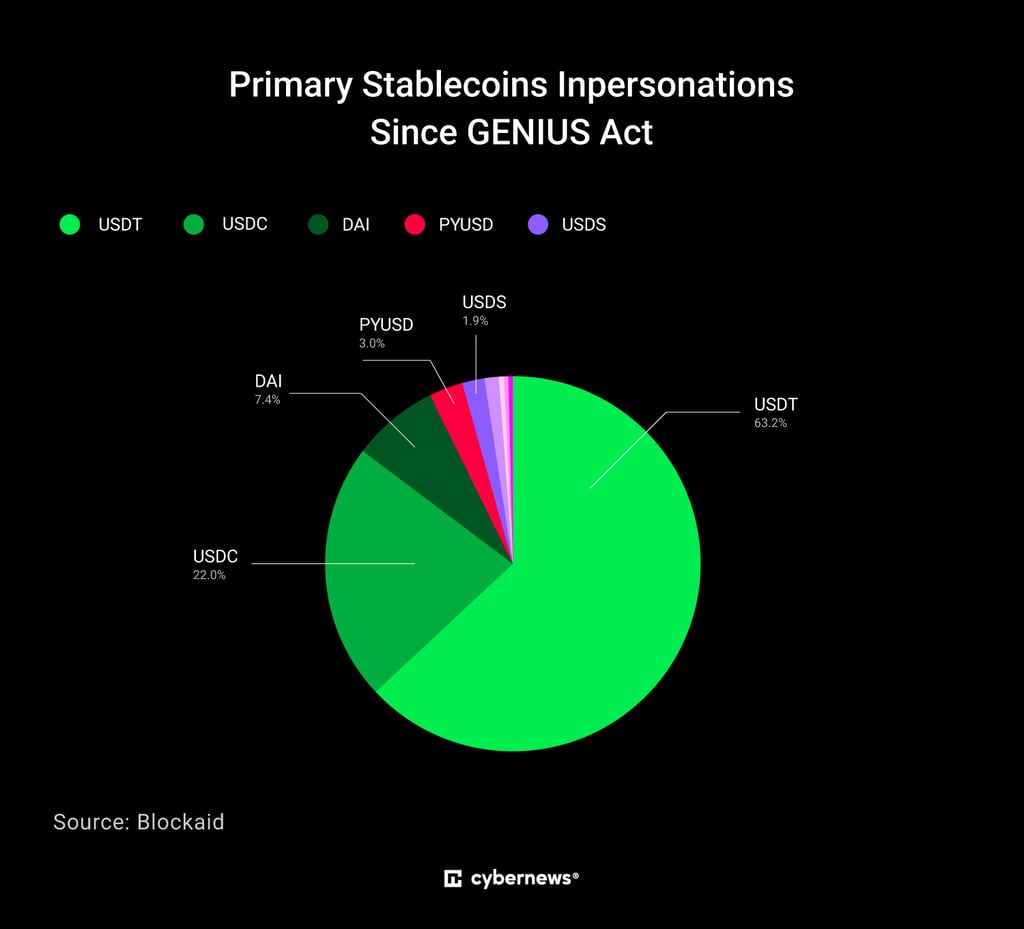
Since the GENIUS Act became law in July 2025, blockchain security firm Blockaid has found over 54,000 fake stablecoins out of more than 17 million tokens created during that time. Most of these, about 34,000, tried to copy the most popular stablecoin, Tether (USDT), while around 12,000 targeted the second-largest, USD Coin (USDC).
By distributing fake tokens, criminals hope that their potential victims will overlook subtle discrepancies in token symbols while also using Cyrillic or other Unicode characters in URL addresses to trick people into thinking the website is legitimate.
"A URL reading 'usdc.com' might actually use a Cyrillic 'c' that directs to an attacker-controlled site," Blockaid explained.






Also, the criminals are sending small amounts of fake tokens to people's wallets, which might also be an attempt to trigger malicious approvals.
Moreover, on some networks, such as Hedera and Solana, attackers exploit the metadata field to insert fake token symbols or malicious contract addresses, hoping victims will copy-paste addresses from their transaction history and send funds to criminals. This is also known as the address poisoning attack.
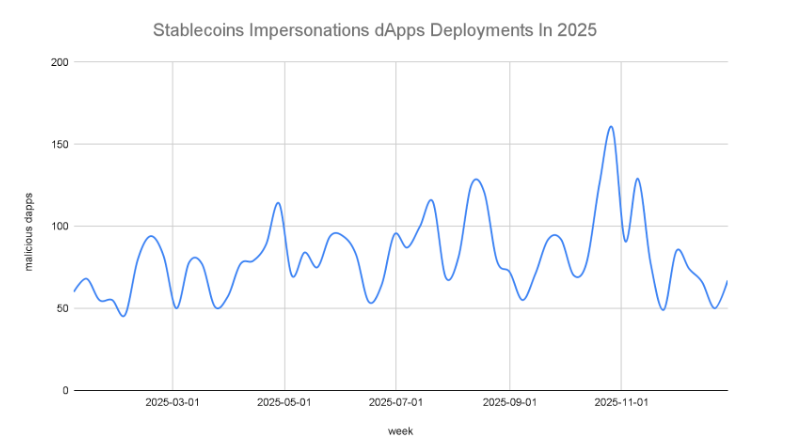
Threat actors are using malicious app templates, impersonating legitimate brands, and distributing them via social media networks, messaging apps, emails, and even fake YouTube tutorials or AI-generated celebrity endorsements, the researchers have found.
Once a potential victim falls into their phishing nets, criminals try to trick people into entering their crypto recovery phrase, giving access to their wallets. Also, fake apps trigger a wallet connection request followed by a transaction signature prompt, which helps criminals steal crypto assets.
"New institutional stablecoins (PYUSD, RLUSD, USDG) will become prime targets as they gain market share. Attackers follow liquidity, so expect impersonation attacks to track adoption curves closely," Blockaid concluded, warning that impersonators will increasingly target emerging blockchains with less mature security infrastructure and resort to phishing campaigns disguised as official compliance requirements.






Unlock more exclusive Cybernews content on YouTube.