Americans lose $21bn to cybercrime as AI fuels fraud surge
Last year, cybercrime defrauded Americans of approximately $21 billion, an increase of 26% over the previous year.

AI Fraud vacuum sucking dollar bills. Image by Cybernews.

Last year, cybercrime defrauded Americans of approximately $21 billion, an increase of 26% over the previous year.
The Internet Crime Complaint Center (IC3), the FBI’s cybercrime division, received a record-breaking 1,008,597 complaints, an increase from 859,532 in 2024.
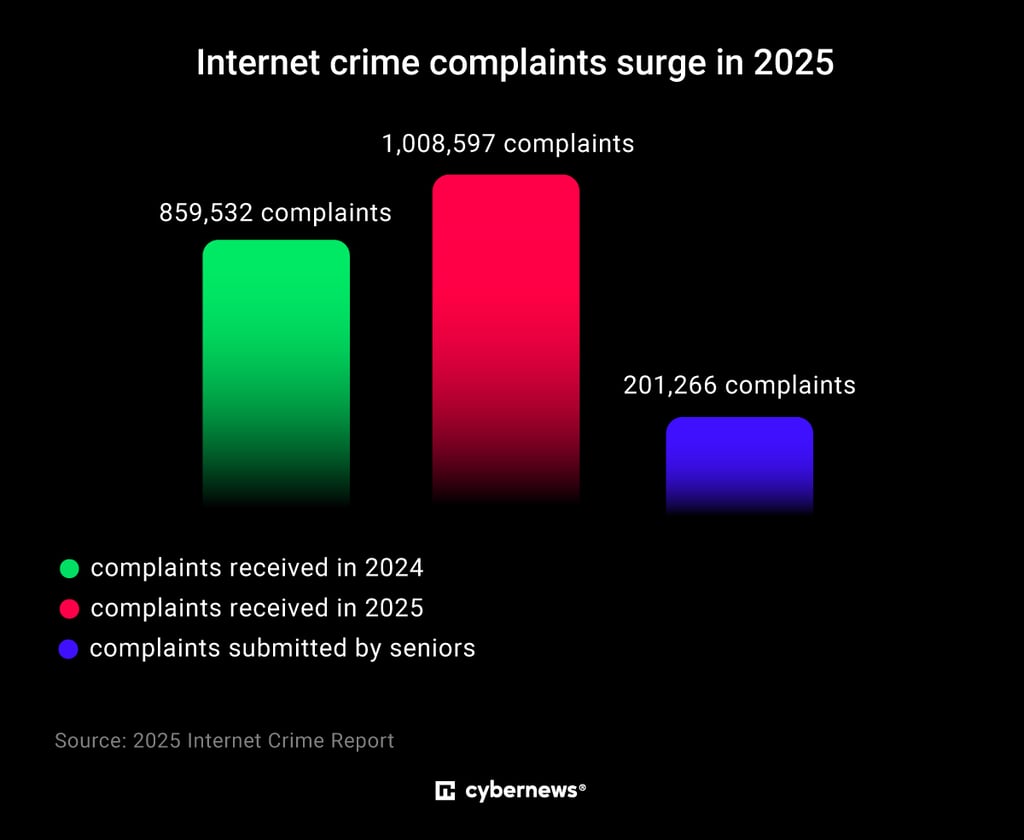
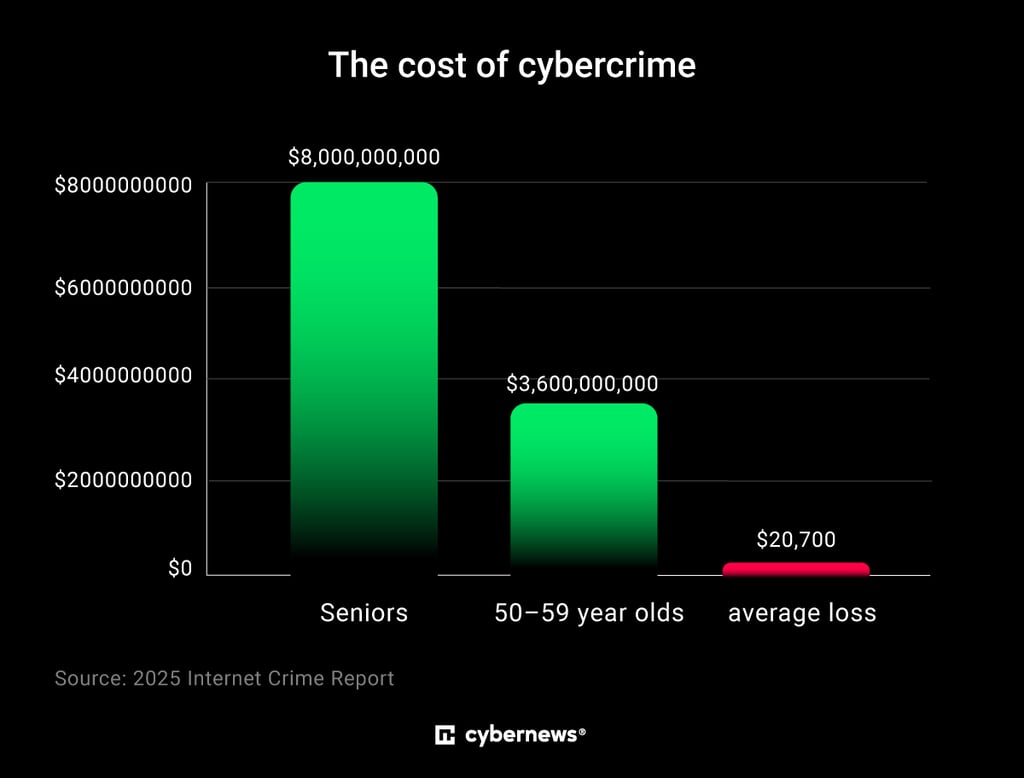
Seniors submitted the most complaints (201,266) and reported the highest losses ($7,748,911,371), followed by 50-59-year-olds with $3,676,138,586 in losses. The average loss amounted to $20,699.






Investment-related fraud was once again the largest component of losses ($8,648,617,756), followed by business email compromises ($3,046,598,558) and tech support scams ($2,134,675,818).
Americans involved in cryptocurrency reported the highest losses, with 181,565 complaints totaling more than $11 billion, which is nearly half of all scam-related losses. Operation Level Up, an initiative launched in 2024 to identify and notify potential victims of cryptocurrency investment fraud, has reduced losses by more than $500 million.
The IC3 also found that cybercriminals increasingly use artificial intelligence (AI) to pull off scams, such as business email compromise and romance scams. In total, the FBI’s cybercrime division received 22,364 AI-related complaints, resulting in a loss of $893,346,472.
“AI technology enables the creation of convincing synthetic content, such as social media profiles and personalized conversations, often in mass quantities. People have manipulated video and audio similarly for decades, but the widespread availability of this developing technology makes it possible to create high-quality content,” the FBI’s 2025 Internet Crime Report says.






AI-generated synthetic content is becoming increasingly difficult to detect and easier to create, which allows criminals to potentially conduct successful fraud schemes against individuals, businesses, and financial institutions, IC3 continues.
“It has never been more important to be diligent with your cybersecurity, social media footprint, and electronic interactions. Cyber threats and cyber-enabled crime will continue to evolve as the world embraces emerging technologies such as artificial intelligence,” Jose Perez, Operations Director for Criminal and Cyber Branch at the FBI, states.
He recommends that every American be vigilant in identifying the red flags of a potential scam.
“Resist pressure to act quickly and assess the situation before turning over money or personal information,” the FBI concludes.
Unlock more exclusive Cybernews content on YouTube.