London’s ultra-prime property market rocked by council cyberattacks
A cyberattack on local government IT systems has impacted search systems, threatening to delay thousands of property transactions in some of the capital’s most expensive areas.
Image by Cybernews

 Follow us
A cyberattack on local government IT systems has impacted search systems, threatening to delay thousands of property transactions in some of the capital’s most expensive areas.
In November Cybernews reported a series of confirmed cyberattacks affecting the Royal Borough of Kensington & Chelsea (RBKC), Westminster City Council, and the London Borough of Hammersmith & Fulham councils.






All three authorities are thought to share multiple IT functions. According to Bloomberg, this attack is now starting to impact London’s property market.
Local authority searchers are a statutory requirement in England and Wales, providing buyers and lenders with information on planning history, enforcement notices, infrastructure projects and environmental risks.






With council systems reported to be “partially offline” or “degraded” for months after the November 2025 attack, conveyances are reporting slower turnaround times, stalled competitions and heightened legal uncertainty.
These issues disproportionately affect the kind of high value transactions that these areas have commanded, with many foreign buyers investing in homes in these boroughs with the expectation of yielding high returns.
In late 2025, the Office for National Statistics (ONS) reported that the average house price in Kensington and Chelsea is £1.2million (€1.4m).
Kensington and Chelsea: where houses can fetch up to €62m
Independent research shows that London’s most expensive streets — such as Belgravia’s Whistler Square – have seen individual residential deals up to £52m (€62m) over recent years.
Last November’s cyberattack may disrupt chains as even modest delays in these markets can freeze large sums of capital and disrupt transactions that extend beyond the UK.
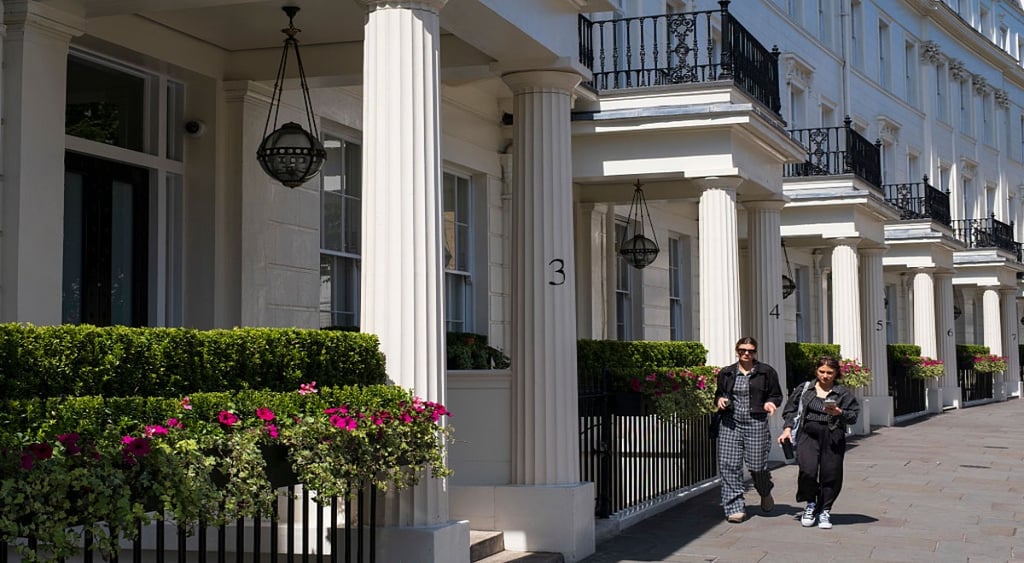
Bloomberg said that no firm timeline has been provided by the councils for full restoration of affected systems, which it reports is increasing uncertainty for buyers, sellers, estate agents, and developers.
There is also little scope for billionaires to bolt on underground media rooms, swimming pools, or gyms in their late Georgian Belgravian bolt holes, as planning has also been impacted by the attacks.
Last week, The Times reported that high-profile Chelsea planning applications — from residential extensions to mixed-use developments — have been delayed because digital validation tools remain restricted, forcing councils to rely on slower, manual processes.
No threat actor has yet laid claim to the attack, and the London Metropolitan Police’s Cyber Crime Unit told the BBC earlier this month that inquiries were ongoing, no arrests had been made, and it was "unable to go into details around what information has been accessed.”
This is not the first time that a UK council’s IT failures have rippled through the property market. The 2020 ransomware attack on Hackney Council in East London disrupted land charge searches, causing delays and costing the borough tens of millions in recovery costs.
Unlock more exclusive Cybernews content on YouTube.