One thousand and one nightmares of modern tech
I could keep you awake with tech scare stories for a thousand and one nights.

By Cybernews

 Follow us
I could keep you awake with tech scare stories for a thousand and one nights.
There are probably just as many ways it improves our lives – but as journalists, we're often blamed for focusing on the bad news. So, in that spirit, here are some of the more unsettling stories from the cyber world.
Last week, Elon Musk sparked a fan debate about what the male Grok companion should be called. Modeled after hypersexualized fictional characters such as Edward Cullen from Twilight and Christian Grey from Fifty Shades of Grey, the male Grok companion risks glamorizing a rather troubling notion of what constitutes a “cool” man.




I particularly appreciated this aptly crafted comment from one X user.




“Edward Cullen stalked high school girls across centuries. Christian Grey groomed a 21-year-old into a contract of submission. Now Grok’s ‘male companion’ channels both… powered by real-time X data and user behavior tracking?”
The two Grok companions introduced already seem somewhat unhinged. Ani, the anime-style female companion, appears designed to cater to sexual fantasies. Panda, named Rudi, the seemingly kid-friendly option, exhibits suicidal behavior when prompted.
Grok is a gift that keeps on glitching.
Be it the pro-Nazi discourse or harmful male and female stereotypes, it seems to reflect some of humanity’s worst qualities – ones we should aim not only to eliminate, but at the very least, keep hidden, like Dorian Gray’s portrait.

But it wouldn’t be fair to single out Musk or criticize only the algorithms built by companies he owns. Other big tech firms are equally guilty of promoting harmful narratives. For example, chatbots like OpenAI’s ChatGPT have been shown to consistently suggest that women ask for lower salaries than men.
Well, maybe one shouldn’t turn to a chatbot for career advice. But we are weak and succumb to the temptation to make the most of life using technology.
As one heartbreaking story goes, a Belgian man traveled 760 kilometers to meet the woman of his dreams – his future wife, a French model and beauty pageant titleholder. Upon arriving at his sweetheart’s home, Michel, 76, was forced to face a harsh truth.
Not only did she already have a husband and know nothing of Michel’s romantic endeavors, but he had also lost $35,000. Michel had fallen victim to an online romance scam – a prevalent risk, especially for elderly and lonely individuals.

You might feel like you are smarter than that and wouldn’t fall for scams featuring Brad Pitt or Jennifer Aniston. Unfortunately, in many cases, it’s not you who fails to safeguard your personal information.
Recently, hackers have been on an attacking spree against the retail industry, disrupting shopping giants like Marks & Spencer, Co-op, and Harrods. Not only did this cause significant downtime and potential revenue loss for the companies, but it also exposed consumer data. Shirine Khoury-Haq, CEO of the Co-op Group, confirmed that all of its 6.5 million members had their data stolen in a recent cyberattack.
Consumers’ full names, home addresses, emails, phone numbers, dates of birth, and other personal information might be worth only a few dollars on the dark web – but for an individual, it might be worth their whole life. Combined with data from other leaks and the information we voluntarily put online, this becomes a treasure trove for hackers and could lead to identity theft.
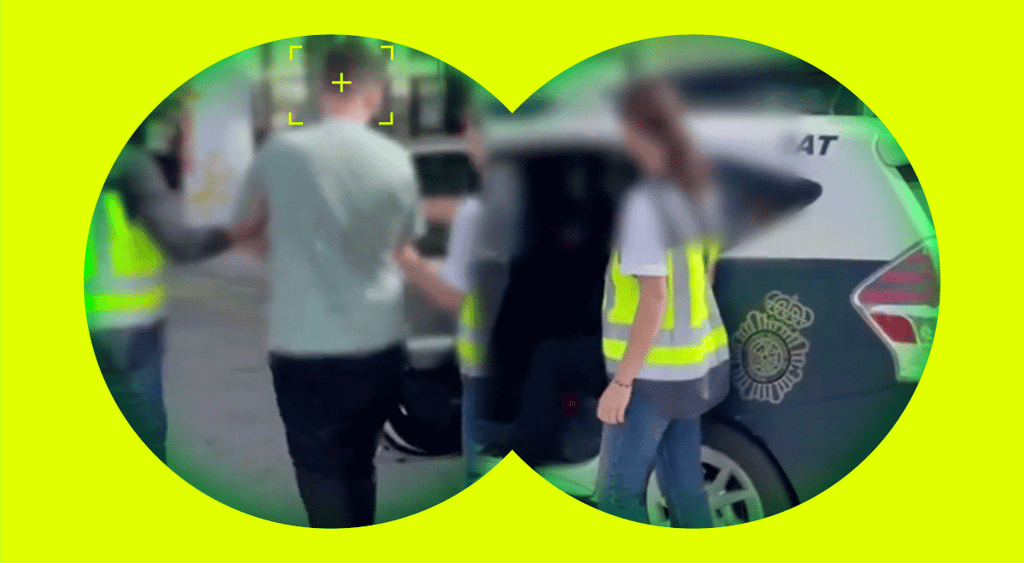
Even if you’re not shopping online, haven’t signed up for any loyalty programs, and pay in cash, your data – and you – are still at risk as long as you appear in public, as governments and various organizations are increasingly relying on surveillance cameras and AI applications.
One city in Alabama is using AI-powered cameras to protect its fountains from pranksters.

The Metropolitan Police will use facial recognition technology during the annual Notting Hill Carnival, which has taken place in London since 1966. The cameras will be used to “identify and intercept” people who might be potentially dangerous.
Maybe the use of some technology is justified in certain cases. But given it is flawed and biased, much like we are, I’d much rather have a police officer watching my back than cheaply acquired tech.