Could Taylor Swift vs Elon Musk be the lawsuit that redefines AI abuse?
Taylor Swift’s deepfake fight with Elon Musk’s Grok has set up a huge discussion, but a legal precedent for AI abuse remains uncertain.
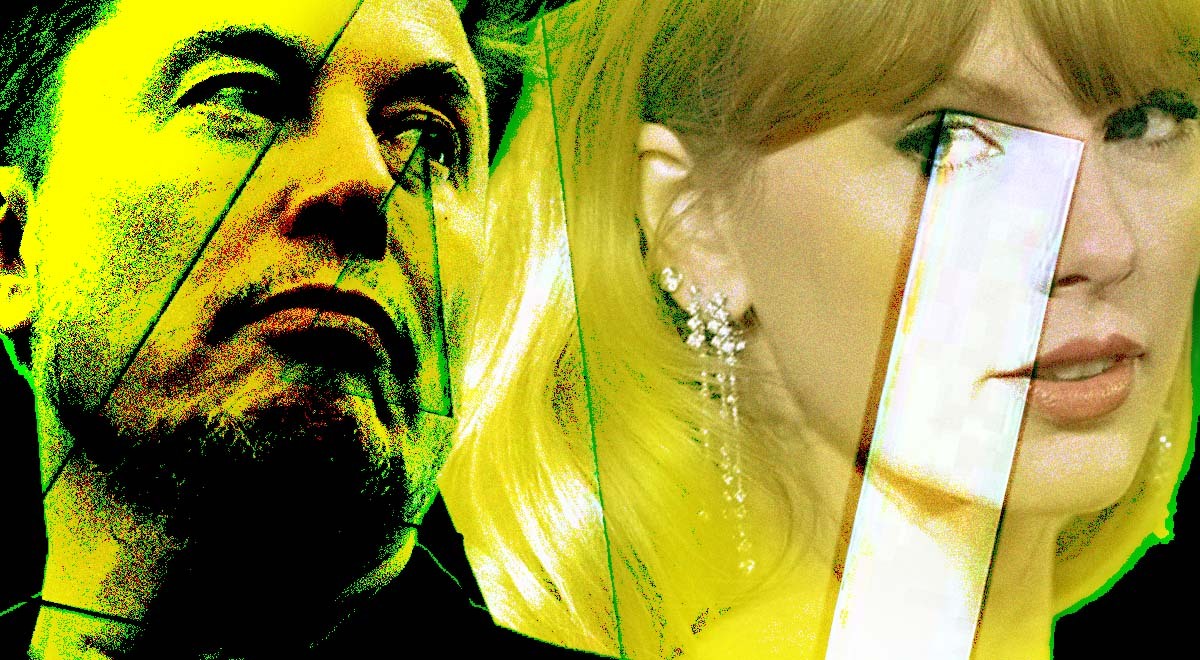
Image by Cybernews

 Follow us
Taylor Swift’s deepfake fight with Elon Musk’s Grok has set up a huge discussion, but a legal precedent for AI abuse remains uncertain.
Like a vending machine that spews out toxic content on demand, toggling between modes set from custom to fun to spicy, Grok has outdone itself once again. This time, by generating a deepfake video of Taylor Swift stripping down to a thong while dancing.
Swift, along with Scarlett Johansson, is the latest victim of Grok’s rotten outpouring of fake videos, which could well force lawmakers to act.
The controversial AI’s “spicy mode” went live for Apple users only, meaning that every download runs through Apple’s App Store policies.
There is also a minimal age verification pop-up that gives a seemingly linear, legally sound process.


Apple has previously pulled apps for similarly scandalous reasons, and hosting Grok could potentially make them appear as an accessory in the public’s perception.
The real party at fault, however, is Grok itself, which is at the center of the deepfake storm.
Social media has already expressed disapproval, with a broader “burn it down” tagline doing the rounds on X.
Not everything we can build deserves to exist.
undefined Heisenberg (@rovvmut_) August 3, 2025
Grok Imagine's new 'Spicy' mode can generate topless videos of anyone on this Earth.
If this is the future, burn it down.
When pop meets code
Taylor Swift is already a deepfake target – her 2024 AI porn leak hit 45M views in days – and now Grok has effectively automated the process further.
The Take It Down Act applies to user-uploaded content, not AI-generated one-to-one outputs, and Grok slips through the cracks in that regard.
Even if the image gets screenshotted and shared, it is not “published” if only the prompter technically sees it.
Scarlett Johansson, Kristen Bell, and others have never managed to successfully sue for the misuse of their likenesses. Cases usually stall in the US because the law is frozen in 2019, while AI is now very much in 2025.




Could Taylor Swift break the pattern?
However, Taylor Swift’s legal team has proven to be formidable over the last ten years, winning multiple cases regarding trademark disputes. She was also successful in defending herself in a Shake It Off lyrics dispute.
The legal team would have to pressure Apple over its App Store inconsistencies, perhaps framing it around how they have previously removed apps. With targeted arguments built around real-life cases, it could possibly succeed in a removal.
Musk could also receive lasting, damaging publicity if the case gathers momentum, especially if the initial negative opinions swell further.
Should Swift’s legal team take the scandal up a notch, then pressure could quickly build on Musk, especially considering Grok’s recent track record.
“Grok’s past public promises of zero tolerance could open the door for Taylor Swift or others to take legal action,” Sean Smith, a Litigation Attorney at Brach Eichler, told Cybernews.
“Given her influence and visibility, Ms. Swift has the unique power to spark real change, potentially pushing for stronger limits on the kinds of technology that make harmful deepfakes possible.”