Porn star wins freedom of expression case against Meta
Meta was wrong to delete adult content creator Esperanza Gómez’s Instagram account, Colombia’s highest court has ruled, saying it violated her right to freedom of expression.
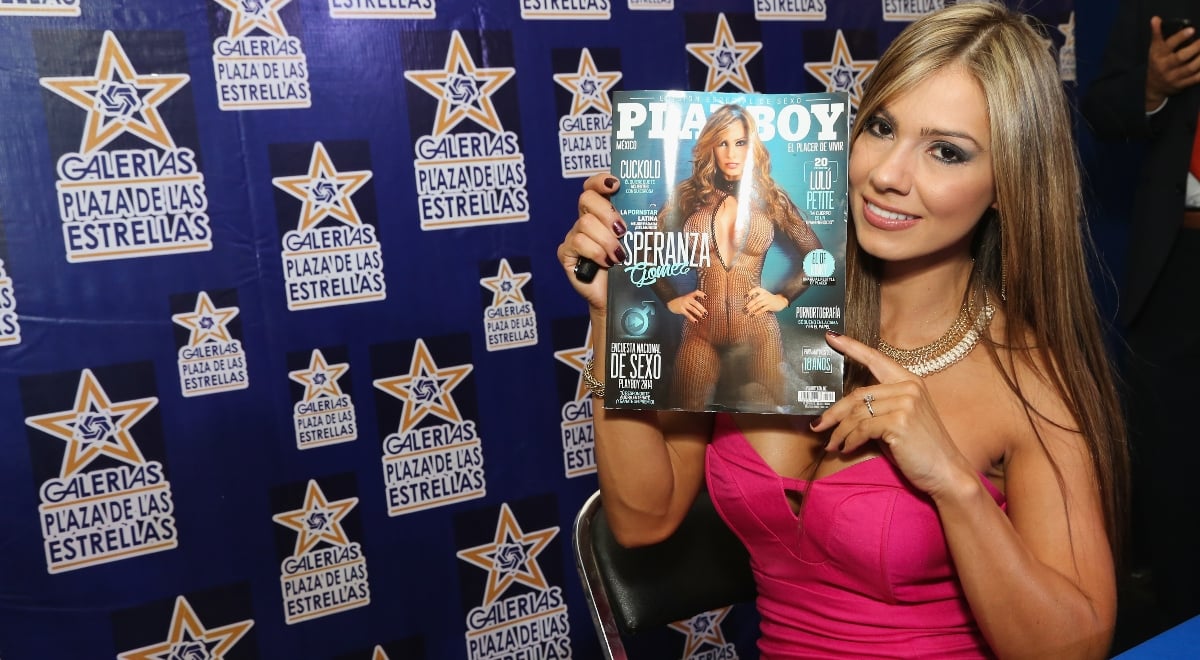
Image by Victor Chavez/WireImage/Getty Images

 Follow us
Meta was wrong to delete adult content creator Esperanza Gómez’s Instagram account, Colombia’s highest court has ruled, saying it violated her right to freedom of expression.
One of Colombia’s biggest porn stars celebrated the ruling as “a historic moment for digital rights” and her victory as a collective one for all those whose livelihoods depend on foreign social media platforms.
“No more arbitrary blocks, no more decisions without evidence, no more discrimination disguised as ‘community standards’,” Gómez said in a statement posted, appropriately, on Instagram.
She currently has 1.6 million followers on the platform, compared to more than 5 million she had several years ago, when Meta removed her account. The company argued in court that Gómez violated its rules on nudity.





The porn star insisted that she complied with the community guidelines and that Meta’s decision was influenced by her pornographic work outside Instagram, as others with similar accounts were not treated the same way.
Gómez, 45, also said that her ability to work suffered because of Meta’s decision and that the company did not follow due process.
“The court acknowledged the inequality and discriminatory treatment I was subjected to. It recognized that I cannot be punished for my name, for my career, or for social prejudice,” she said.
The court ruled that Meta – which owns Instagram, along with Facebook and WhatsApp – removed Gomez’s account “without a clear and transparent justification,” as reported by the BBC.
It agreed that her account was treated differently from similar accounts. While the ruling recognized the social platform’s need to moderate content, it said that Meta applied its policies on nudity and sexual services “inconsistently.”
Social media posts were protected by the South America country’s constitution and should only be limited in a proportionate way where needed, the court said.




It ordered Meta to review and adjust Instagram’s terms of use and privacy policy so that users are “clearly aware” of the mechanisms for challenging moderation decisions.
Social media platforms should also “clearly state” if they’re using offline activities as a criterion for content moderation, the court said. It did not specify any sanction for non-compliance, and Meta is yet to publicly react to the ruling.
The ruling comes as Donald Trump is putting increasing pressure on foreign countries for what he sees as unjustified attacks against American tech giants or attempts to suppress “conservative voices.”
According to recent reports, Trump is even considering sanctions against the EU if the bloc, which unites some of the closest American allies, implements its Digital Services Act. The Act demands that tech giants do more to tackle illegal content such as hate speech and child sexual abuse material.
