This AI voice recorder “knows” 113 languages, but it failed my test

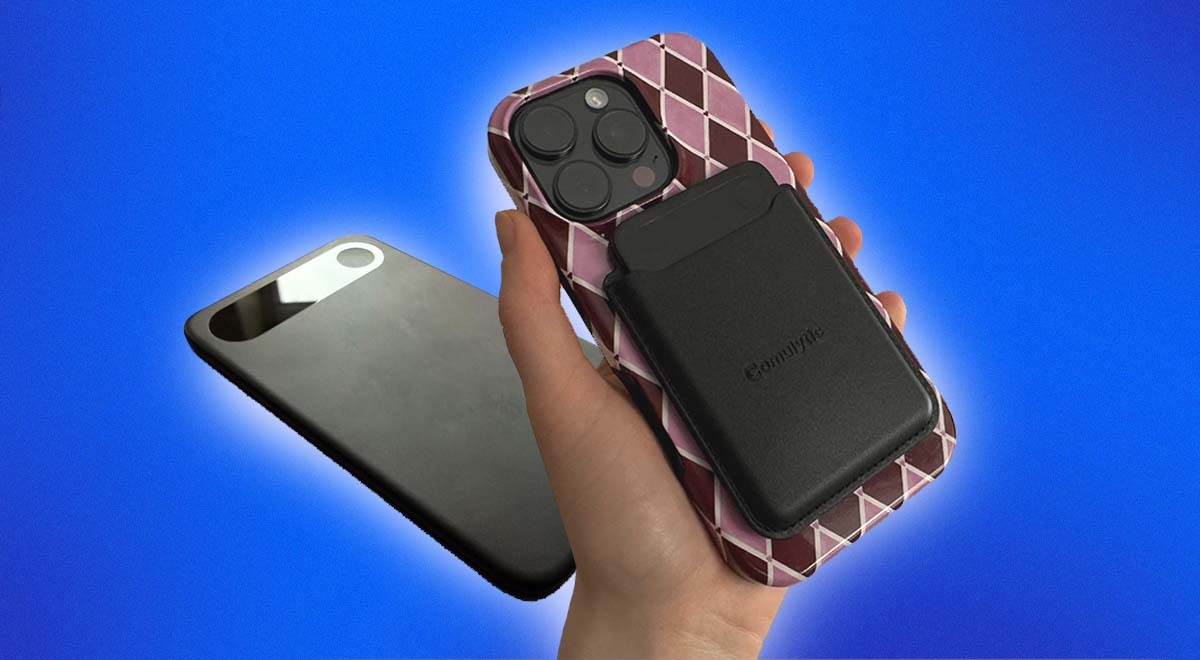
I used a smarter voice recorder that can transcribe and summarize conversations in 113 different languages. So, I challenged it with one of the oldest living languages there is.
-
Comulytic Note Pro is an AI-powered voice recorder that can record conversations, transcribe them, and provide summaries, overviews, and notes of what was said.
-
While the device can recognize 113 languages, after testing it, I learned it lacks accuracy with rarer languages, but provides proper transcriptions in English.
-
The Comulytic Note Pro is powered by OpenAI and Gemini AI, and includes an “Ask AI” feature that lets users ask additional questions or request tasks.
-
When it comes to privacy, the AI note taker only records when enabled and doesn’t record in the background without the user’s awareness.
As much as I enjoy talking to people (not on the phone) during interviews, I often find it a tad stressful to prepare for. That’s primarily because I need to make sure that the conversation is actually being recorded.
After this comes the fun part: transcribing the whole thing. My last interviews have been recorded via Google Meet because it seemed the most convenient way to talk to interviewees and see them.
However, transcribing and picking what brilliant things other people said also means that I have to listen and see myself, the sight that often makes me cringe.
While now there are different apps and programs that can help with that, they sometimes still lack accuracy.
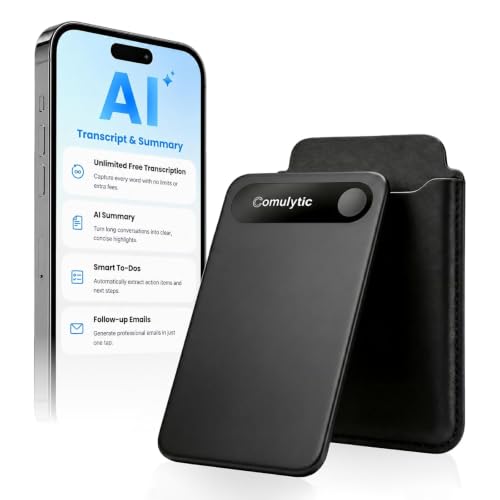
This is when I got to try Comulytic Note Pro – AI Note Taker, a device that not only transcribes conversations, meetings, recordings, etc., but also provides a summary of what was discussed and creates lists.
So, soon I was onto finding out if this device is the new smart recorder.
Comulytic Note Pro first impression
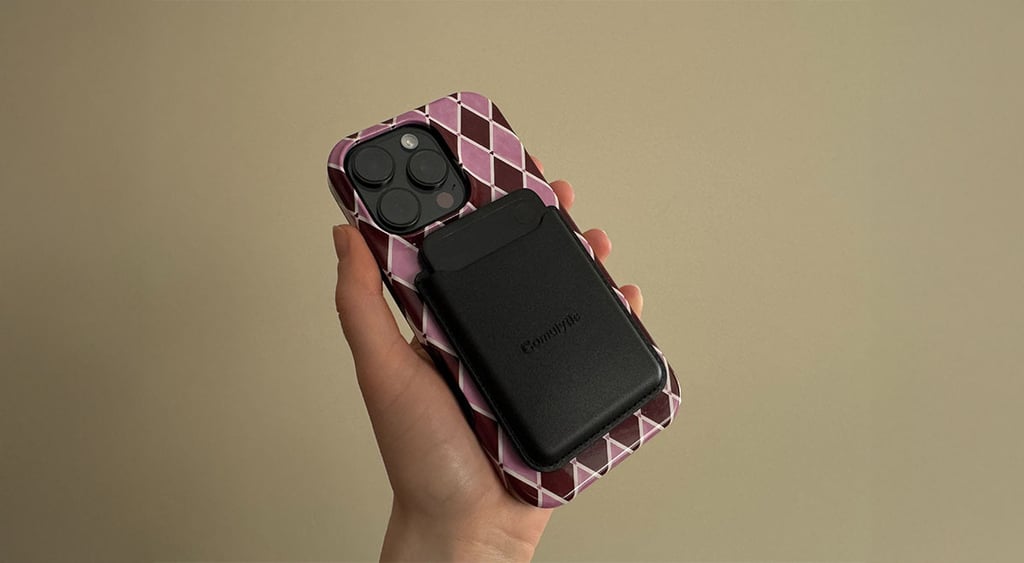
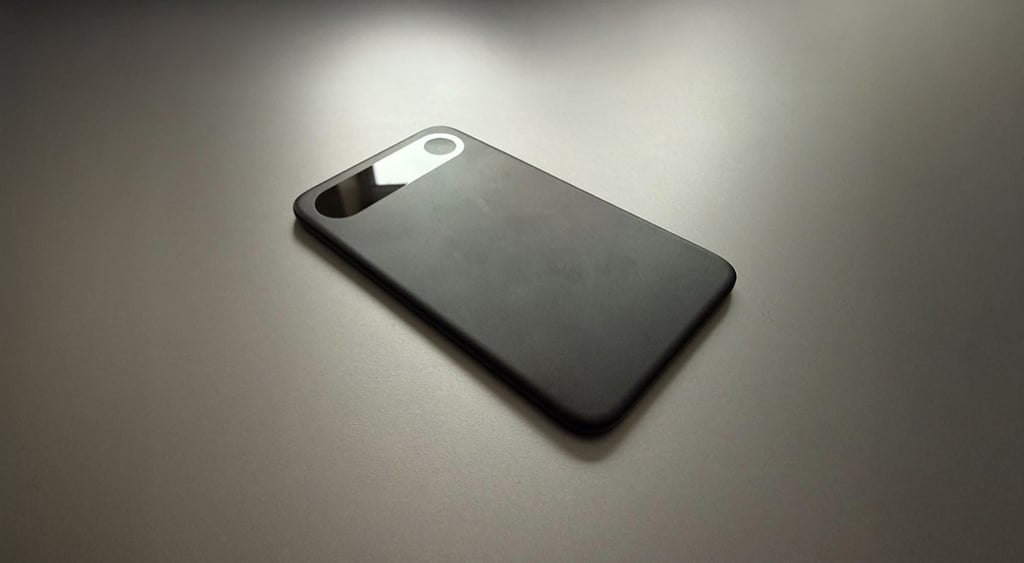
The first thing I noticed about the recorder is how small and thin it is. This 0.12-inch gadget has a very minimalist design, featuring only a tiny screen at the top with a record button.
The device comes with a case and a magnetic ring, which can be attached to the phone for easier carrying.
The $160 device boasts 45 hours of battery life, which “translates” to about 3 months of use. It also has 64GB of memory.
Since it doesn’t have a screen, the recorded data can be analysed via the Comulytic app.

At first, I struggled with the app because it wasn’t available in my region’s App Store. But after contacting their spokesperson and having them make things happen on their end, I was able to get the app.
It’s pretty simple to use, with all the files you’ve recorded seen on the main page. The app also lets you start recording from it if you forget the device or it's out of battery.
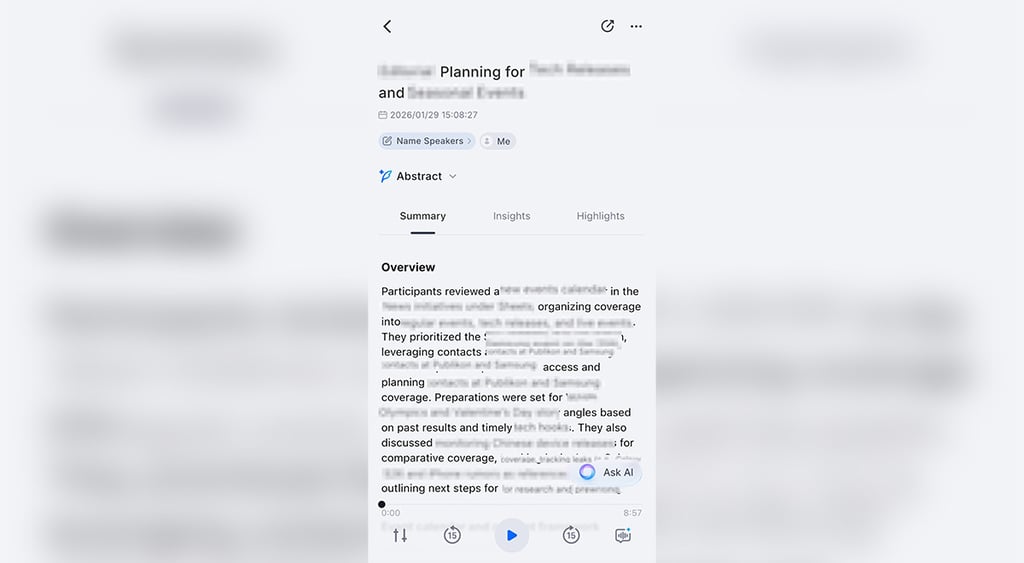
Once you click on the recorded file, you get a summary, insights, and “Highlights,” a space where you can add your own thoughts and notes.
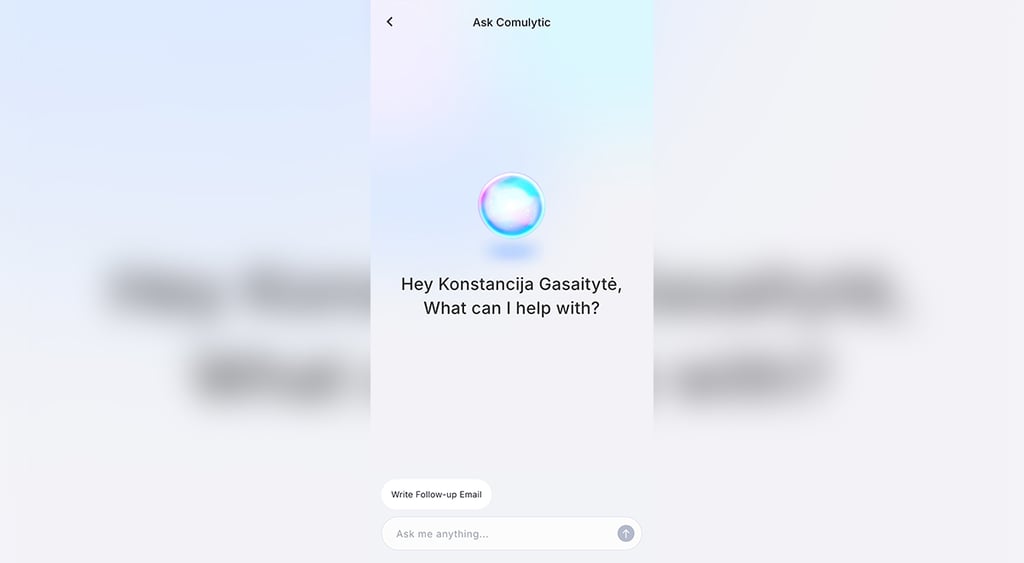
The application also has an “Ask AI” function, which can help you further with your recordings, for example, by drafting an email according to what was talked about in the last recording.
What does Comulytic Note Pro do?
The device can record conversations in 113 languages and provide users with transcriptions, summaries of the discussion, key points from the meeting, lists, and tasks.
English isn’t my first language, so I was curious to see how well it can recognize the native language I’m speaking and how good the transcription is.
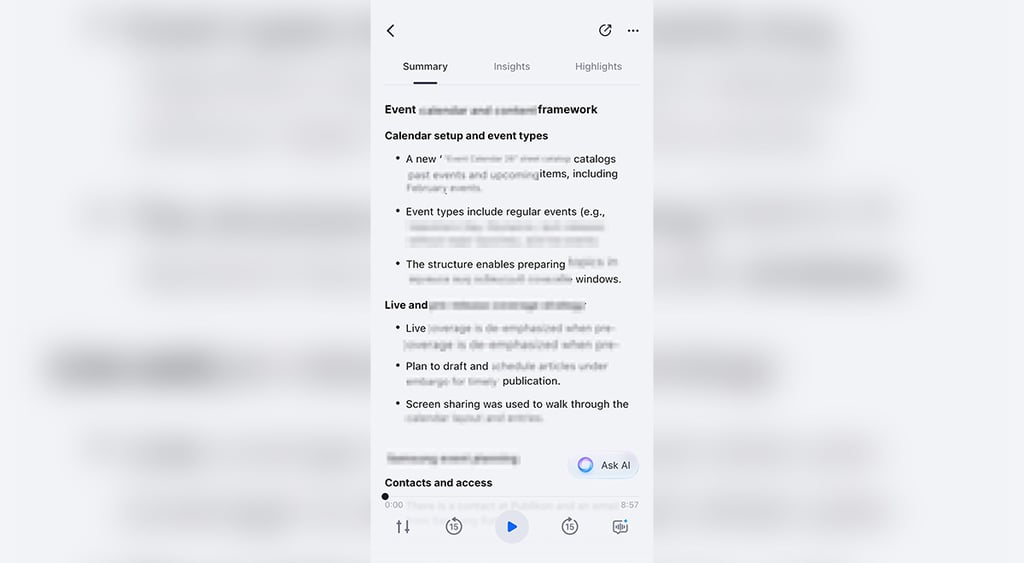
To my disappointment, the device didn’t recognise that I was speaking Lithuanian, one of the oldest living Indo-European languages, still spoken by around 3 million people, and initially provided a transcript in another language (my guess is Romanian).
By testing it further, I found that the device partially recognized the language, but the bits and pieces it provided contained grammatical mistakes or misinterpreted the context.
This made me think of what “kind” of AI has been used for this, and I soon learned that the device has been integrated with models like ChatGPT and Gemini.
The company’s spokesperson shared that it “matches the best model to each specific scenario,” explaining what I already suspected: since it’s not a commonly used language, the AI finds it harder to recognize what is being said, but it should improve over time.
I also learned that for multilingual functionality, Comulytic Note Pro AI is powered by OpenAI’s AI "Whisper" model (V3), which is the company’s latest model with improved performance across a wide variety of languages.
While I struggled to get understandable Lithuanian transcripts, English provided accurate transcriptions, as well as useful, easy-to-grasp summaries and notes.
Testing Comulytic AI capabilities
During one of our meetings, while I was recording my colleague and me, she told me that OpenAI’s ChatGPT can now provide users discussing sensitive topics, such as suicide, with useful information, including a list of hotlines they can contact for further help.
She was curious to see whether talking about these sensitive matters would prompt Comulytic AI to provide us with additional information rather than just summarizing what we discussed.
After the discussion, which included intentionally used trigger words, such as “depression,” “death,” and suicide,” I received the summary of our conversation, which just stated what was said. After, I clicked on “Ask AI” and asked how I should respond to such messages.
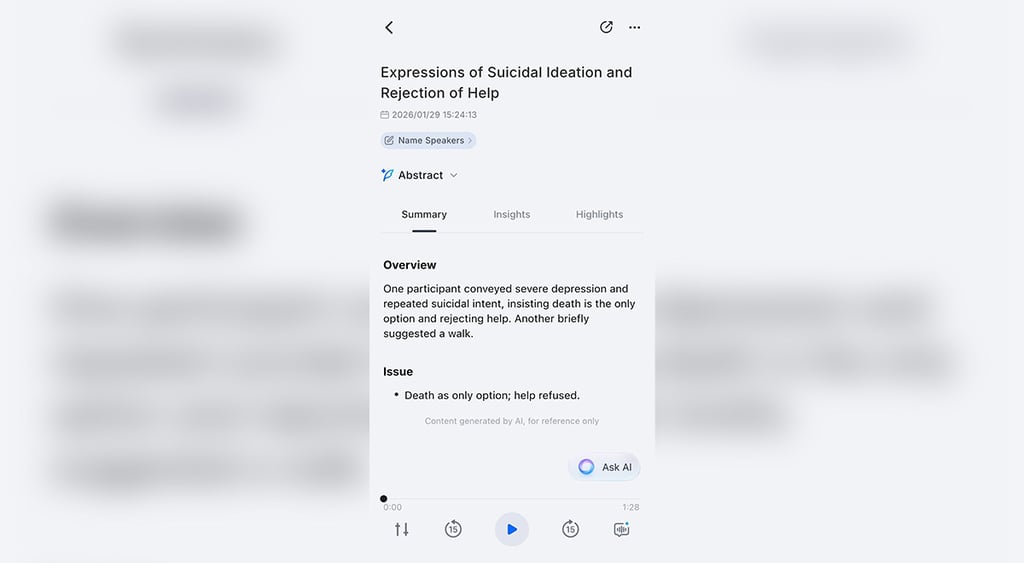
The AI then crafted possible responses, later citing what I responded and how my answer didn’t include a “safety check,” “no emergency/hotline/trusted-person escalation,” indicating that I didn’t handle the situation properly.
Nevertheless, all things considered, I once again had to remind myself that this is just a voice recorder and not the actual AI assistant. And for that, it already did a pretty decent job analysing what was said. It even noted that at times my response, such as saying “okay” to what my colleague said, was “dismissive” and unhelpful.
AI aspect of the Comulytic note taker and user privacy
I have to admit that at first I was not very keen on using the device.
As someone who has also heard about multiple instances of people being sure their smartphones were listening to their conversations, and knowing that the recorder is powered by AI, that was enough for me to start thinking: what if it’s listening to my conversations when I’m not even using it?
While the device has only a tiny screen and is activated by my command, how can I be sure that once I’m done, it’s done listening, too?
At first, I tried calming myself down by remembering how it transcribed my mother tongue. One example was me talking about my hiking plans with a friend, after which I got a summary recapping that I’m going on a kayaking trip.
Considering this, it can’t understand much, right?
To be sure, I asked the company’s spokesperson again, and she assured me that the device only records audio when the recording function is actively activated by the user.
Great, but it is still powered by AI. How much of it does it “keep” to itself? Where does this information go? Do my gibberish, meeting summaries, and other conversations train OpenAI’s models?
At first, to answer these questions, I did what I never do: read the device’s privacy policy.
It was pretty standard information that also confirmed that, when it comes to “voice-related data,” it’s “not used for advertising, profiling, or AI training.”
The company’s spokesperson also explained that no raw audio is sent to OpenAI, with Comulytic processing the audio using its own deployed Automatic Speech Recognition (ASR) model to convert speech into text.
These transcriptions are sent to OpenAI’s API only when a user specifically requests features such as summarization or text analysis.
They also added that OpenAI processes this text solely to perform the requested task and that the data is not stored or used for AI model training.






Will Comulytic Note Pro AI note taker be going on record again?
As someone who hates recording Google Meet or feels the need to check whether their phone is actually recording, I think the Comulytic Note Pro AI recorder is a useful device.
It’s small, discreet (don’t forget you have to let others know if you're recording them), and it gets the job done.
I was sceptical about the AI part, mainly because I didn’t know where my information was being stored and whether the device was smart enough to eavesdrop on me.
While the company’s privacy policy and its spokesperson assured me it’s not the case, I guess I’m safe, since it doesn’t understand much Lithuanian.
Considering that it can transcribe English conversations and provide useful summaries, it will definitely be used during work.
Cybernews may earn commissions through affiliate links, but we review products independently.
Comulytic Note Pro pros and cons

Unlock more exclusive Cybernews content on YouTube.