Samsung’s Galaxy S26 Ultra made me realize that we overpay for camera features
Testing out the latest Samsung smartphone, the Galaxy S26 Ultra, made me think about how much we overpay for our devices and how rarely we use them to their full potential.

Image by Cybernews

 Follow us
Testing out the latest Samsung smartphone, the Galaxy S26 Ultra, made me think about how much we overpay for our devices and how rarely we use them to their full potential.
It’s no secret that with each smartphone release, it becomes harder to surprise consumers with something new. Perhaps that’s why we mostly see upgrades rather than breakthrough innovations. But are these upgrades worth paying at least $1,000 for?
Before I actually got to use the Samsung Galaxy S26 Ultra, a few of my friends asked me to share my experiences, since they’re thinking of upgrading but aren't sure whether it’s worth it.
After the Samsung Unpacked event, it was clear the company hadn’t introduced anything groundbreaking. Instead, Samsung revealed upgrades in three focus areas: screen, camera, and Galaxy AI.
That was exactly what I decided to focus on in this review.




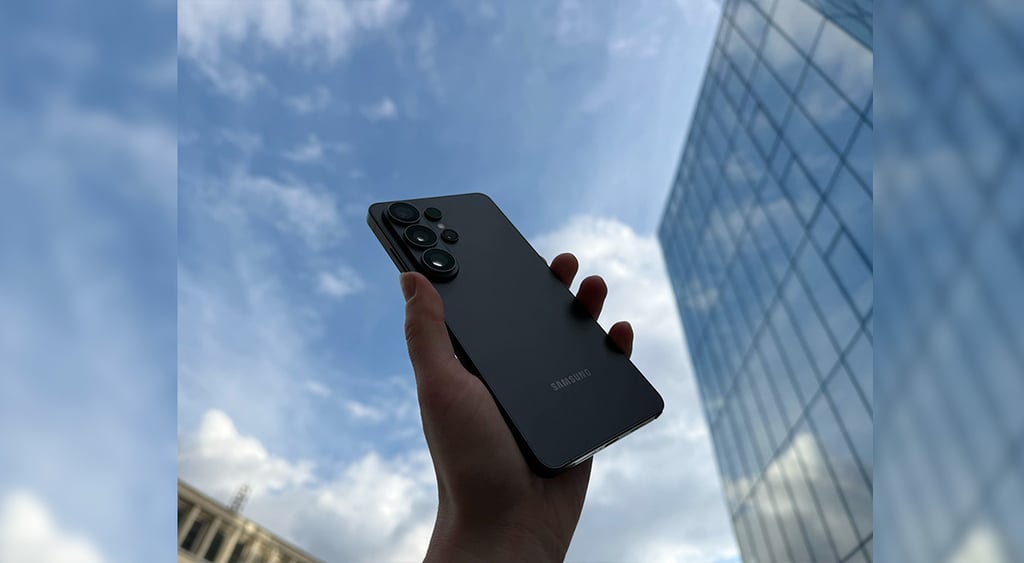
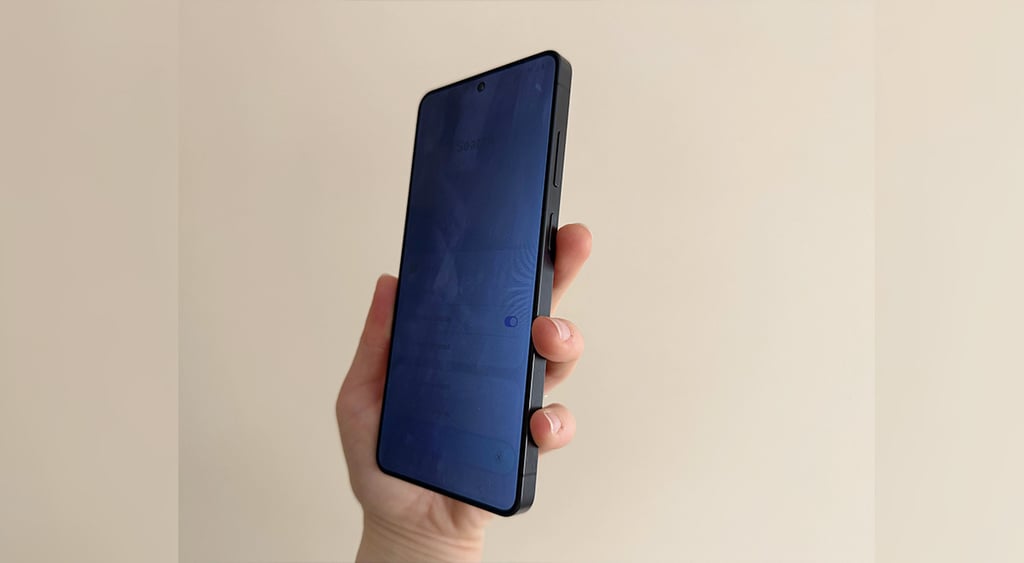
Is the privacy display feature meant to make up for the lack of design changes?
Before the Samsung Galaxy S26 Ultra's release, the company had already sought to increase user interest in the product by adding a built-in privacy display feature.
The privacy display works as a privacy screen protector, preventing unwanted shoulder-surfing while you browse in public spaces. In this case, users can turn it on and off and decide which apps it should work with, thereby securing their passwords, pins, and sensitive information in those apps.
As intended, the new feature received significant attention. However, reactions were not what Samsung might’ve expected. Some users complained that once the feature is on, it affects the screen too, making it harder to see, causing a “weird” feeling, and straining their eyes.
As someone who accidentally glances at other people’s phones on public transport and also doesn’t like to open her banking apps or sites that contain personal information, I was interested in seeing how the feature works and why some users find it uncomfortable.

I soon learned that it certainly changes the screen brightness, which didn’t bother me much, until I opened the gallery to look at the pictures I took, and they looked darker than they should’ve been.
So I ended up disabling the display protection feature.
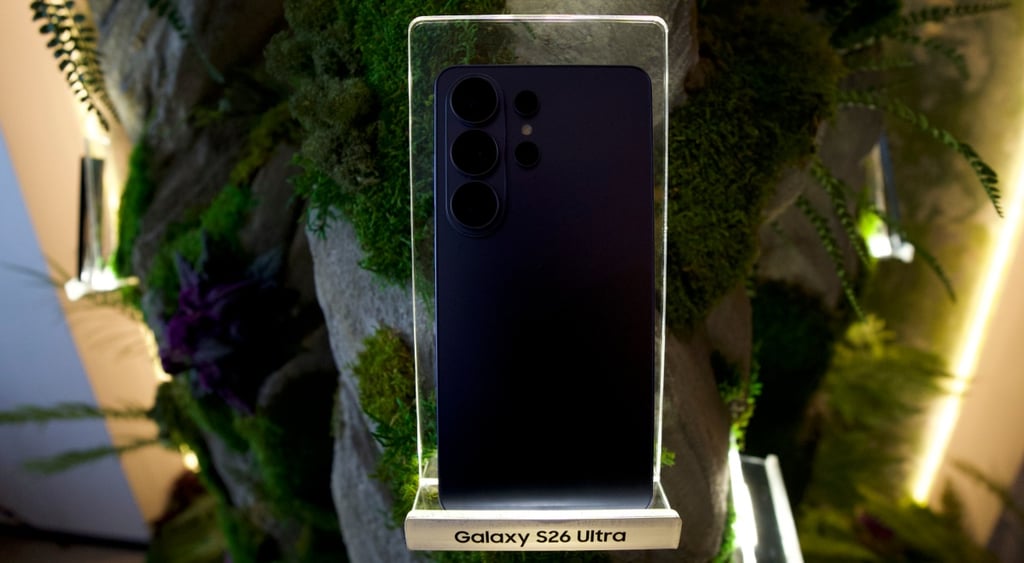
When it comes to its design, the latest Ultra isn’t that different from its predecessor, the Galaxy S25 Ultra. They are the same height (162 mm), with the S26 Ultra being 7 grams lighter and 0.4 mm thinner.
It also includes the same display size as the Galaxy S25 Ultra, which is quite a bit bigger than my iPhone 16 Pro, so it was quite comfortable to work on a bigger screen. However, it isn’t as comfortable when you need to use the device with one hand or put it in your pocket.
Are the new camera features used to their full potential?
Almost 15 years ago, when I was very into photography, I received my first (and last) DSLR camera. I remember being very hyped about learning how to use it, understanding the settings, and how they worked.
Soon after I finished my photography lessons, I rarely used the camera and just took pictures with my phone because it was easier, faster, and didn’t require me to remember certain settings to take a good picture.
Each time companies present their latest smartphones, one of the key selling points is an upgraded camera.
The same is true now, with the Samsung Galaxy S26 smartphone lineup including new or upgraded camera features.
According to Samsung, its Galaxy S25 Ultra includes night photography, horizontal lock, Advanced Professional Video (APV) codec, and, of course, new AI-powered features for quick editing.
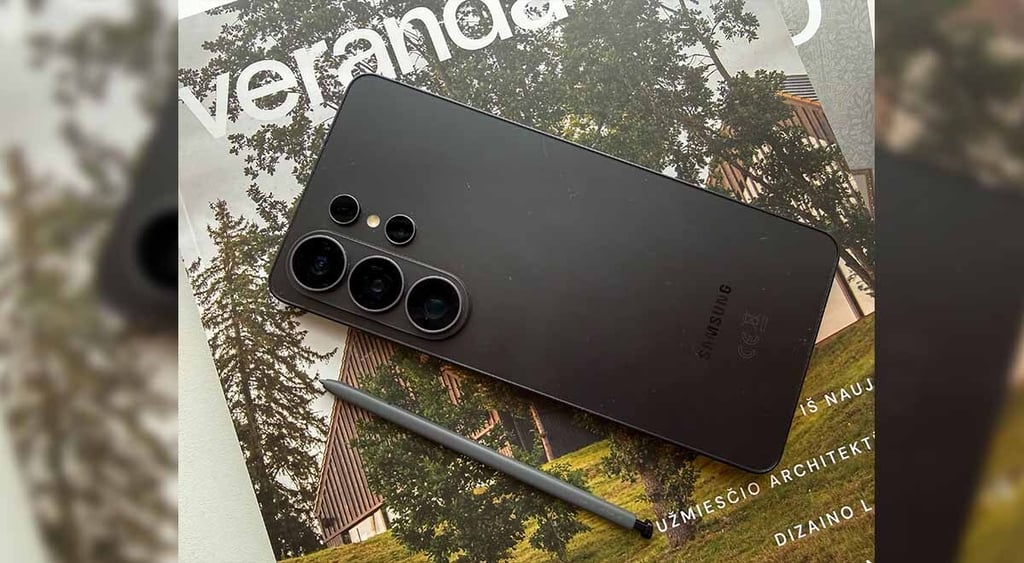
Do I really need all of this just to take a picture of my dog, Easter cake, or an old dress that I’m going to sell on Vinted?
A few of those features make sense, especially if you enjoy recording high-quality videos at concerts or while traveling.
I was also quite happy with the horizontal lock, which proved useful while hiking. It made my videos much more stable, and I was able to record while walking.
However, it still made me think whether these advertised features are used to the fullest. Or am I the only one who opens the camera settings, gets spooked, and then goes back to the good old auto settings?
And what happened to one of the main rules of photography, which says you don’t need expensive gear to take a good shot?
While it’s good to know that your smartphone camera offers settings like ISO, shutter speed, and RAW (uncompressed) capture, most users don’t use them at all, notes Steven Athwal, the founder of The Big Phone Store.
Then why do camera advancements remain one of the main smartphone selling points?
“It's mostly about perception, not practical use: bigger sensors, more megapixels, etc. sound important, but most won't notice a difference in their daily photos,” shares Athwal.






Another reason why users may want to invest in a better smartphone camera is social media.
“Better camera equals better social media content, more social media followers, higher social media status,” notes Mark Voronov, founder of Uproas, the company that provides agency ad accounts.
While I’m no social media influencer, I had to agree with this one. After using my smartphone for about 4 years, I decided it might be time to upgrade.
But then again, I already had a perfectly operating device. The final straw in my decision-making was a CES conference in Las Vegas that I was about to attend, so I needed a new phone to “make better content.”
Would my old phone have done the same job? Most definitely.
“It seems to be the case that brands try to force their customers to become creators as soon as they get their hands on a new phone,” Voronov said.
“They try to make them think that their camera is good enough for creating content and that it takes no extra effort or skills. This approach works quite well in sales, but it makes users miss their potential greatly,” he added.
Strong password generator

Skills replaced by AI?
Along with the release of the Samsung Galaxy S26 Ultra, the company unveiled upgraded AI features, many of which were focused on image editing.
I still remember days when the only editing tool many of us would use was Photoshop.
Now you can ask AI to delete unwanted elements from the background, add new elements, or ask it to generate an entirely new image.
I have to admit that I’m not a fan of creating AI-generated images or stickers, but I've relied on AI to edit my photos better than I could.
I do use AI to remove certain elements from an image. Nevertheless, the way I see photo editing, and what I would like for AI to do, is to make it easier to make changes to the actual image.
This includes not only removing unwanted elements from the background but also “cleaning” overexposed areas, balancing color, and similar tasks.
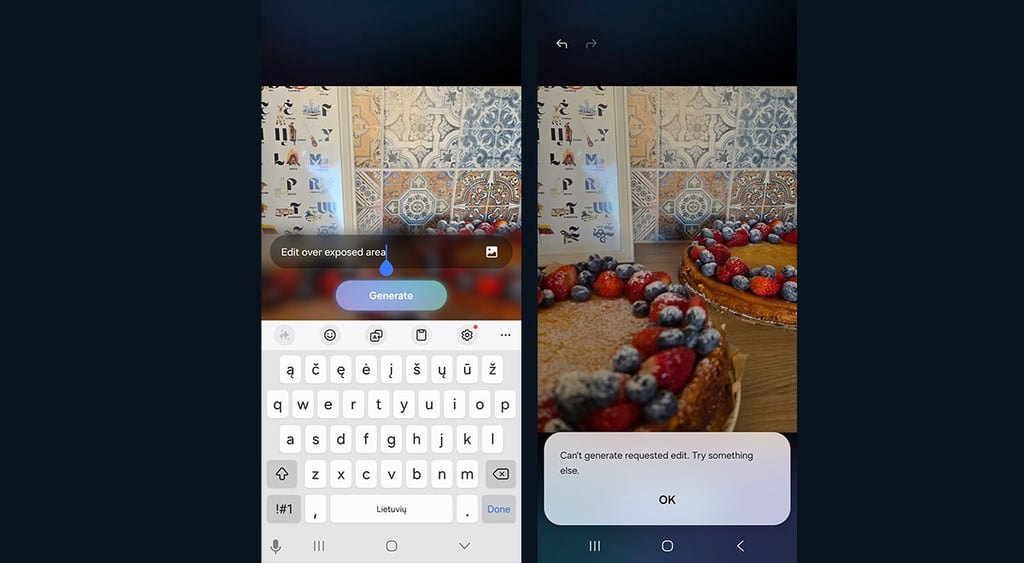
However, after asking AI to do so, my request was denied as it couldn’t be generated.
The bottom line: Is the Samsung Galaxy S26 Ultra worth it?
One of the features that created a buzz around the Samsung Galaxy S26 Ultra was its privacy feature. While it was useful at first, I can see why people thought it distorted the screen quality. Perhaps the company will find a way to upgrade this feature.
Another point of focus was the smartphone’s increased camera capabilities. The company added two useful features: night photography, which helps reduce “noise” and create higher-quality images, and horizontal lock, which keeps video footage stable and level.
The company also didn’t forget to add AI-powered features that make it easier to edit and even create new images via a simple prompt.
However, it made me question whether these upgrades are enough for a smartphone with a starting price of $1,100.
- Quick battery charge
- Comfortable to use because of the big screen
- Thin
- Tends to heat up after extensive use
- Harder to put in the pocket or use with one hand due to size
- Display privacy feature distorts screen view

Unlock more exclusive Cybernews content on YouTube.