How I turned these $350 AI translation earbuds into a language tutor
AI translation earbuds are designed to help me understand people from around the world more quickly and accurately. However, I'm determined to turn them into my language teacher.
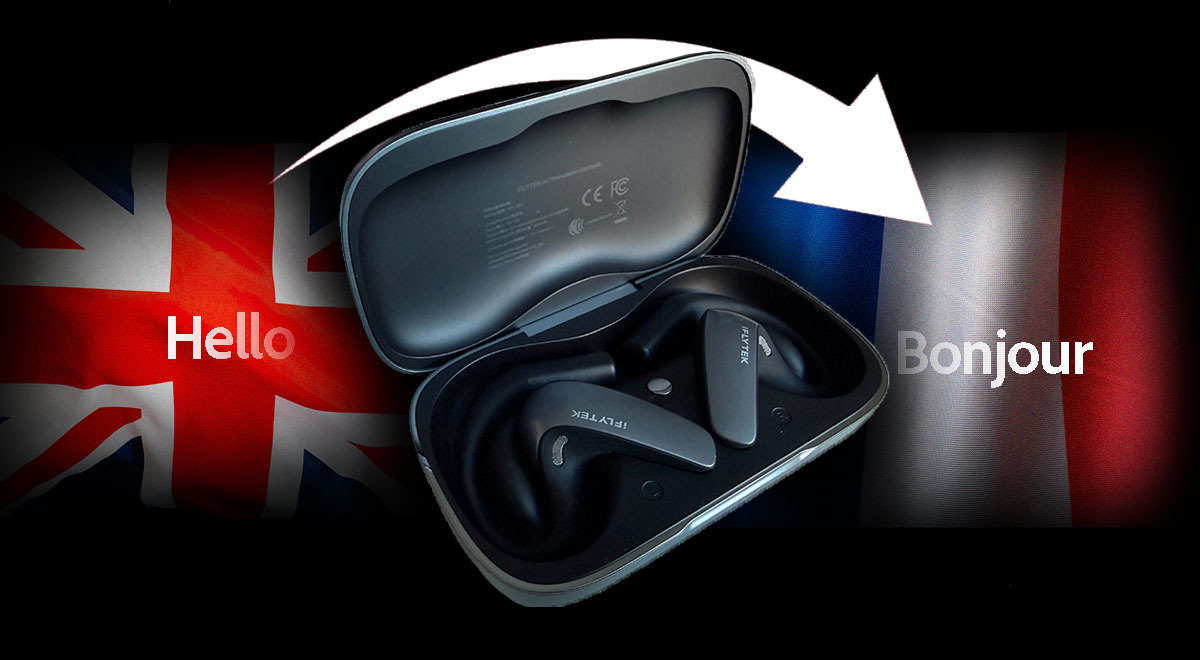
Image by Cybernews

 Follow us
AI translation earbuds are designed to help me understand people from around the world more quickly and accurately. However, I'm determined to turn them into my language teacher.
When I was at school, I caught a case of francophilia.
Little did I know that what would “cure” me of this was learning the French language. It took me more than six years, and I still haven’t progressed much beyond ordering coffee, with French numbers still sending shivers down my spine.
Since I was not raised a quitter, I tried every possible way to learn the language. However, not much helped, with me now stuck with a half-read Françoise Sagan novel collecting dust on my bedside table.
Then I got iFLYTEK AI translation earbuds, which are supposed to work as a live translator.






At first, the device made me roll my eyes, because it made me think that nowadays, nothing can be made without AI. And, more importantly, because I was once again reminded that I wouldn’t need translation earbuds if I had just learned the damn language.
That’s when I decided to turn them into my language teacher to see how well the translation features work and test their hardware on my walks and runs.
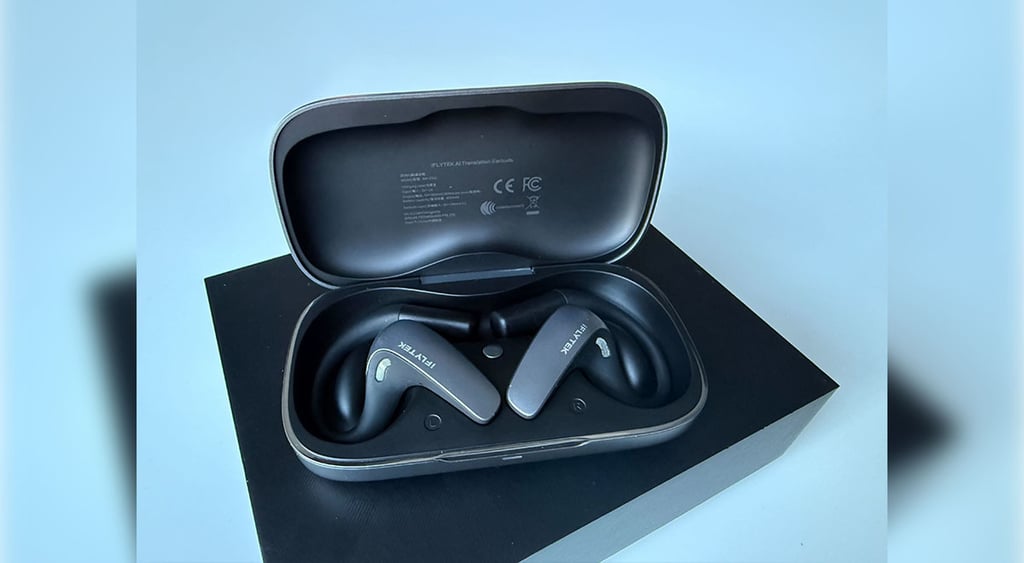
Unboxing iFLYTEK AI translation earbuds
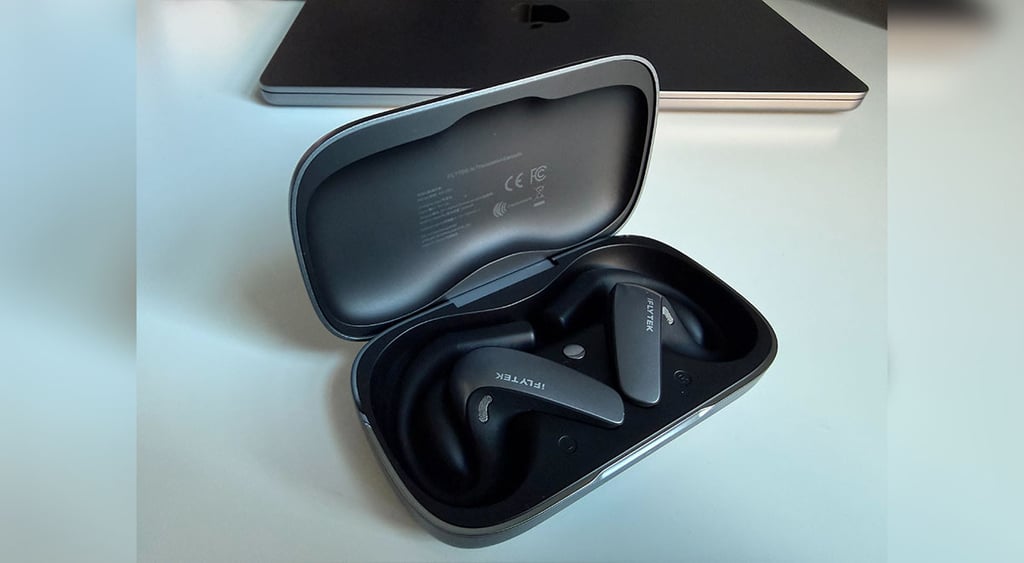
What caught my attention was the size of these AI translation earbuds, especially compared to my compact Apple AirPods.
Soon, I learned why.
iFLYTEK AI translation earbuds are open-ear translation buds powered by bone-conduction technology and a noise-reduction system, allowing users to wear them for prolonged periods without blocking the ear canal while still staying aware of their surroundings.
The same technology can be found in earbuds like Shokz, which runners use to stay aware of their surroundings for safety.
When it comes to the earbuds' specifications, they worked similarly to any regular ones: I was able to adjust volume, skip songs, and even summon their AI assistant.
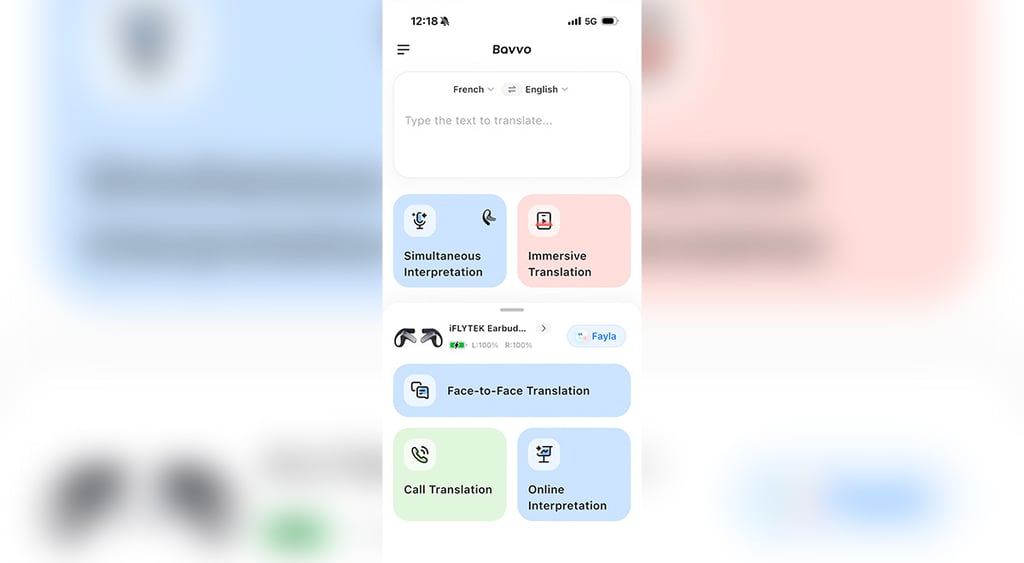
To fully use the earbuds, I also needed to download an app that would provide all translation-related features.
These features include simple in-app text-to-text translation, simultaneous interpretation, immersive translation, phone call translation, and online interpretation. It also includes an AI assistant, Fayla. I decided to go through each feature to see which best fits my goal.
Can these AI-powered earbuds help with language learning?
According to the company, the earbuds can translate from 83 languages in real time.
I instantly decided it needed to go through my “does it understand my mother tongue?” test, which I had previously given to the Comulytic Note Pro AI voice recorder.
My idea was to play some news in Lithuanian through earbuds, then have it translated to English. Before playing the video, I checked the app and set the language combination to Lithuanian-English. However, I couldn’t find such a combination.
I even summoned Fayla, the AI assistant, to ask if I’m missing something. While it was very receptive to simple questions, such as what’s the weather forecast, after asking it to translate something from Lithuanian, it couldn’t help me.






Then off I was with my other experiment.
One way that works for me when it comes to language learning is reading a book and translating it word-for-word. This way, I learn the words, fixed phrases, and grammatical combinations faster.
However, instead of reading a book and trying to enjoy it, I find myself on my phone, with multiple dictionary apps and Google Translate open. And once I’m on my phone, the chances of my finger slipping to reply to a text on Messenger or scroll through the Instagram feed increase by the minute.
Considering this, I decided to pick up my dusty novel by Sagan, Bonjour Tristesse, or Hello Sadness (the title that pretty much sums up the situation I’m in), to see if earbuds could instantly translate what was read into my ear.
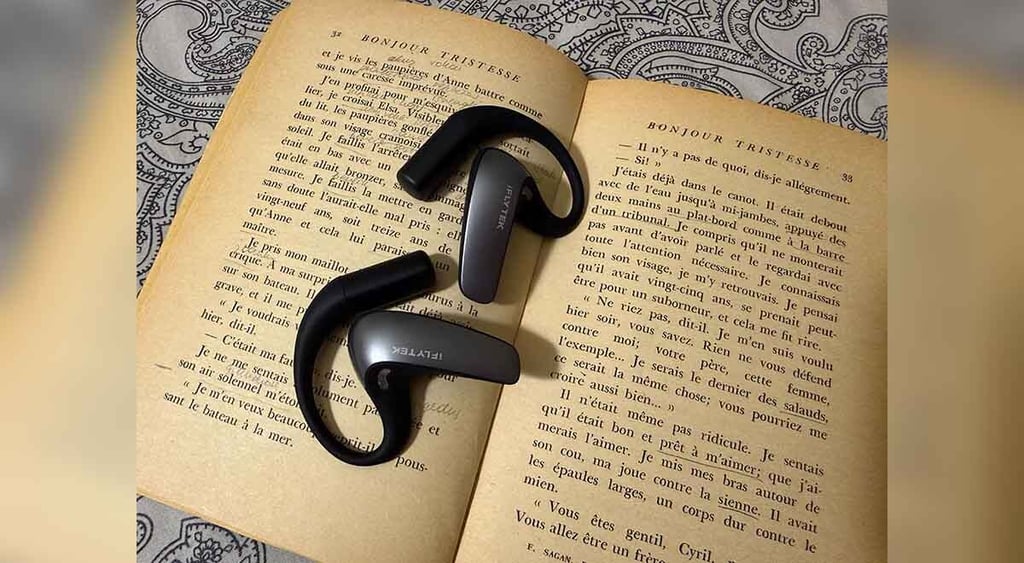
I then read the book aloud for the earbuds to pick up, which it did, and delivered the translation to my ear. The whole process reminded me of having an actual interpreter who would translate what I said after each sentence.
Sounds perfect? It would be, if I knew how to read every word correctly. I didn’t, but that was fine because I faced a new learning opportunity.
When translating, the app also provides a transcription of what it heard in the original language and a translation into the target language.
So I could compare whether what was read was understood correctly. If not, I knew I had probably misread the word, so I kept trying until I was lucky and my interpreter finally understood what I meant.
When it comes to translation quality, it did provide me with a correct translation after I successfully read it the way it was supposed to be read.
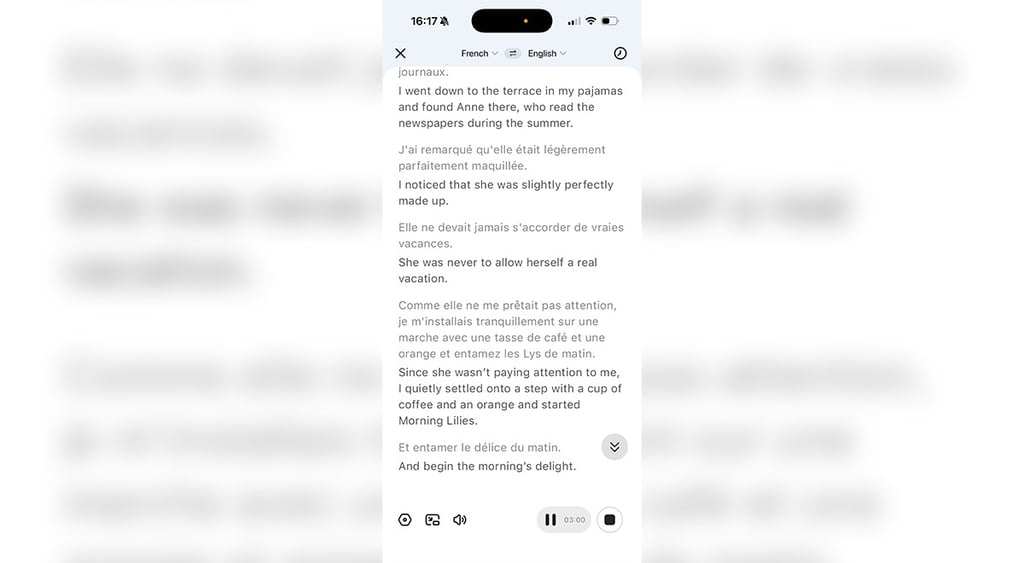
Next, I played a video from a French news site to see how it would work when a person speaks for extended periods, when there’s a discussion, or when multiple people are talking at once.
This was harder for me to comprehend, mainly because there was a delay at first, which is probably normal since the device needs to get or listen to the information before it can provide a translation.
However, I found it too distracting to listen to the news cast and the translation at the same time.
But there’s a third feature that can help to avoid this cacophony. Called “online interpretation,” the feature allows you to broadcast any website or app, and receive translation in text, which is shown while you’re on that page.
I have been following the Musée Yves Saint Laurent Paris on Podcasts for quite some time, as it covers fashion, film, art, and more. These conversations are in French, so while I understood bits and pieces, I often struggled to understand them fully.
So, I played one of the episodes and enabled the AI translator, which then displayed the translation in English in a small window while the conversation played in my earbuds.
Once again, I was able to listen to the conversation, understand it, and try to pinpoint which French word corresponds to its English translation. But what can be annoying is that it looks like a live translation, meaning that when you start reading the sentence, it sometimes changes midway to catch up with what the speaker actually meant.

My 2-in-1 Shokz?
When I first saw the iFLYTEK earbuds, they reminded me a lot of the Shokz OpenFit 2 earbuds.
I first heard about Shokz from runners online who praised or criticized the earbuds, with some saying they could finally enjoy what they’re listening to without worrying about missing what’s going on in the background, while others said the sound quality wasn’t the best.
I often thought about upgrading my earphones, but I wasn’t quite sure whether I wanted to commit to this type of device. After seeing that iFLYTEK’s earbuds use the same technology, I was quite happy to shoot two birds with one stone by taking them on my run.
While I enjoyed hearing the music and what’s going on in the outside world, I was a bit uncomfortable after noticing that if I turned up the volume, the sound would leak.
Strong password generator

Maybe this isn’t a big problem when you’re outside, and people can’t hear you anyway because of all the noise, but it was something that kept me cautious.
According to the company, the earbuds should last “at least 5-6 hours of continuous translation on a single charge.” I also learned that if you’re just playing music, it could work for 12 hours, which is already music to my ears.
That’s because when I’m on my long runs (which often last from an hour and a half to three hours), I sometimes get stranded with my own thoughts, since my old AirPods can last me only a few hours before dying.
iFLYTEK AI earbuds: take it or leave it?
While skeptical at first, I found these earbuds useful in my attempt to revive my French language skills, as they provided translation without requiring me to use several different apps.
However, I sometimes thought it would be cool if the “translator” could be summoned via earbuds. Especially considering that it already has an AI assistant that can be called without going to the app. The earbuds could also include something similar to the “detect” language feature.
When it comes to the hardware, two main things caught my attention. One is that, thanks to the open-ear design, the earbuds can be worn for prolonged periods. This should be especially helpful to those who need to sit through a day-long meeting or conference.
The second thing is long battery life, which allows users to use the earbuds for at least 6 hours for translation and 12 hours to listen to music.
The pros and cons of this device add up to its price of $350.
- Multiple translation features
- Open-ear design to prevent ear fatigue
- Long battery life
- Misses some language combinations
- Sound leakage
- App required to enable translation features
Unlock more exclusive Cybernews content on YouTube.