Best body fat scales in 2026: accurate and smart picks
Being behind major reports like The Mother of All Breaches and RockYou2024, our in-house cybersecurity experts and journalists provide unbiased, real-world testing and in-depth analysis.
We maintain complete transparency by openly sharing our testing methodologies with our audience.
Learn more

A body fat scale is a smart scale that estimates body composition using bioelectrical impedance analysis. Unlike a basic digital scale that only shows total weight, it provides additional metrics such as body fat percentage, muscle mass, and water weight.
Body fat percentage can offer a more meaningful view of health than weight alone. A 2025 study published in the Annals of Family Medicine showed that body fat percentage is a better predictor of 15-year mortality risk in young adults than body mass index.
Keep in mind that body fat scales are not clinical-grade tools. They rely on estimates and individual readings, which can vary with hydration and timing. Body fat scales are most useful for tracking trends under consistent conditions rather than focusing on single readings or exact numbers.
In this article, you’ll find the best body fat scales, determined after I conducted thorough research of various models available online. I focused on each one’s accuracy, consistency, and usability to ensure you get the best value, with the most potential for long-term use.
Top 4 body fat scales – my shortlist
Find an overview of the best body fat scales of 2026 in this list below:
- Hume Health Body Pod – best body fat scale of 2026
- Oxiline Scale MD Pro – body composition metrics for your household
- Withings Body – basic composition tracking on a budget
- Renpho MorphoScan Smart Body Scale – smart scales for segmental analysis


Our team of in-house researchers, writers and editors reviews and analyzes health tech products using a research-driven approach. We gather data from multiple sources, fact-check all information, and conduct our research based on peer-reviewed studies, expert opinions, consumer ratings, and regulatory approvals.
You can learn more about how we test health tech products here.
Comparison of the best body fat scales
Compare the top-performing body fat scales in this overview table:
| Features | Hume Health Body Pod | Oxiline Scale MD Pro | Withings Body | Renpho MorphoScan Smart Body Scale |
| Body metrics tracked | 45 metrics, including weight, body fat percentage, muscle mass, hydration, and metabolic rate | 31 metrics, including weight, body fat percentage, muscle mass, and bone mass | Basic body composition, including weight, body fat percentage, and muscle mass | 50+ metrics, including body fat percentage, muscle mass, and visceral fat |
| Composition technology | Multi-frequency bioelectrical impedance analysis (BIA) | BIA | BIA | Dual-frequency BIA |
| Connectivity | Bluetooth | Bluetooth | Wi-Fi, Bluetooth | Bluetooth |
| Multiple user support | Up to 8 | Unlimited | Up to 8 | Up to 8 |
| Subscription | Optional paid subscription for deeper insights | No subscription required | Optional paid subscription for deeper insights | No subscription required |
| Pricing | $229.00 | $199.00 | $69.95 | $139.99 |
Best body fat scales in 2026 – detailed reviews
Get detailed reviews of the best body fat scales below:
1. Hume Health Body Pod – best body fat scale of 2026

| Connectivity: | Bluetooth |
| Users supported: | Up to 8 |
| Maximum weight: | 400lbs |
| Price: | $229.00 |
The Hume Health Body Pod is a high-end body composition analyzer built for users who want detailed and accurate fat, muscle and health data beyond simple weight.
The Body Pod uses multi-frequency BIA with eight electrodes and segmental scanning to estimate fat mass, muscle mass, visceral fat and more. This makes it well suited for strength training, CrossFit, or body recomposition programs where tracking fat loss alongside muscle gain matters more than scale weight.
The Hume companion app shows long-term trends in body composition, with graphs and metrics that reveal changes over weeks or months. Setup is straightforward, thanks to the Bluetooth connection, app guidance, multi-user recognition, and daily weighing routines.
2. Oxiline Scale MD Pro – body composition metrics for your household
| Connectivity: | Bluetooth |
| Users supported: | Unlimited |
| Maximum weight: | 396lbs |
| Price: | $199.00 |
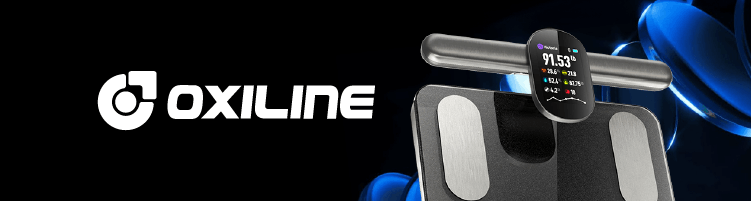
I recommend the Oxiline Scale MD Pro for families who want detailed health metrics beyond simple weight tracking. It works well for households with mixed fitness goals, such as runners, weightlifters, and casual exercisers sharing one scale.
This smart scale uses eight Echo MD™ bioelectrical impedance sensors on both feet and handle grips to generate a full-body scan, reducing estimation errors common in foot-only devices.
The free Oxiline Health app syncs via Bluetooth to display comprehensive trends, charts, and data export options. Setup is straightforward, and the app supports unlimited user profiles and daily tracking for meaningful long-term insights.
3. Withings Body – basic composition tracking on a budget

| Connectivity: | Wi-Fi, Bluetooth |
| Users supported: | Up to 8 |
| Maximum weight: | 440 lbs |
| Price: | $69.95 |
The Withings Body is a budget-friendly smart scale for users who want simple body composition estimates alongside reliable weight tracking. This scale fits users focused on general wellness, walking programs, or basic weight management rather than structured training plans.
Withings uses single-frequency bioelectrical impedance analysis to estimate body fat, muscle, and water percentages, giving basic composition data that is consistent enough for general trend monitoring but less detailed than advanced models.
The scale connects via Wi-Fi or Bluetooth to the companion app, which displays weight and composition trends and supports multiple user profiles. I like that daily weighing is easy, and its automatic syncing ensures historical data is captured over time.
4. Renpho MorphoScan Smart Body Scale – smart scales for segmental analysis

| Connectivity: | Bluetooth |
| Users supported: | Up to 8 |
| Maximum weight: | 400lbs |
| Price: | $139.99 |
The RENPHO MorphoScan Smart Body Scale is a feature-rich body composition scale designed for users who want detailed segmental fat and muscle data beyond simple weight tracking. It’s ideal for gym enthusiasts, resistance trainers, or athletes who want to monitor muscle balance and asymmetries across different body parts.
This scale uses dual-frequency BIA with eight electrodes to evaluate over 50 body metrics. It measures and tracks segmental fat and muscle distribution across limbs and torso, giving more nuanced readings than basic foot-only devices.
The MorphoScan app syncs via Bluetooth to show long-term graphs and trends and exportable data. Setup is straightforward, and daily weighing updates trends for each individual.
How I selected the best body fat scales
I applied this methodology to assess how body fat scales compare in accuracy, usability, and overall value:
- BIA technology and electrode design (25%). I analyzed the type of bioelectrical impedance analysis used and the number and placement of electrodes to assess potential measurement depth and signal consistency.
- Body fat percentage consistency (20%). I studied how reliably each scale reports body fat percentage over time under consistent conditions to judge its usefulness for progress tracking.
- Number and relevance of body metrics (15%). I evaluated which metrics each scale provides and whether those data points offer practical value beyond basic weight and fat percentage.
- App clarity and long-term tracking (15%). I reviewed companion apps for readability, data visualization, and how effectively they support long-term trend monitoring.
- Multi-user support (10%). I examined how well each scale handles multiple user profiles, including automatic recognition and profile separation.
- Price-to-feature ratio (10%). I compared pricing against available features to determine overall value for different types of users.
- Customer feedback and expert opinions (5%). I researched verified user reviews and expert assessments to identify recurring strengths, weaknesses, and reliability concerns.
The goal of this approach is to ensure rankings reflect real-world usefulness rather than isolated specifications or single measurements.
How body fat scales work
Bioelectrical impedance analysis (BIA) sends a very low electrical signal through the body. Fat, muscle, and water resist the signal differently, allowing the scale to estimate body fat percentage.
Results vary with hydration, timing, and foot contact because they alter electrical flow. I recommend you measure body fat percentage under consistent conditions to improve trend tracking.
Consumer BIA scales estimate body composition using surface electrodes. Meanwhile, clinical methods like DEXA scans and Bod Pod testing use imaging or air displacement for higher precision. For this reason, home scales are best used to track trends over time, not for medical diagnosis or clinical decision-making.
Key features to look for in a body fat scale
When choosing a body fat scale, these features determine its usefulness and reliability:
- Comprehensive fat tracking. The scale should measure body fat percentage and visceral fat to give a clearer picture of overall health.
- Electrode quality and placement. More electrodes and advanced designs improve signal accuracy when compared with basic foot-only models.
- Measurement accuracy and consistency. Reliable scales provide repeatable results over time for accurate trend monitoring.
- Specialized modes. Athlete and pregnancy modes adjust calculations for unique body compositions.
- App connectivity and data export. Integration with mobile apps allows users to track progress and export data for long-term analysis.
- Multi-user support. Scales with automatic profile recognition can easily track multiple users.
Prioritizing these key factors ensures accurate tracking and meaningful health insights over time.
Are body fat scales accurate?
Body fat scales are less accurate than clinical methods like dual-energy X‑ray absorptiometry (DEXA). A 2021 cross-sectional study found that smart scales measured weight accurately, but its fat mass estimates often differed by -2.2 kg to -4.4 kg compared with DEXA. This shows that body composition readings from consumer scales can vary significantly from clinical measurements in real-world conditions.
Some users should be especially cautious with body fat scales, including elite athletes, pregnant women, and people with medical conditions that affect water balance or body composition. For these individuals, readings may be less accurate, and all users should rely on scales primarily to track trends rather than make medical or health decisions.
Tips for getting the most accurate body fat readings
Follow these simple practices to improve the reliability of body fat scale readings:
- Measure at the same time each day. Taking readings consistently at the same time improves comparability and trend tracking.
- Measure before eating or exercising. Body weight and water distribution can change after meals or workouts, affecting results.
- Use bare, dry feet. Full contact with dry feet ensures proper electrode connection for accurate measurements.
- Maintain consistent hydration. Fluctuations in body water can alter electrical resistance and impact body fat estimates.
- Focus on trends, not daily fluctuations. Day-to-day readings may vary, so track long-term changes for meaningful insights.
- Calibrate the scale on a flat, hard surface. Uneven or soft surfaces can distort measurements and reduce accuracy.
- Allow the scale to warm up if needed. Some models perform better after being powered on for a few moments, ensuring stable readings.
Consistently applying these tips helps users track meaningful trends over time.
Smart body fat scales vs. regular scales
Regular scales can’t distinguish between fat, muscle, or water, as they only measure total body weight. This means they miss important information about body composition that affects health and fitness.
Body composition matters because knowing fat and muscle percentages helps you track your fitness progress more accurately. More specifically, it allows users to see fat loss or muscle gain even if their total weight stays the same.
Upgrading to a smart body fat scale makes sense for those tracking long-term health or fitness trends. For users only interested in basic weight, a regular scale is sufficient and more cost-effective.
Other health tech to support body composition goals
Best smart scales: compare smart scales to track different body metrics
Oxiline Scale MD Pro vs Hume Body Pod: examine how the Oxiline Scale MD Pro stacks up against the Hume Body Pod
Morphoscan Smart Body Scale review: explore the Morphoscan Smart Body Scale, and learn about its features for accurate body tracking
Morphoscan Smart Body Scale vs Hume Body Pod: analyze the differences between the Morphoscan Smart Body Scale and Hume Body Pod
Conclusion and final recommendations
The overall best body fat scale of 2026 is the Hume Health Body Pod because it balances strong measurement technology, consistent trend data, a robust app ecosystem, and long-term tracking clarity. Hume’s multi-frequency BIA improves repeatability, and the companion app visualizes meaningful changes over time.
For alternatives, choose the Oxiline Scale MD Pro if you need to track mixed fitness levels among your household. I recommend Withings Body if you want a budget-friendly basic composition tracker and the RENPHO MorphoScan Smart Body Scale if segmental analysis and detailed body metrics matter most.
FAQ
What is the most accurate body fat scale?
The Hume Health Body Pod is among the most accurate consumer body fat scales, using multi-frequency BIA and eight electrodes to deliver consistent, repeatable trend data when used under controlled conditions.
Are body fat scales worth it?
Yes, body fat scales are worth it for people tracking fitness or weight loss trends, since they show changes in fat and muscle that basic scales cannot reveal over time consistently.
Can a body fat scale really measure fat percentage?
Yes, body fat scales estimate fat percentage using bioelectrical impedance. However, they don’t provide direct measurement, so accuracy varies with hydration and conditions.
What body fat scale works best with Apple Health?
The Hume Health Body Pod integrates with Apple Health, allowing body composition data to sync automatically for centralized tracking alongside fitness, nutrition, and health metrics over time.