Coveron vs Aura 2026: test-based comparison and expert review
Our in-house experts test identity theft protection services themselves, using real-world scenarios and established testing methods. We look at how well each service monitors personal information, how quickly and clearly it sends alerts, what recovery support it offers, and how it handles customer data.
We assess every provider using the same criteria and explain our testing process clearly, so readers can compare services and make a more informed choice.
Learn more

Coveron (formerly known as NordProtect) and Aura are among the best identity theft protection services in 2026, but they have different strengths. During this comparison, I found that Coveron offers more affordable plans, generous identity theft insurance, and additional cybersecurity tools, while Aura stood out for its broader personal data monitoring and dedicated family safety features.
Both providers are designed for US users and offer identity theft recovery assistance if something goes wrong. In this Coveron vs Aura comparison, I'll break down their monitoring capabilities, insurance coverage, security features, and pricing to see which offers better protection for your money and who each service is best suited for
Coveron vs. Aura overview
Before diving into a more detailed comparison, let's review how Coveron and Aura weigh up side by side.
| Coveron | Aura Identity Theft Protection | |
| ⭐ Rating: | ||
| 🥇 Overall rank: | #1 out of #20 | #2 out of #20 |
| 💵 Price: | From $4.74/month | From $8.00/month |
| ✂️ Free version: | No, 30-day money-back guarantee | Yes, 14-day free trial |
| 🖥️ Platforms: | Web app | Windows, macOS, iOS, Android |
| 💰 Credit monitoring: | Yes (up to 3 bureaus) | Yes (3-bureau credit monitoring) |
| 🔒 Insurance: | Yes, up to $2M (Identity Theft Protection plan or higher) | Yes, up to $1M/adult |
| 🔥 Coupons: | Coveron coupon 66% OFF | Aura Identity Theft Protection coupon 66% OFF! |

About Coveron
Cybersecurity experts at NordSecurity launched its identity theft protection service in 2024 for US residents. It entered the market with a unique selling point, offering cyber extortion coverage I haven't seen in other similar services.
While Coveron initially focused solely on individual users, it has since expanded to offer Couple and Family plans, as well as home title protection (reimbursing up to $100K in legal and recovery costs for covered title fraud). Its starting price is only $4.74/month, compared to Aura's $10.00/month, or $14.95/month for IDShield. It's worth noting that Aura also expanded its insurance to include cybercrime protection, but so did Coveron to include online fraud coverage (up to $100K).
One of Coveron's setbacks was one credit bureau monitoring on all plans. It has since been upgraded to all three credit bureaus and added a TransUnion credit lock on the Identity Theft Protection and Full Protection plans. Right now, the service is available throughout the US, excluding New York.
Compatibility within the NordSecurity ecosystem is another strong Coveron advantage. Starting from its Full Protection plan, it includes NordVPN with the next-gen antivirus (formerly Threat Protection Pro) upgrade. It is the current VPN market leader and adds online privacy protection to Coveron's list of benefits.
About Aura
In 2019, identity theft protection pioneer Identity Guard merged with antivirus Intrusta and rebranded as Aura, combining both services. Aura is an all-in-one cybersecurity service focused on identity theft protection for families, but also excellent for individual use.
Aura's exceptional feature is 130 pieces of personally identifiable information (PII) monitoring. It offers home and auto title, identity verification, court records, bank fraud, 401(k), and Investment Account monitoring. Coveron monitors core essentials alongside home title protection, but lacks some of Aura's broader financial monitoring points like 401(k) accounts.
Aura's family plan covers 5 adults and unlimited kids. Coveron now matches this structure with a Family plan (5 adults + unlimited kids) and a Couples plan (2 adults + unlimited kids). Aura also offers a VPN, a password manager, and an antivirus, which I will compare to Coveron's alternatives shortly. Aura also uses AI-powered online fraud detection and claims a 650x faster detection speed than its competitors.
Among Aura's newer features are personal data removal and unused account cleanup tools. Although Aura focuses on identity theft protection, its wide range of benefits contributes to overall online hygiene.
Coveron vs Aura: features comparison
Looking at the features side by side, it's clear that both Coveron and Aura have plenty to offer. Both cover the essentials well, from dark web and credit monitoring to financial fraud alerts, while bringing their own advantages to the table. With neither having a clear edge across the board, I call this one a draw.To see where each provider has an advantage, I've compared their main features side by side below.
| Feature category | Coveron | Aura |
| Identity monitoring |
|
|
| Scam protection and fraud coverage |
|
|
| Credit and financial monitoring |
|
|
| Identity theft insurance and recovery |
|
|
| Online privacy and device security |
|
|
| Family protection |
|
|
If you're mainly concerned about your personal information being exposed, financial fraud, or keeping your online activity private, Coveron makes a stronger case. It gains that edge with higher individual identity theft insurance coverage, additional protection against cyber fraud, and access to NordVPN, next-gen antivirus, and Incogni for added online security and privacy.
However, if you're protecting an entire household, especially one with younger children, Aura gives more. Its additional family safety features are genuinely useful for parents who want to keep an eye on their children's online activity and potential risks.
So, while both providers offer strong protection, neither is necessarily the better choice for everyone. It really comes down to your situation and which features you'll actually use.
Coveron vs Aura: pros and cons
Both Coveron and Aura offer generous identity theft protection suites, but not without limitations. Here are their main advantages and drawbacks to consider before choosing.
Coveron vs Aura: pricing and plans
Coveron has the advantage when it comes to pricing flexibility, with cheaper entry-level plans and the option to pay more as your protection needs grow. Aura takes a different approach, offering most of its core identity protection features from the start, with subscription prices depending mainly on how many people you want to cover. Both are reasonably priced for what they offer, although there are some important differences worth considering.
Starting with Coveron, it offers three individual plans: Scam Protection, Identity Theft Protection, and Full Protection, starting at $4.74/month, $5.69/month, and $9.49/month, respectively. Here's how they compare:
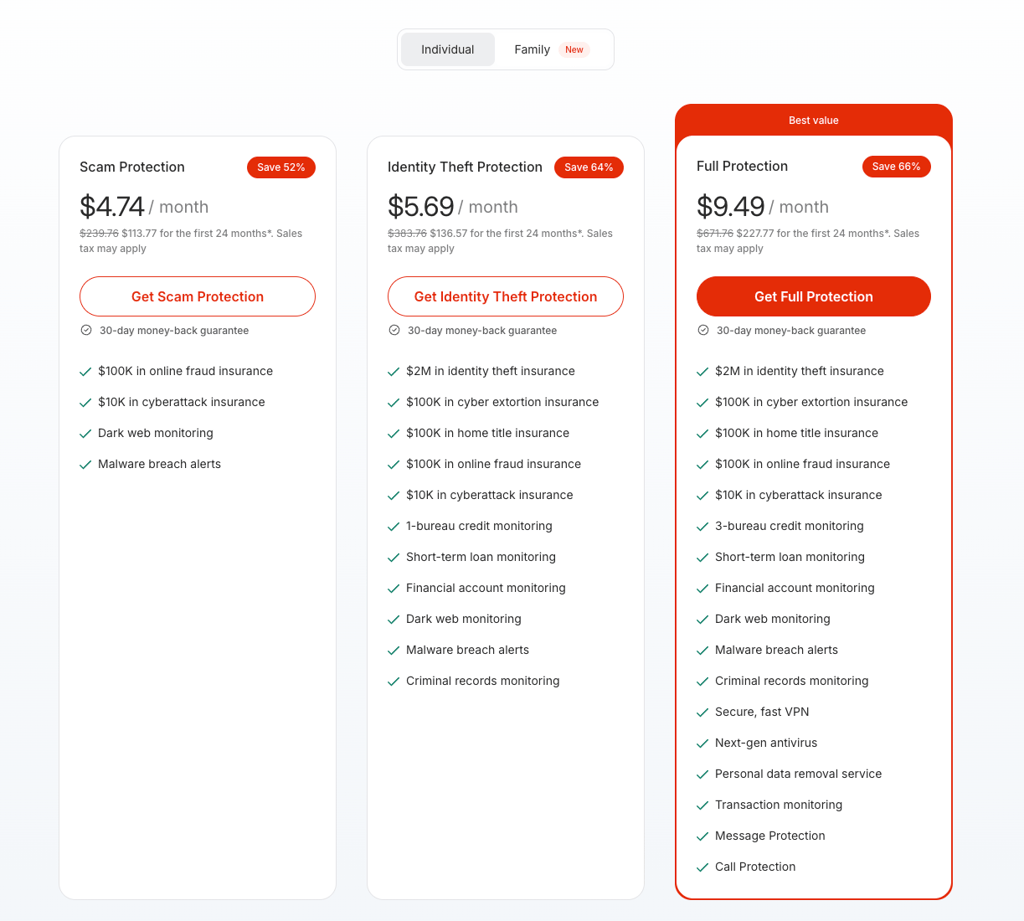
What I particularly like about Coveron's pricing is the relatively small jump between its plans. For example, moving from Scam Protection to Identity Theft Protection costs just a buck more, but adds $2 million in identity theft insurance, credit monitoring, and additional financial protection.
Meanwhile, the $9.49/month Full Protection plan brings in NordVPN, antivirus, Incogni, and 3-bureau credit monitoring, saving quite a lot if you are already paying for any of these separately.
Coveron also has plans for larger households, with Couple subscriptions starting at $16.14/month and Family subscriptions at $25.64/month. The latter can cover up to five adults and all children.
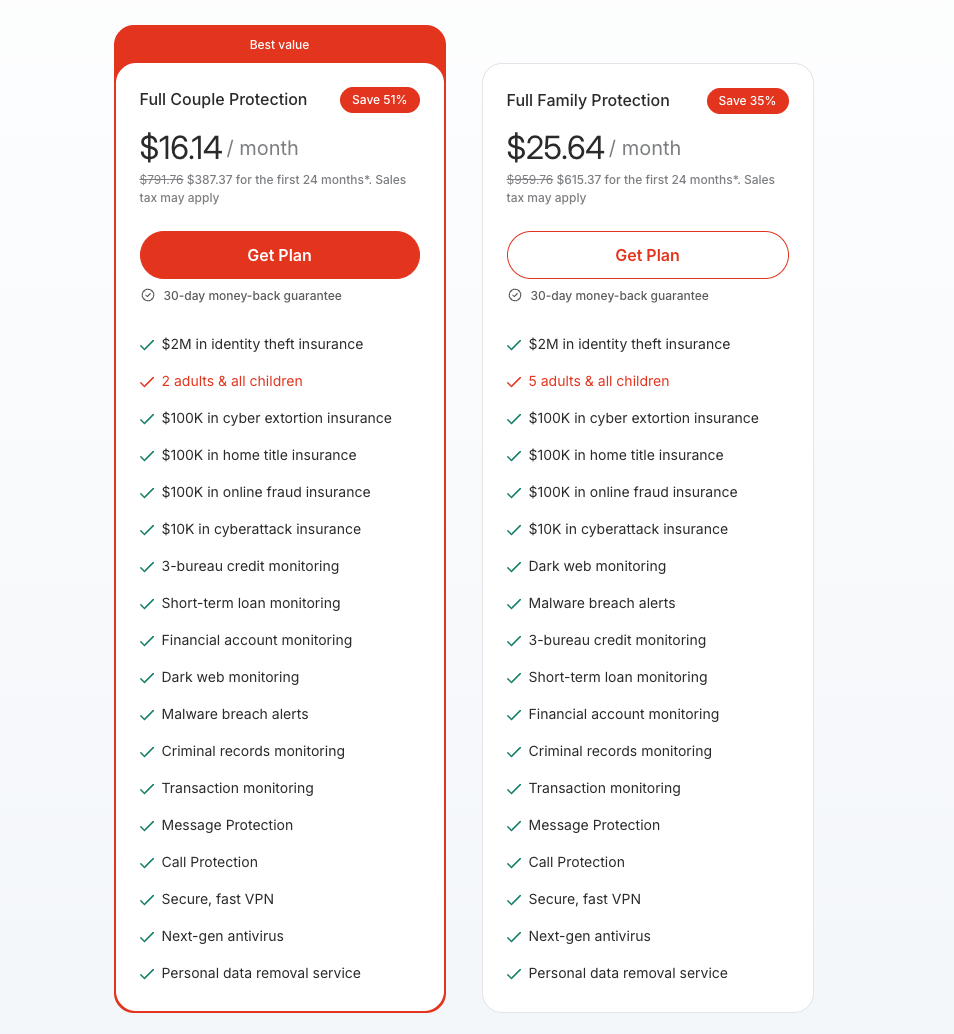
However, Coveron's advertised discounts require a 2-year commitment paid upfront, which is quite a long subscription if you're trying identity protection for the first time. There's no free trial either, but it does include a 30-day money-back guarantee, which gives you some room to reconsider.
Aura keeps things somewhat simpler. Rather than asking you to choose between different levels of identity protection, it offers the same base protection across all its plans: Individual, Couple, Family, and Kids. The Individual subscription starts at $10.00/month with annual billing, while the Couple costs $18.00/month.
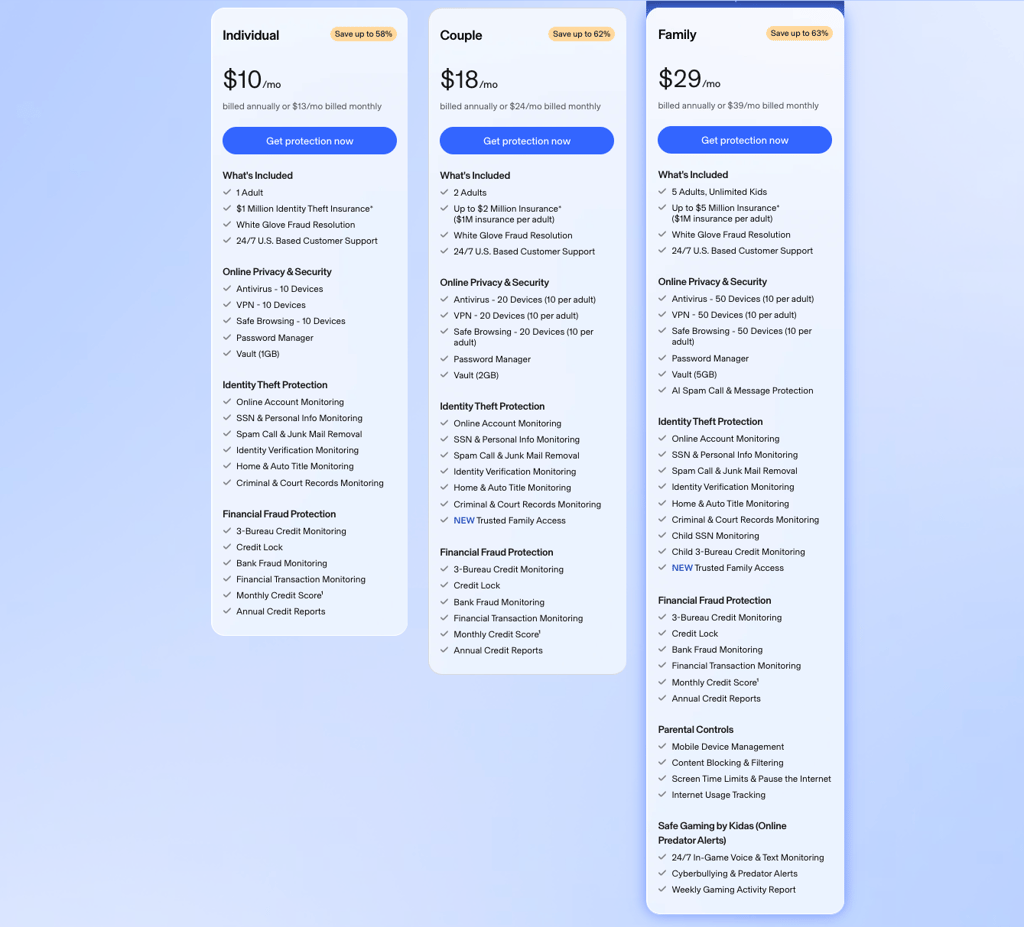
Aura's Individual plan is a bit more expensive than Coveron's most expensive individual plan. It also includes 3-bureau credit monitoring and identity theft insurance, alongside antivirus, VPN, safe browsing, and a password manager.
However, its identity theft insurance limit is lower than Coveron's, and separate cyberattack and cyber extortion insurance isn't included as standard. Coveron's cheaper tiers also give you more control over how much you spend, particularly for the features that you might not use or already have.
Compared to Coveron, the value proposition shifts with Aura’s Family plan. Although more expensive, at $29.00/month, it includes a whole suite of features designed to protect children, including parental controls, child identity monitoring, and online gaming protection. There's also a separate Aura Kids subscription for $10.00/month, aimed at parents primarily interested in their children's online safety.
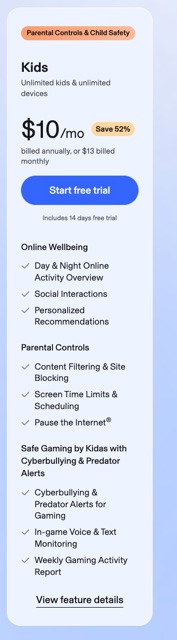
Another advantage of Aura plans and pricing is its 14-day free trial, which Coveron lacks entirely. Eligible annual subscriptions also come with a 60-day money-back guarantee, giving you more time to test the service before deciding whether it's worth keeping.
With all that said, I find Coveron offers better overall value, especially for individuals who want more control over how much they spend. You can start with its $5.69/month Identity Theft Protection plan and get substantial coverage without paying for a complete cybersecurity package.
Aura still deserves credit for its more comprehensive family plans, particularly if protecting children is a priority. However, Coveron's wider range of price points and affordable individual protection give it the edge in this comparison.
Coveron vs Aura: which one should you choose?
Overall, I find Coveron to be a better choice for most users in 2026 compared to Aura, mainly because it offers a better balance between price and protection. Both providers cover the main identity theft risks well, but Coveron gives you more flexibility in choosing what you pay for, while Aura makes a stronger case for families with children.
For individuals, even Coveron’s cheapest plan, at $4.74/month, already includes identity and financial insurance, so you can get substantial protection without paying for a complete security package.
Even if you choose Coveron's highest-tier Full Protection plan, you'll still pay less ($9.49/month) than for Aura's entry-level Individual plan ($10.00/month), while getting higher identity theft insurance coverage, separate cyber fraud protection, and additional privacy tools. I think that's a pretty good deal for someone primarily concerned about protecting their own identity and finances.
Nonetheless, Aura is a better choice if you have younger children, as both its Family and Kids plans give parents more control over their children's online activities. These include blocking inappropriate websites, managing screen time, and using Safe Gaming by Kidas to detect cyberbullying, online predators, and harmful interactions in popular PC games like Roblox, Fortnite, and Minecraft.
How we tested this software (methodology)
To pick the best identity theft protection services, we follow our in-house developed testing methodology. I also rely on other expert tests from independent labs, genuine user first-hand reviews, and my own usage experience. Here's our exact evaluation criteria:
- Protection features (30%): Together with Cybernews testers, I verify selected services' dark web monitoring, personal data leak lookup, and additional cybersecurity benefits that contribute to identity theft protection, like safe browsing features.
- Monitoring and alerts (30%): I confirm how many credit bureaus are chosen as service monitors. I also research how fast it alerts to data leaks and the scope of personal data monitoring.
- Recovery services (20%): I check what recovery services are available, including dedicated restoration specialists and identity theft insurance.
- Value for money (20%): Lastly, I compare pricing to other similar services, considering feature availability and the price tag.
Coveron vs Aura: which one is best for you?
Both providers performed well in this comparison, but Coveron comes out ahead in overall value, offering more affordable individual plans, higher identity theft insurance coverage, and additional protection against cyber fraud. Aura, meanwhile, has an advantage in family safety features, particularly for households with younger children.
While Coveron wins this comparison, it's a close call. I'd recommend choosing based on which features you'll actually use and how much you're willing to spend. Coveron makes more sense if you want to keep costs down without compromising on identity protection, while Aura's higher price may be easier to justify if your household would benefit from its additional safety tools.
FAQ
Which is more affordable, Coveron or Aura?
Coveron is more affordable than Aura, with individual plans starting at $4.74/month, compared to Aura's $10.00/month. Even Coveron's most expensive individual plan costs less than Aura's entry-level option. Coveron also offers cheaper family plans, although its lowest prices require a 2-year subscription.
Is Aura better than Coveron?
No, Aura isn't necessarily better than Coveron. Coveron offers better overall value, with more affordable plans, higher individual identity theft insurance coverage, and additional cyber fraud protection. However, Aura is a better choice for families with younger children, thanks to its parental controls, child identity monitoring, and online gaming protection.
Is identity theft really worth paying for in 2026?
Yes, identity theft protection services are worth their subscription prices in 2026. In fact, the Federal Trade Commission alerts users of increasing AI-powered identity theft, such as voice and video cloning scams.