AI just found hundreds of space oddities hiding in NASA’s Hubble archive
A pioneering AI space detection system named AnomalyMatch has been used by NASA to scan over 100 million image cutouts from the Hubble Telescope imaging archive, and the results are impressive.
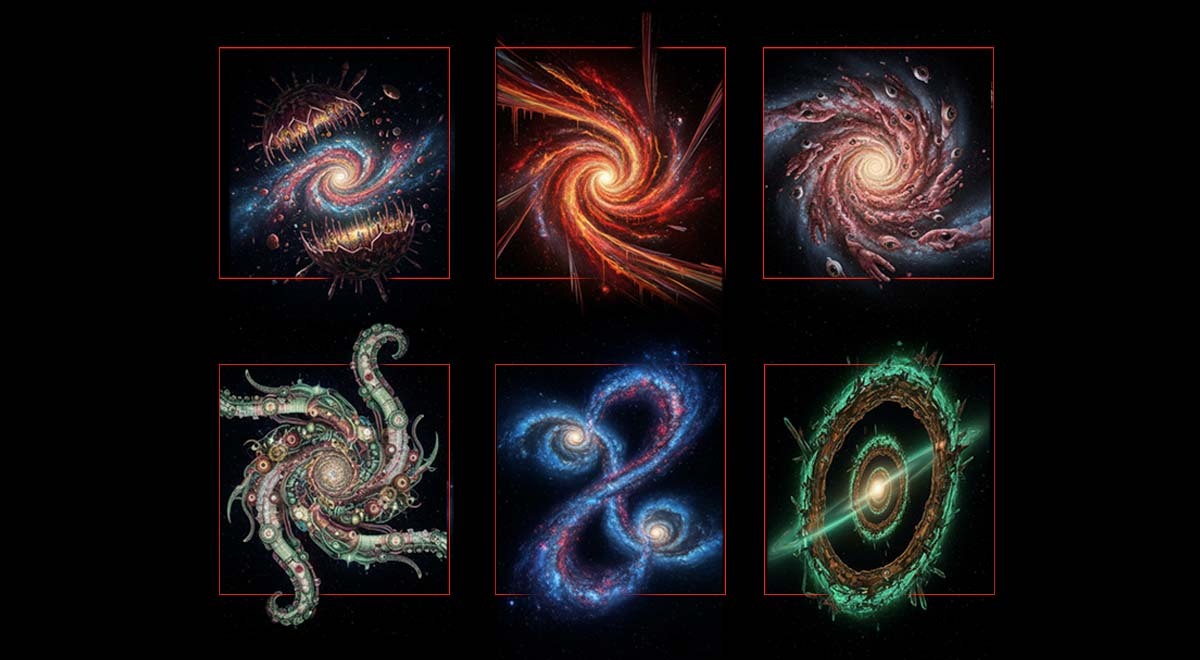
Image by Cybernews

 Follow us
A pioneering AI space detection system named AnomalyMatch has been used by NASA to scan over 100 million image cutouts from the Hubble Telescope imaging archive, and the results are impressive.
The system, functioning as a neural network similar to the human brain, flagged over 1,300 anomalies, with over 800 having never been described in scientific literature.
AnomalyMatch was developed by researchers at the European Space Agency (ESA).
Most strikingly, the AI scanner found 417 galactic mergers and interactions (with distorted shapes and star streams) and 138 gravitational lenses (bending light into arcs with surreal forms).
The system also picked up jellyfish-shaped galaxies that bleed gas as they tear through dense galaxy clusters, as well as hamburger discs – technically known as protoplanetary disks, with the light radiating from the young star within, shining on a thick layer of dust.



Researchers are using AI to uncover astrophysical anomalies in Hubble's archive!
undefined Hubble (@NASAHubble) January 27, 2026
This AI tool identified more than 1,300 anomalous objects in just 2.5 days... more than 800 of which had never been documented in scientific literature!
Learn how it works: https://t.co/UGv1w2QY66 pic.twitter.com/8K73cPiuEw
Cutting shapes
This dataset spans 35 years of the Hubble telescope's observations, with the human eye unable to scan millions of images over the decades.
And while AI excels at pattern recognition, human eyes may miss subtle distortions, or faint arcs, and simply move on to the next scan, as content gets buried in the archive under the sheer volume.
Because the AnomalyMatch has been so proficient at detecting historical oddities, researcher Pablo Gomez observed: “This is a powerful demonstration of how AI can enhance the scientific return of archival datasets.”
He went on to highlight the importance of looking ahead to the future: “The discovery of so many previously undocumented anomalies in Hubble data underscores the tool’s potential for future surveys.”
The ability to unlock these blind spots that we never knew existed isn’t going unnoticed. Upcoming research for NASA’s Nancy Grace Roman Telescope, which will probe into matters of dark matter and astrophysics, as well as ESA’s Euclid, and the Vera C. Rubin Observatory, will employ AI-assisted scrutiny.






Unlock more exclusive Cybernews content on YouTube