Anthropic accuses Alibaba of industrial-scale AI extraction as China unveils Mythos rival
In a bombshell geopolitical accusation, Anthropic says Chinese tech giant Alibaba has conducted an "industrial-scale" campaign to illicitly extract capabilities from its Claude AI models – just as Beijing unveiled its own answer to the company's powerful vulnerability-hunting system, Mythos.
Image by Primakov | Shutterstock

 Follow us
In a bombshell geopolitical accusation, Anthropic says Chinese tech giant Alibaba has conducted an "industrial-scale" campaign to illicitly extract capabilities from its Claude AI models – just as Beijing unveiled its own answer to the company's powerful vulnerability-hunting system, Mythos.
- Anthropic says operators linked to Alibaba generated nearly 29 million interactions with Claude in its largest known AI extraction campaign.
- China has unveiled its own answer to Mythos, a powerful AI system designed to discover software vulnerabilities.
- The developments highlight a growing US-China race over AI systems that could reshape both cyber defense and cyberattacks.
Key Takeaways by nexos.ai, reviewed by Cybernews staff.
Anthropic alleges massive extraction campaign
In a June 10th letter to Senate Banking Committee leaders, Anthropic said Alibaba and its AI lab, Qwen, used nearly 25,000 fraudulent accounts and generated 28.8 million exchanges with Claude in an apparent effort to siphon the model’s capabilities.
The letter was sent directly to Committee Chairman Tim Scott and Ranking Member Elizabeth Warren, according to Bloomberg, which first reported the story.






Anthropic accused Alibaba-affiliated operators of carrying out the campaign between April 22nd and June 5th in what it called "the largest known attack of its kind on the company" – raising concerns among an already weary cyber community that AI model extraction could become the next frontier of cyber espionage.
The letter, reviewed by Reuters, also labeled the campaign a form of “distillation” – a technique where a less capable AI model is trained on the outputs of a more advanced one.

Mythos fears shake defenders
More importantly, Anthropic warned that knowledge obtained from the extraction could accelerate China’s ability to replicate its most advanced AI systems, including Mythos Preview, the company’s high-powered AI cybersecurity model that has sparked national security concerns since its April release.
Fears that hackers could gain access to Mythos and use it to autonomously uncover and exploit unpatched vulnerabilities in record time have shaken defenders – even leading the Trump administration to ban the frontier model from all government agencies in June.






The new allegations follow earlier warnings from the San Francisco-based AI startup after Reuters reported that Mythos had identified vulnerabilities inside highly sensitive US government systems during a Project Glasswing testing exercise.
Project Glasswing has allowed more than 200 of the biggest technology companies to test Mythos' vulnerability-hunting and autonomous patching capabilities on their own systems.
The revelation came during congressional testimony earlier this month, according to Reuters.
Curious what others think about this story? Contribute your thoughts to the debate below.
Referring to the testimony, Reuters quoted Senator Mark Warner of Virginia as saying he had been informed by National Security Agency chief Joshua Rudd that Mythos "broke into almost all of our classified systems, not in weeks, but in hours."
It's also not the first time Anthropic has accused Chinese labs of illicit distillation.
In February, Anthropic said campaigns linked to Chinese startup DeepSeek and AI firms Moonshot AI and MiniMax generated millions of interactions with Claude, in apparent attempts to harvest data from the AI model – all to accelerate the development of their own systems.
China unveils its own Mythos rival
Meanwhile, while all this was unfolding Tuesday, the Chinese cybersecurity firm 360 Security Technology quietly unveiled its own answer to rival the Anthropic vulnerability-hunting model at the ISC.AI 2026 cybersecurity conference in Beijing.
Speaking at the event, 360 founder Zhou Hongyi introduced two AI security tools under the banner “Yitian Tulong,” or “Heavenly Sword and Dragon Saber,” Reuters reported.
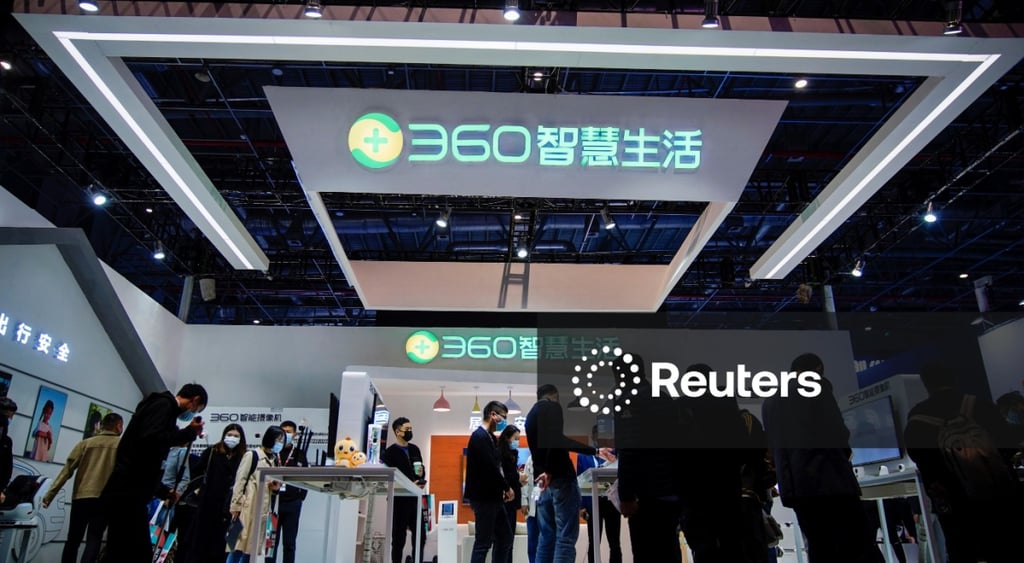
Zhou said one tool, “Tulongfeng,” was designed to automatically discover software vulnerabilities, even calling it “China’s version of Mythos,” while a second system, “Yitianzhen,” was built to automate cyber defense and incident response.
“This kind of powerful weapon that can change the landscape of cyber offence and defence cannot be held only by others,” Zhou said, according to a transcript published by 360.
Zhou described vulnerability-finding AI as a national strategic asset that could be used to defend critical infrastructure and gain an offensive cyber advantage, the news outlet said.
Unlock more exclusive Cybernews content on YouTube.