The Cosmic Report: a weekly UAP and space news digest
From final screams to orbital service stations – it has been a week of cosmic contradictions. In this week’s UAP (UFO) and space news digest, here’s what moved the needle.

Image by Cybernews

 Follow us
From final screams to orbital service stations – it has been a week of cosmic contradictions. In this week’s UAP (UFO) and space news digest, here’s what moved the needle.
As much as we might feel like screaming down here on planet Earth, we might not be the only ones.
The first days of 2026 have howled out loud. The leader of Venezuela was captured, and then the country was provided with free Starlink internet. With alarm bells ringing about territorial disputes, our civilization might feel like it's on the brink of collapse. That’s not our main focus here, however.
Panic signals
During the first few days of 2026, I was drawn to the idea that there might be alien civilizations out there in a state of crisis, rather than one of peace.






Columbia astrophysicist David Kipping has put forward the Eschatian Hypothesis, meaning that we should be looking out for extraterrestrial cultures that send out more pulsating signals than the ones we usually detect. An ominous-looking flare could be far more likely than a sophisticated approach from a stable colony.
The discussion accused NASA of gaslighting the public — downplaying UAPs with poor imagery while allegedly discussing far more advanced technology in private with figures like Bledsoe. We might not be the only ones experiencing a state of catastrophic energy bursts, so if we were to take a peek, an alien society might be in an even worse situation than we are.
"Eschatian" is Greek for final, and Kipping argues that our first signs of detection might be the “final scream” elsewhere. Instead of waiting for a radio signal, scientists should use field-wide telescopes, gearing up for that final roar into the night.






Light years of lies
NASA came under scrutiny this week on the American Alchemy podcast, as Jesse Michels and UFO experiencer Chris Bledsoe discussed the double standards at the space agency.
On the one hand, NASA distances itself from the UAP narrative, but on the other hand, it releases shoddy pictures, and amateur photography is often a cut above.
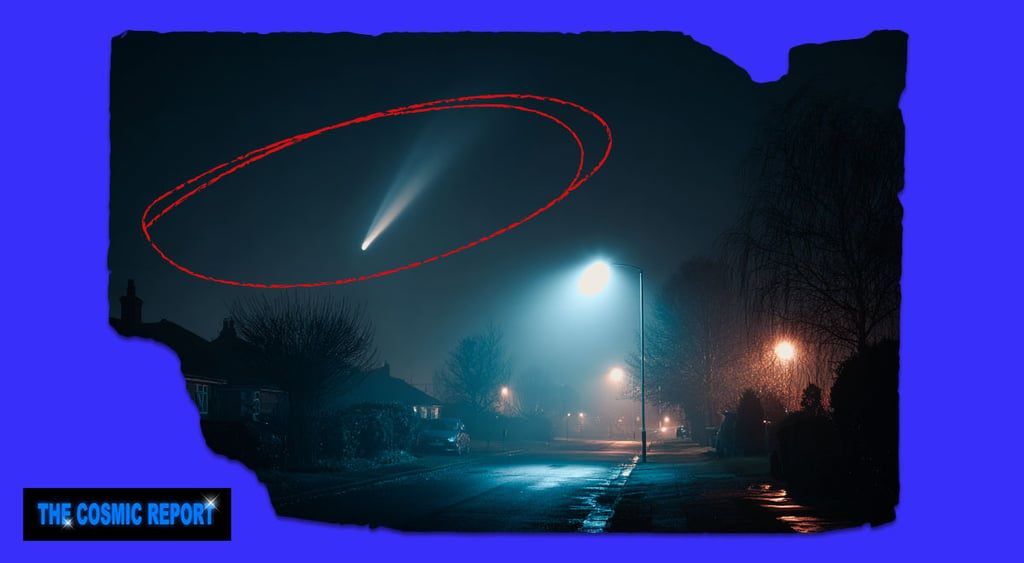
The discussion accused NASA of gaslighting the public, downplaying UAPs with poor imagery while allegedly discussing far more advanced technology in private with figures like Bledsoe.
The Reddit community huddled up over the topic, and the longer interview is an appealing slowburner, in and of itself.
Junkyard in the sky
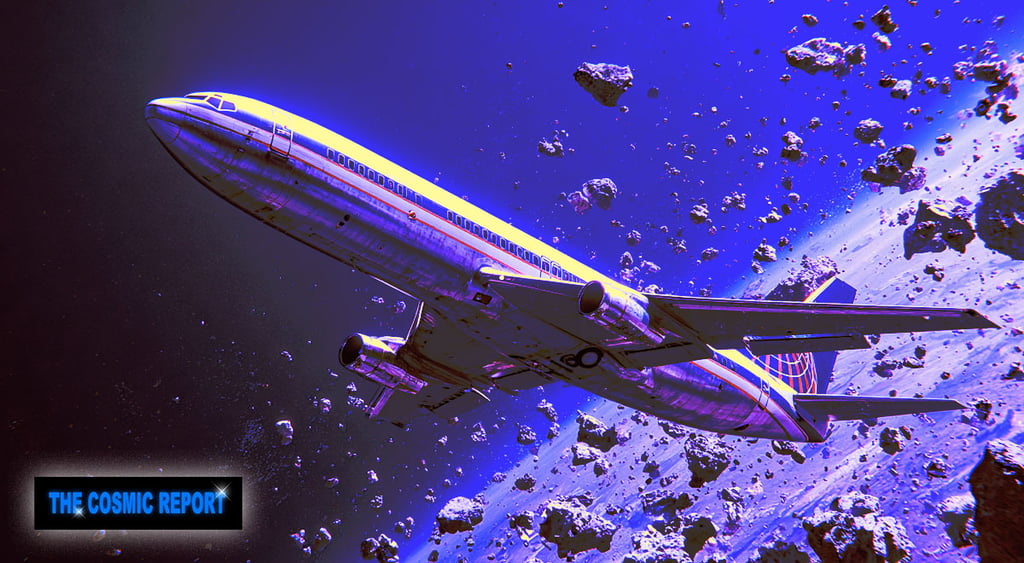
As if to prove that what’s floating around up there can affect us down here, experts are claiming that by 2030, there could be a 1 in 1000 chance that a commercial airplane flight could hit space debris.
And last year, we were alerted to the fact that as we speak, there’s a one in four chance that rocket debris can enter busy airspace. That’s definitely enough to make you want to let out a massive wail.
In terms of space missions this week, it’s been quite a patchwork. What was supposed to culminate at the end of February this year, NASA had to pull their six-month-long Crew-11 mission, due to one of the astronauts getting sick. This is the first mission they've pulled in the 25-year history of the ISS (International Space Station).
Meanwhile, there is more reason for optimism in India, as it could be redemption time for the ISRO (Indian Space Research Organization). After technical failings on a major satellite mission last May, the team hopes to make amends on January 12th. The C62 rocket is India's first attempt to gas up satellites mid-orbit, essentially opening the world’s first space-based service station to stop active tech from turning into dead debris.
Unlock more exclusive Cybernews content on YouTube.