Family sues OpenAI after school shooting left their 12-year-old girl with a “catastrophic brain injury”
A 12-year-old girl is fighting for her life in the hospital after a deadly mass shooting at a school in Canada. Now, her family is suing the maker of ChatGPT, OpenAI.
Image by Getty/Bloomberg

 Follow us
A 12-year-old girl is fighting for her life in the hospital after a deadly mass shooting at a school in Canada. Now, her family is suing the maker of ChatGPT, OpenAI.
The family of Maya Gebala is suing OpenAI after their daughter was critically wounded in the Tumbler Ridge School shooting in February 2026.
Gebala was reportedly shot three times at close range and suffered wounds to her neck, head, and cheek, which have left her with a “catastrophic brain injury.”
The young girl will likely have permanent cognitive and physical disabilities as a result of what some are calling one of the worst school shootings Canada has ever seen.
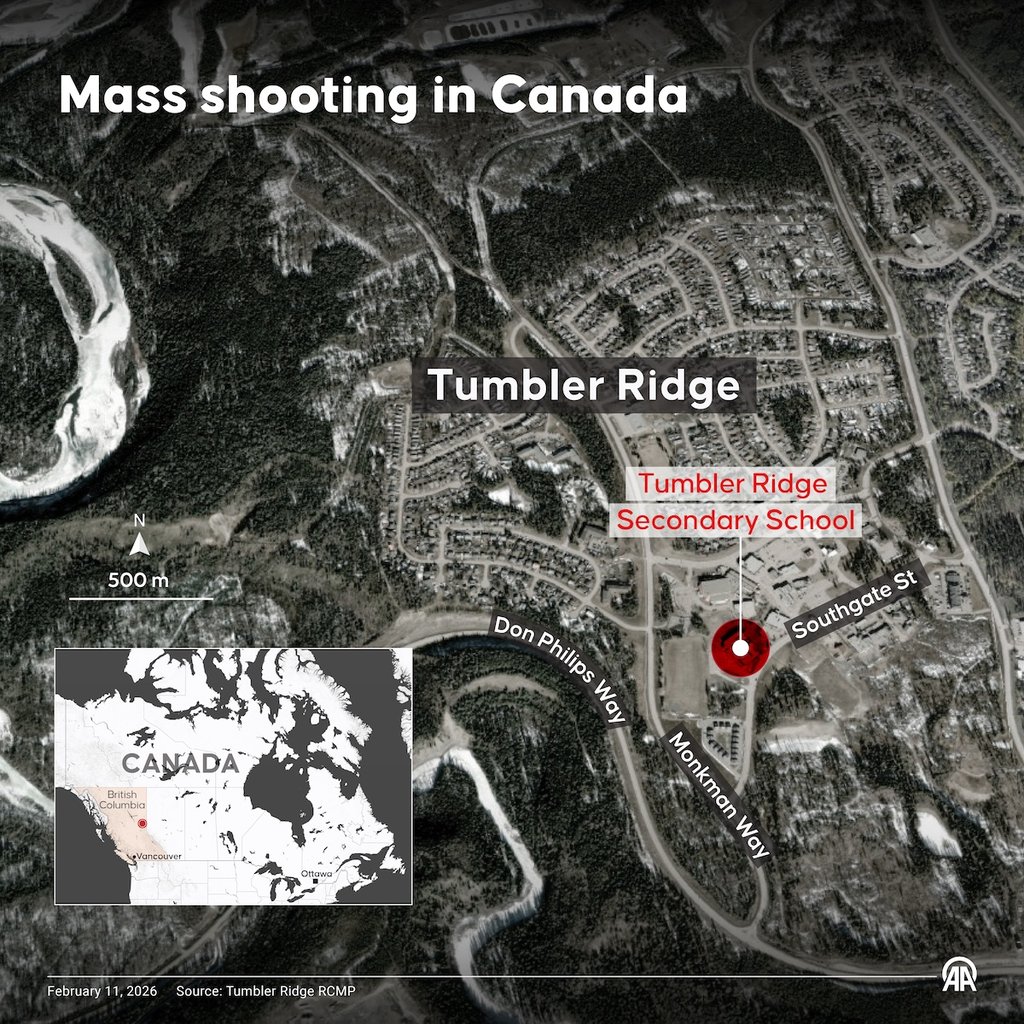





The shooter, Jesse Van Rootselaar, used OpenAI’s product, ChatGPT, to run through scenarios much like the one she carried out in February.
The lawsuit filed on behalf of Gebala and her sister Dahlia by their mother says that OpenAI was aware of Van Rootselaar's plans, as she’d used ChatGPT to role-play a mass shooting.
The shooter used ChatGPT around late spring or early summer of 2025 to generate and run through scenarios, which included gun violence. This exchange took place over several days.
Van Rootselaar's account was flagged as violating ChatGPT’s user policies, and the situation was handed over to human moderators.
Have thoughts about this topic? Others do, too. Join them in the discussion.
“Upon review, approximately 12 employees of the OpenAI Defendants identified the gun violence ChatGPT posts as indicating an imminent risk of serious harm to others and recommended Canadian law enforcement be informed of the gun violence ChatGPT posts,” the lawsuit found by Courthouse News alleges.
Despite calls from human moderators for OpenAI executives to escalate the issue and inform Canadian law enforcement, these higher-ups ignored their requests and instead decided to simply ban the account.
Although Van Rootselaar's account was flagged for inappropriate behaviour, she managed to bypass this ban by creating a second account.
From there, OpenAI failed to identify the second account that continued planning scenarios that involved gun violence.
The lawsuit accuses OpenAI of sitting on knowledge that could’ve helped avoid the devastating attack launched by Van Roostselaar, which subsequently resulted in the deaths of eight people and the maiming of many more.
OpenAI provided information to Canadian police only after Van Roostselaar had murdered eight people and killed herself, saying that the shooter's account had been closed, yet she easily evaded the ban by using a second account.
The way that ChatGPT is designed is also allegedly part of the issue, as the technology “served as trusted confidante, friend, ally" to Van Rootselaar.
“OpenAI specifically designed and trained GPT-4o to provide sycophantic and validating advice and guidance to users, regardless of whether such advice and guidance could be employed to cause clear and imminent harm to third parties,” the lawsuit alleges.
Lawyers accuse OpenAI of training its GPT-4o model to provide overly empathetic and emotional responses “to further cultivate emotional dependency of users.”
OpenAI’s sycophantic nature, coupled with the data it’s trained on, allegedly armed the shooter with information, guidance, and assistance when it came to planning an event such as the Tumbler Ridge mass shooting.
ChatGPT even informed the shooter of different methods for carrying out a mass shooting, the type of weapons to be used, and provided examples of other mass shootings and other acts of historical violence, the lawsuit alleges.
OpenAI promised to tighten security measures following the mass shooting.






Unlock more exclusive Cybernews content on YouTube.