How Israel could track Iran’s new supreme leader, Mojtaba Khamenei
Iran has appointed Mojtaba Khamenei as the country’s new supreme leader. Will Israel seek to track him down like it did his father, Ayatollah Ali Khamenei?
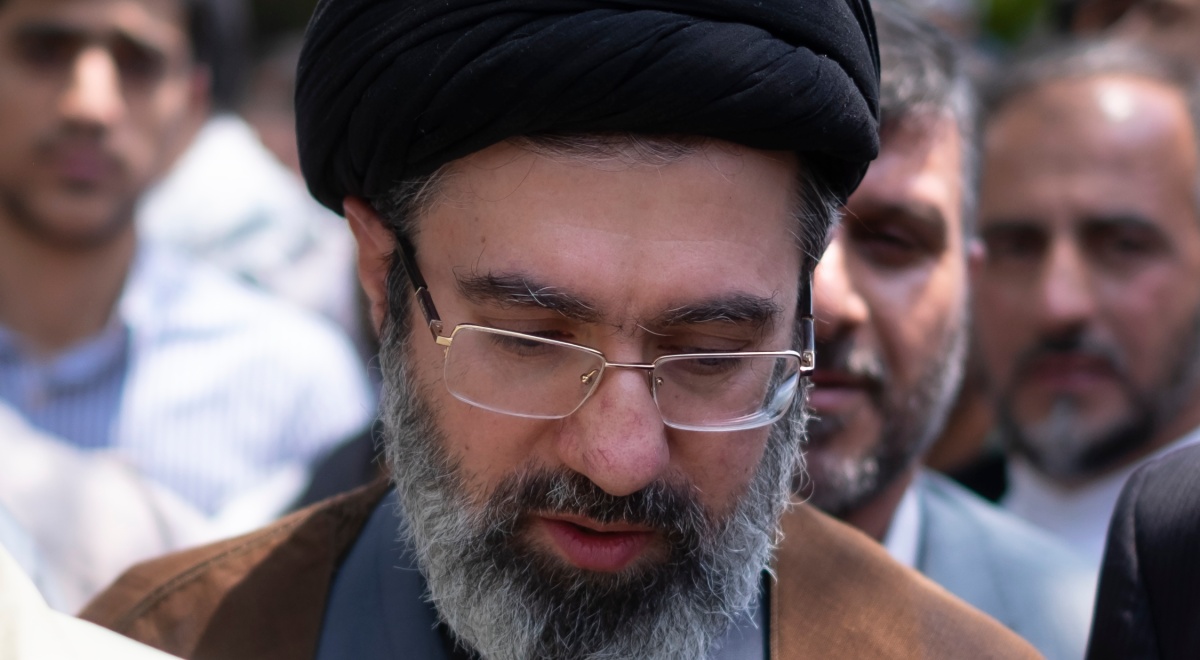
Nurphoto via Getty Images

 Follow us
Iran has appointed Mojtaba Khamenei as the country’s new supreme leader. Will Israel seek to track him down like it did his father, Ayatollah Ali Khamenei?
Ayatollah Ali Khamenei was assassinated during a joint US-Israeli strike on February 28th after months of preparations involving cyber intrusion, human intelligence, and advanced data analytics.
Israel had been reportedly following Khamanei and his officials for years before carrying out the assassination operation, including by hacking nearly all the traffic cameras in Tehran, according to some sources.
These images were encrypted and transmitted to servers in Tel Aviv and southern Israel, with one Israeli intelligence officer telling The Financial Times that “we knew Tehran like we know Jerusalem.”
This means the new head of state has his work cut out for him trying to survive in this hyperconnected world, encompassing surveillance cameras and phone networks, according to cybersecurity experts.






Collin Hogue-Spears, who has experience in nation-state cyber operations, agentic AI security risks, and software supply chain compromise, says that the very systems Iran set up to monitor protesters were used to track down its leader.
Crucially, Israel also had sources on the ground to confirm what the technology reported – in effect, a complex plan all clicking into place with years of preparation.
“That is not hacking in the traditional sense. That is moving into someone's house and watching them through their own security cameras,” Hogue-Spears explains.
This analogy explains how Israel has played the long game and may do so again with the new leader.
“Pattern of life” analysis
Far from being as high-adrenaline as a spy movie, the situation was more like a spreadsheet of daily routines, facilitated by AI, building what is known as “pattern of life” analysis through CCTV footage.
“[It reveals] when they leave for work, when the babysitter arrives, when the in-laws visit. Now scale that to an entire capital and hand the job to a machine,” says Hogue-Spears.
In other words, smart-city infrastructure can become a surveillance goldmine. Every individual within that system becomes instrumented.
The AI tracks every bodyguard, every driver, every aide. When all those tracked phones land on a single coordinate, the algorithm does not need to find the leader. It finds everyone around him and draws the obvious conclusion,Hogue-Spears says.
Algorithms that did not even exist a few years ago – when Israel reportedly started this tracking operation – were applied to analyse the data into detailed dossiers on security guards and other officials, including their addresses, hours of duty, and, most importantly, who they were usually assigned to protect and transport.
In addition to surveillance cameras and human assets recruited by Israel’s spy agency Mossad, the data was also gathered through other sources of intelligence, including Unit 8200, an elite Israeli military cyber unit.
Can the leader do anything to remain invisible?
Going off-grid may sound like the natural solution, but it can be counterintuitive, according to Hogue-Spears.
"This is the counter-surveillance paradox: going dark does not make you invisible. It makes you the one obvious hole in the data, and monitoring systems flag the hole fast," he says.
“When a moving convoy generates zero phone signals and zero camera appearances while everything else in the city broadcasts normally, that silence screams.”
The main defense would be to have dupe accounts and try to throw the system off course. Hogue-Sopears says it means “generating consistent fake data across networks your adversary has already compromised.”
The problem? No government has managed to do this successfully on a large scale.
The Cybernews community is talking about this. Be a part of the conversation.
“If your security doctrine treats 'going dark' as protection, you have built your survival strategy around the one behavior that modern AI is specifically designed to detect,” concludes Hogue-Spears.
Time will tell if Iran will be able to change its gameplan accordingly.