Meta delays the debut of "Phoenix" mixed reality glasses until 2027
Meta has delayed the release of its new mixed reality glasses under the codename “Phoenix” until 2027.

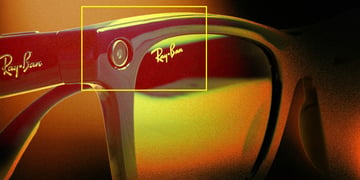
Image by Cybernews.

 Follow us
Meta has delayed the release of its new mixed reality glasses under the codename “Phoenix” until 2027.
Citing internal sources, Business Insider reported that the release was initially planned for the second half of 2026 but has been postponed until the first half of 2027. The timeline was announced in an internal memo viewed by Business Insider, sent out by Maher Saba, VP of Reality Labs Foundation, to employees.
The report added that Saba addressed the recent meeting with CEO Mark Zuckerberg, where Reality Labs (RL) leaders received feedback on their plans for 2026, which "focused on making the business sustainable and taking extra time to deliver our experiences with higher quality."
"Based on that, many teams in RL will need to adjust their plans and timelines," he said, according to Business Insider. "Extending timelines is not an opportunity for us to add more features or take on additional work."
Business Insider also viewed a separate memo, in which the head of the Metaverse PG Gabriel Aul and Ryan Cairns, who manages Quest VR hardware and Meta OS, said postponing the release date is "going to give us a lot more breathing room to get the details right."











They also said, according to Business Insider, "There's a lot coming in hot with tight bring-up schedules and big changes to our core UX, and we won't compromise on landing a fully polished and reliable experience."
The "Phoenix" mixed reality glasses were previously codenamed Puffin, and reportedly have a similar model to Apple's mixed reality glasses Vision Pro, weighing around 100 grams. The Information previously reported that the glasses have lower-resolution displays and weaker computing performance compared with high-end headsets like Apple’s Vision Pro – which, however, weighs around 650 grams.
The glasses are reportedly connected to a puck to power them, and although there was some scepticism amongst the leadership, it was decided to keep the puck to avoid the device from overheating and help keep it lighter.
Mixed Reality (MR) blends the physical and digital worlds, allowing computer elements to interact with your real-world environment. Many tech giants have raced to develop their own mixed reality devices. You can read our recent review of Samsung’s Galaxy XR mixed reality headset here.