Investigation reveals thousands of illegal upskirting videos from Oktoberfest
The videos flooded social media, some tweaked by AI to bypass moderation filters
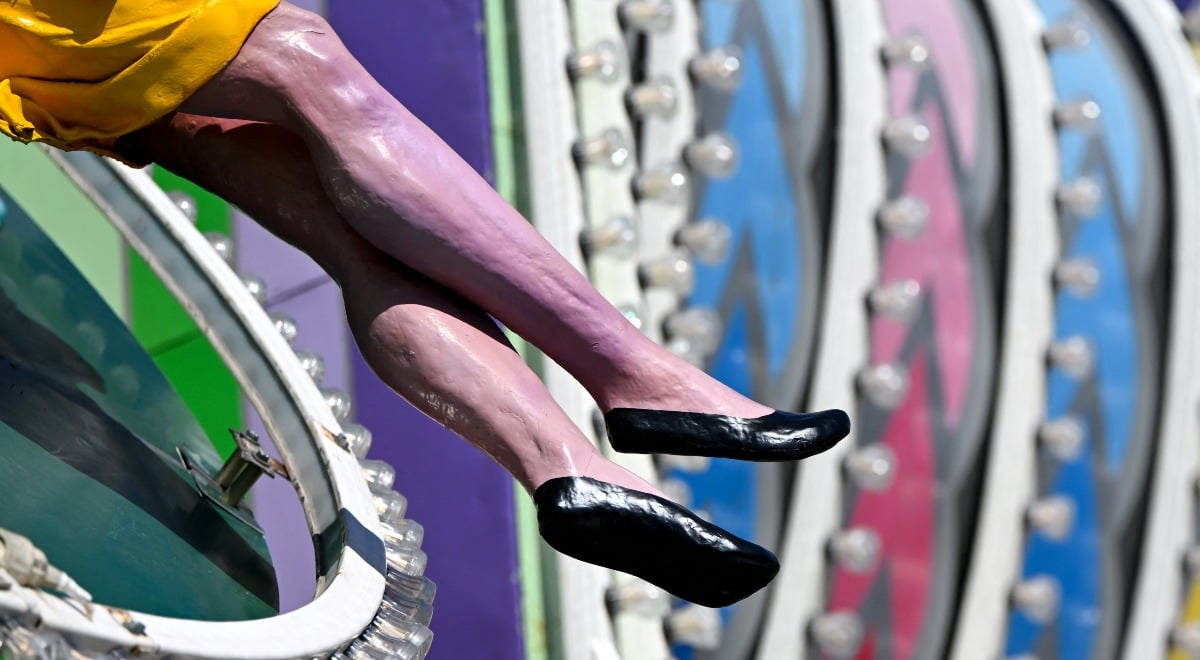
Teufelsrad. Image by Sven Hoppe/Picture alliance via Getty Images

 Follow us
- Investigators found over 32,000 Teufelsrad-linked videos on Meta, with thousands more on YouTube and TikTok.
- The videos appear to target women whose skirts or dirndls lift on Oktoberfest’s spinning Devil’s Wheel.
- Some accounts use AI-edited or AI-generated footage to avoid automatic moderation and promote paid subscriptions.
- Munich organizers warn visitors not to photograph strangers or upload recordings without consent.
Key Takeaways by nexos.ai, reviewed by Cybernews staff.
Tens of thousands of videos from the Oktoberfest festival, suspected of being recorded illegally, have been shared on Meta platforms, as well as YouTube and TikTok.
Videos were taken at Teufelsrad (“Devil’s Wheel”), a traditional Oktoberfest attraction where participants try to remain seated on a rapidly spinning disc, according to the German daily Süddeutsche Zeitung.
The footage focuses on women whose skirts or dirndls – traditional Alpine dresses – are lifted while the “Devil’s Wheel” moves.
Over 32,000 of Teufelsrad-linked videos were found on Meta platforms, with thousands more on YouTube and TikTok.





Many accounts distributing these videos list their locations in countries like Vietnam and Cambodia, while others are officially registered in the US. Some of these accounts have thousands of followers.




Stay updated with our latest stories and follow us on social media
Be the first to discover new stories, ideas, and updates from our team.
In some cases, real footage is tweaked with AI to bypass platforms’ automatic filters. AI-generated videos may simply portray women wearing dirndls while also promoting paid subscriptions, according to Süddeutsche Zeitung.
Oktoberfest, which takes place from September 19th to October 4th in Munich, has welcomed visitors with signs warning against taking photos of strangers and uploading recordings online without their consent.
The case once again illustrates the failure of social platforms to protect women and girls.
BBC discovered over 60 social media channels in 2026 posting the so-called “walking tours” videos that focus entirely on filming women in dresses and skirts, often recorded from behind or at low angles. Sometimes, these videos reveal intimate parts of the body.
Have thoughts about this topic? Others do, too. Join them in the discussion.
By posting these videos, creators earn money through the platforms’ monetization schemes.
Canadian content creator Sherif Elbishlawi was ordered to pay CAD$20,000 ($14,248) for sharing a stranger’s intimate images after he posted a video of himself lifting a woman while her underwear and partially her buttocks were exposed.
Many others, however, don’t face justice, while new technologies make harassment and exploitation less noticeable.
Male content creators now use camera- and microphone-equipped smart glasses to covertly record women, and post the footage online posing as pick-up artists.