“Human-assisted” robotaxis under fire in Washington
US auto safety regulators will host a public robotaxi forum with Waymo, Zoox, and Aurora as scrutiny grows over “human-assisted” self-driving and how autonomous vehicle safety should be measured.

Image by Iv-olga | Shutterstock

 Follow us
The National Highway Traffic Safety Administration (NHTSA) said Friday it is bringing top robotaxi executives to Washington next week for a public forum amid fresh scrutiny over the industry’s “human-assisted” self-driving systems.
- Robotaxis already operate daily in several US cities — but regulators are still debating how safe the technology must be before it scales nationwide.
- New revelations about human operators quietly assisting self-driving cars are raising fresh questions about how “autonomous” the technology really is.
- Next week’s federal forum will put robotaxi CEOs face-to-face with regulators trying to set the safety rules for America’s autonomous future.
Key Takeaways by nexos.ai, reviewed by Cybernews staff.
The full-day National AV Safety Forum will be held on Tuesday, March 10th to discuss real-world safety performance, crash risk assessment, remote assistance, and the next phase of autonomous vehicle deployment.
Executives from companies including Waymo, Zoox, and Aurora are expected to attend the meeting, alongside NHTSA regulators, industry researchers, and legal experts, as officials examine how autonomous vehicles already operating on US roads should be evaluated for safety.
The forum comes after recent revelations from Waymo that its robotaxi systems rely on remote human operators to assist self-driving vehicles in complex situations, raising new questions about transparency, cybersecurity, and how “autonomous” the technology truly is.
Among the speakers scheduled to appear alongside NHTSA Administrator Jonathan Morrison are Waymo co-CEO Tekedra Mawakana, Zoox CEO Aicha Evans, and Aurora CEO Chris Urmson.






According to the traffic safety agency, “The industry has progressed beyond the era of isolated testing, development, and pilot programs into a reality where robotaxis and commercial vehicles are now navigating American roadways daily.”
Human assistance behind “autonomous” driving
One of the key hotbed topics expected to dominate the discussion is the controversial practice of remote assistance – already in use by multiple robotaxi fleets.
As Cybernews previously reported, in early February Waymo's Chief Safety Officer (CSO) Mauricio Peña admitted to lawmakers at a senate hearing on the future of AVs, that the company employed “human agents” in the Philippines (and the US) to help guide Waymo robotaxis when faced with unusual driving scenarios.
Although Peña made clear that the human assistants did not actually have the ability to take over the Waymo vehicle and drive, he was unable to answer a plethora of pointed questions, such as if the live agents were properly vetted, had valid US driver’s licenses, and if they were trained to understand US road rules.
Lawmakers also raised questions about transparency, safety oversight, and potential cybersecurity risks, to which he could not answer.
Waymo alone reports more than 200 million fully autonomous miles driven on public roads, offering roughly 400,000 weekly rides in nearly half a dozen major US cities, including Phoenix, San Francisco, Los Angeles, Austin, Atlanta, and Miami.
The panel is expected to examine how remote assistance works and what risks it could introduce as autonomous vehicle fleets scale nationwide.

Check if your data was exposed
Find out if your email and related personal information have appeared in known data breaches.
How safe is “safe enough”?
Another major focus of the forum will be how regulators should measure the real-world safety of autonomous vehicles.
“While people have asked for decades, ‘How safe is safe enough?’, perhaps an even more important question is ‘How do you measure safety performance?’”- National Highway Traffic Safety Administration (NHTSA)
“While people have asked for decades, ‘How safe is safe enough?’, perhaps an even more important question is ‘How do you measure safety performance?’” the NHTSA asks.
That discussion panel will examine whether robotaxi safety should be compared directly with human drivers.
Experts are also expected to discuss new evaluation methods based on leading safety indicators, such as safety margin violations and behavioral metrics, rather than relying only on crash or fatality statistics.

As the autonomous vehicle industry pushes for broader deployment, Morrison has said the agency wants to support innovation while maintaining strict oversight of emerging risks.
“We are taking a measured approach – removing unnecessary, unintended barriers to this technology while maintaining strict safety oversight,” the NHTSA chief said.
Federal safety probes continue to mount
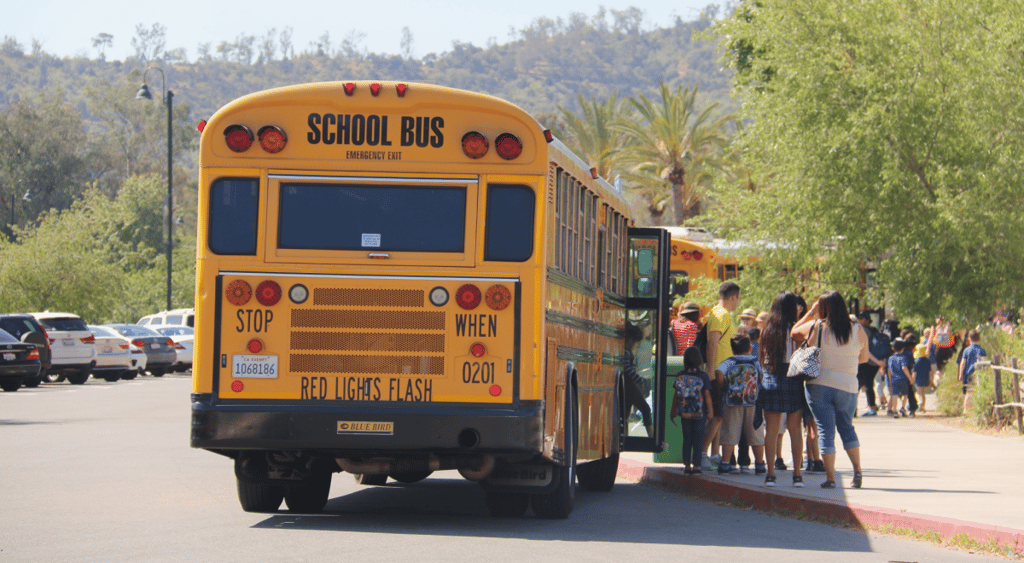
Federal regulators are already investigating several incidents involving robotaxis, including multiple cases in which Waymo robotaxis were observed driving past stopped school buses – a maneuver the AVs are programmed to avoid.
In one of those cases, the Waymo robotaxi reportedly struck a child crossing the street in front of a stopped bus on school grounds.
Meanwhile, Tesla’s driver-assistance system – marketed as Full Self-Driving (FSD) – has faced a slew of federal safety probes and lawsuits following crashes involving the technology, including at least 23 fatalities.
Last August, a jury found Tesla partially guilty for the 2021 death of a Florida women, finding the auto-pilot system defective and awarding a landmark $243 million judgement.
Since 2023, Tesla has been forced to recall over 2 million vehicles to update its fully automated driving software and add safety features that increase driver attentiveness alerts.
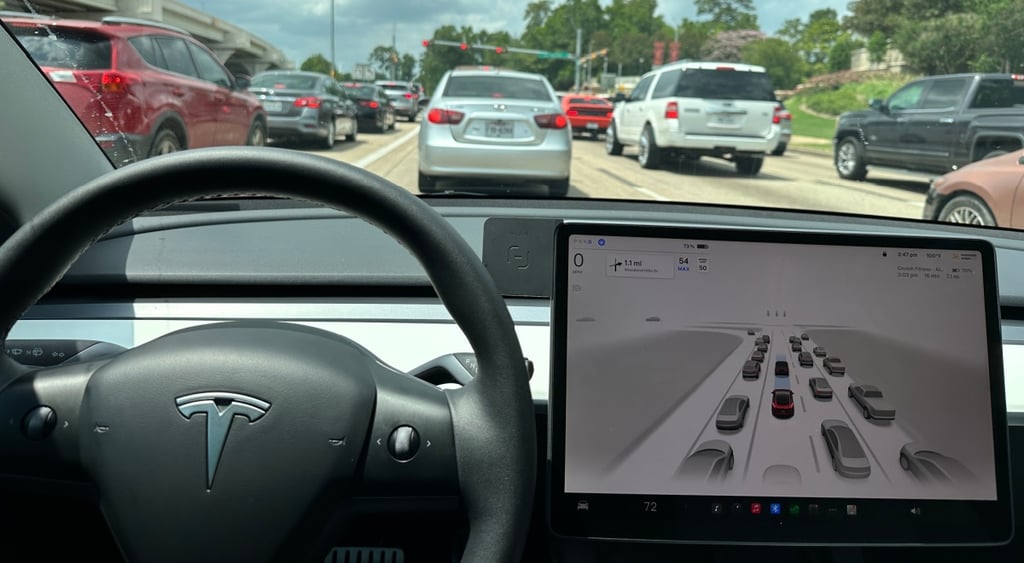
The NHTSA had said the software allowed Tesla cars to "exceed speed limits or travel through intersections in an unlawful or unpredictable manner," making them susceptible to crashing.
Taking place at the US Department of Transportation headquarters, the forum will kick off with a fireside chat and end with a feedback workshop to gather input on the various issues, while also featuring an “AV Showcase on Automation Plaza” with industry brands Tesla, Waymo, Zoox, Holon, and Lucid-Nuro-Uber.
Advanced registration was required for public attendees and is now closed, the NHTSA noted.
Unlock more exclusive Cybernews content on YouTube.