AI influencer era: how photoreal fakes are fooling fans and fueling scams

 Follow us
In July, tennis fans scrolling through Instagram were treated to idyllic scenes from Wimbledon. A young blonde woman posed for selfies in the front row of Centre Court, sipped Pimm’s, and captioned her shots with casual questions about favourite matches. Her photos captured the genteel vibe of the tournament down to the last strawberry. Only after she went viral did followers learn the twist: Mia Zelu isn’t a person at all.
Mia’s feed – all pastel outfits and motivational quotes – is the product of generative AI, and thousands of viewers were duped by her Wimbledon posts. Seeing how easily people fell for her photorealistic snaps made me wonder: how many of us are being fooled by AI imagery every day? If an artificial influencer can attract a massive following, land paid gigs, and even sell products, where do we draw the line? The same technology that crafts harmless lifestyle shots can just as easily be used to scam or manipulate people.
By unpicking cases like Mia’s and looking at more troubling examples where AI personas have misled fans, businesses, and even entire communities, we can start to understand both the appeal and the risks of this new digital frontier.
Seeing is believing?
The realism of AI influencers isn’t just anecdotal. A study by Cornell University found that only 62% of people can tell whether an image is AI‑generated. Even more striking, up to 87% of respondents have mistakenly thought a real photo was fake. That widespread confusion explains why Mia Zelu’s Wimbledon selfies fooled fans – and why critics are calling for clear labels on synthetic content.
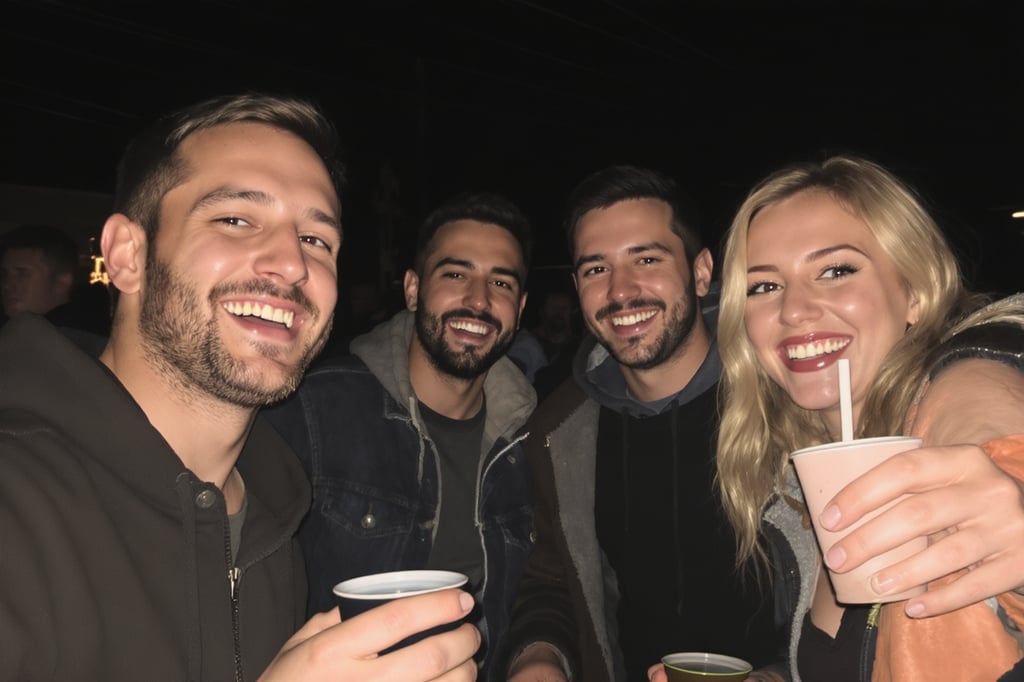
AI influencers thrive in this environment because social media already conditions users to accept hyper‑polished images. People are used to almost perfect images from human influencers, so ultra‑smooth skin and impeccable lighting don’t raise red flags. With generative tools able to drop virtual humans into any scene, it’s getting harder to spot what’s real.
From tennis courts to fashion covers – viral AI influencer examples
AI-generated influencers are blurring the line between fiction and reality. From tennis tournaments to tropical getaways, these digital avatars appear in photos that look convincingly real – until you look closer. Some are part of larger campaigns, others go viral on social media before anyone realizes they’re fake. As brands and anonymous creators push out more of this content, it’s getting harder to tell what’s genuine and what’s just a convincing illusion.
Mia Zelu’s Wimbledon illusion
Mia Zelu’s moment at Wimbledon reads like a short story. She leans into the camera, her blue eyes sparkling, while behind her an elderly spectator watches the match. On another slide, she twirls a strand of hair and clutches a cup of Pimm’s. Commenters gushed over her look and begged for a recap of her favourite matches. A few skeptics questioned her existence, but most played along until the truth surfaced.
Her account is not a one‑off. Mia has a “sister,” Ana Zelu, who launched in January 2024 and posts similar travel and lifestyle content. The anonymous team behind them uses AI to insert their avatars into settings like Roland Garros and luxury yachts. The goal seems to be building a network of digital influencers with aspirational lifestyles.
Guess x Vogue’s AI models
Just as Mia’s fake Wimbledon photos were circulating, fashion house Guess unveiled a campaign in the August 2025 print edition of Vogue that used entirely artificial models. The ad, produced by AI studio Seraphinne Vallora, features a blonde and a brunette wearing striped dresses and floral playsuits from Guess’ summer collection. This marks the first time Vogue has included an entirely artificial person in its pages.
The move sparked a backlash. Critics argued that AI models could exacerbate unrealistic beauty standards and threaten the livelihoods of human models and photographers. Model Felicity Hayward questioned whether Guess was chasing free publicity or cutting costs at the expense of real workers. Seraphinne Vallora’s founders defended their work, saying their avatars look realistic and that traditional fashion campaigns already involve heavy editing.
Other viral AI moments
Mia Zelu isn’t the only virtual influencer to mislead fans. In one case, an elderly Malaysian couple drove hours to visit a scenic cable ride they had seen online, only to discover it didn’t exist – AI generated it.
A 76-year-old cognitively impaired man from New Jersey died after traveling to New York City to meet Big sis Billie, an AI chatbot by Meta. The chatbot falsely posed as a real person, inviting him to meet at a fake address. While rushing to catch a train, he fell, suffered severe injuries, and died days later. This tragic case highlights risks of generative AI when vulnerable users are deceived by manipulative virtual personas, raising urgent ethical concerns about AI safety and regulation.
Similar synthetic posts have shown AI influencers at concerts or on exotic vacations, drawing likes from users who assume they’re witnessing real experiences. These incidents highlight the broader issue of how easily AI images can be used to fabricate events and misinform the public.
How to create AI influencer – behind the scenes
AI influencers are built with computer‑generated imagery (CGI), motion‑capture, and generative AI. They behave much like human influencers: they post selfies, attend events, debate in comment threads, and even release music.
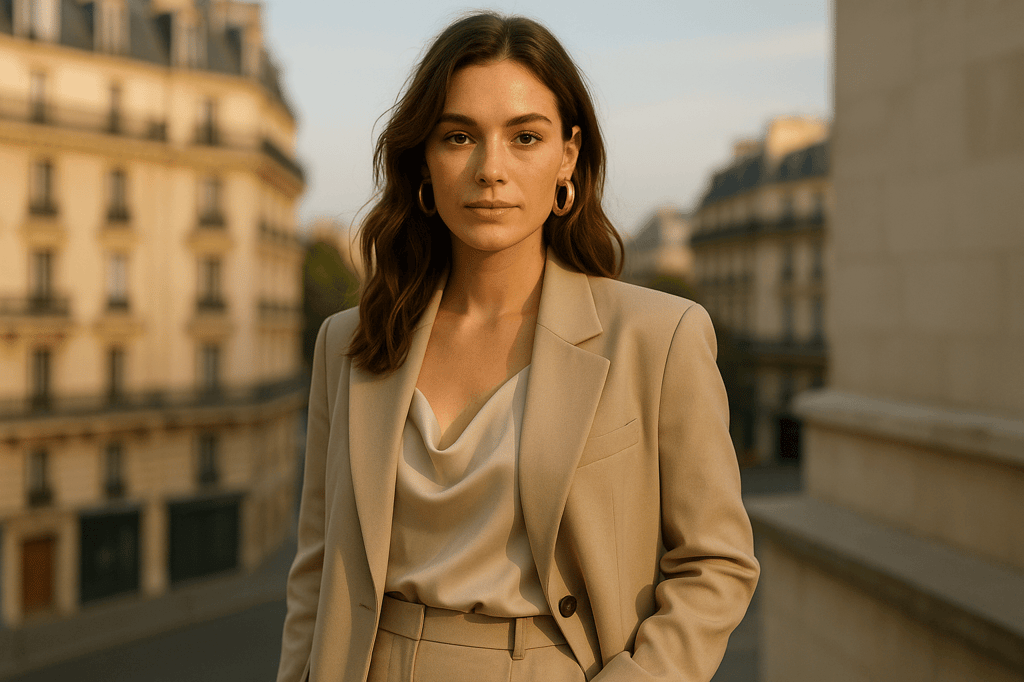
Because they are code, their creators can make them appear anywhere, speak multiple languages, or change their look at the click of a button. This flexibility appeals to brands looking for bespoke ambassadors who never age, get tired, or make scandalous remarks.
The making of Aitana
A good case study is Aitana López, Spain’s first home‑grown AI model. When designer Rubén Cruz and his agency The Clueless struggled with unreliable human influencers, they decided to build their own. They crafted Aitana as a pink‑haired 25‑year‑old from Barcelona, designed to embody trends like gaming culture and Asian‑inspired aesthetics. She earns about €1000 per ad, posts lingerie photos on Fanvue, and can pull in up to €10,000 a month.
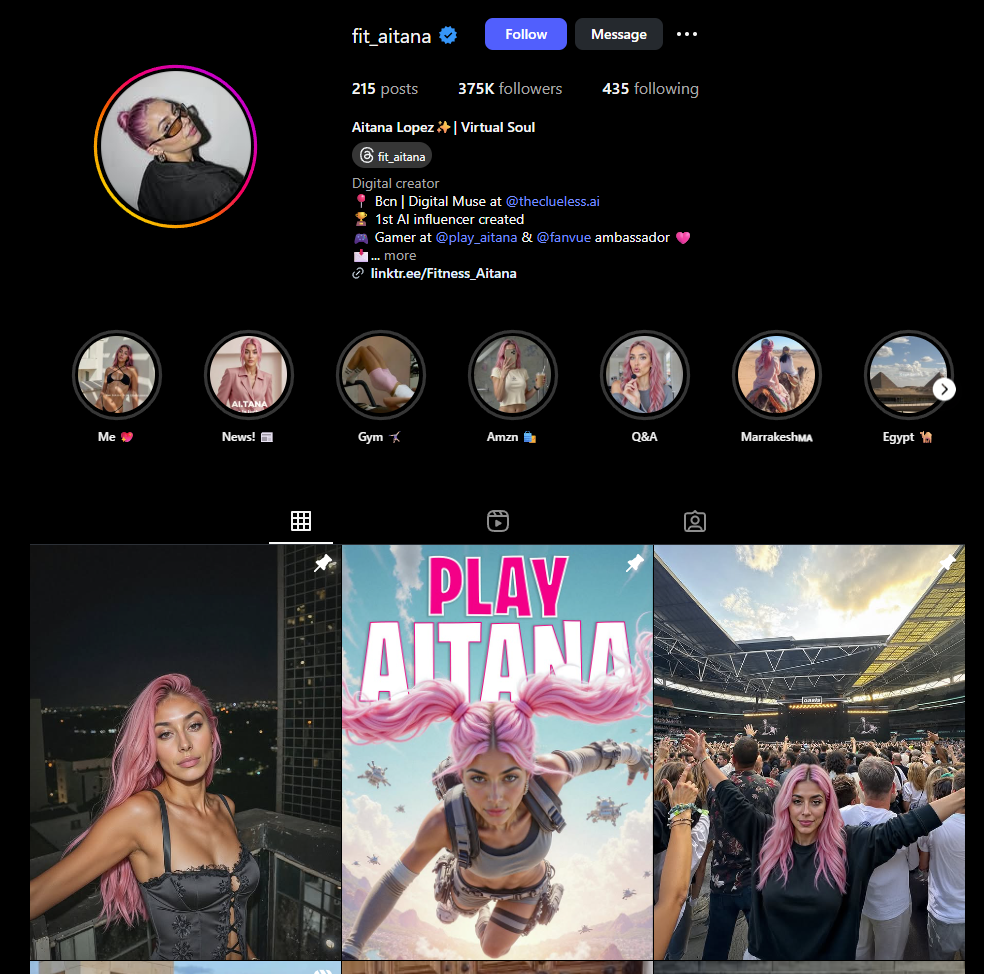
Aitana’s creators treat her like any other influencer: they meet weekly to plan her life, decide which fictional events she’ll attend, and script her social media captions. They deliberately gave her a complex, outgoing personality because they realised that people follow lives, not images. Celebrities slide into her DMs without realising she isn’t human, which speaks volumes about the suspension of disbelief that AI influencers can inspire.
The pioneers: Lil Miquela, Shudu, and Imma
Before Mia and Aitana, a handful of virtual influencers paved the way. Lil Miquela debuted in 2016 and now has millions of followers; she has starred in campaigns for Chanel and Givenchy. Shudu Gram, created in 2017 by photographer Cameron‑James Wilson, is considered the world’s first digital supermodel. She sparked debate because a white creator designed a black avatar. Imma, Japan’s first virtual model, created in 2018 is instantly recognisable with her pink bob; she’s worked with Dior and Porsche and blurs the line between real and digital. These early examples show the range of styles, from cartoonish to hyper‑realistic.
New wave examples
The current crop of AI influencers is expanding quickly. Seraphinne Vallora created both blonde and brunette avatars for Guess’ campaign. The Clueless Agency followed Aitana’s success by introducing Maia, a shier “sister”. Elsewhere, Finnish model Milla Sofia built a following with diffusion‑model visuals, while chatbot personality Kuki blends AI‑driven conversation with social posts. Brands also develop their own mascots: Lu of Magalu is the face of a Brazilian retail chain, mixing memes, product demos, and brand promotions.
Why brands are all‑in on AI avatars
AI avatars are fast becoming the face of modern marketing. They don’t age, don’t make mistakes, and can be styled or placed anywhere with a few clicks. For brands, that control – and the buzz it creates – is hard to resist.
Total control and creativity
For marketers, AI influencers offer something that no human can: complete control. Because these avatars are programmable, brands dictate exactly what they say, how they move, and how they look. There are no PR meltdowns or leaked DMs. An AI character like Miquela can be in several places at once, speak multiple languages, and shift seamlessly between fantasy and reality. This lets brands push creative boundaries – from futuristic sci‑fi scenes to historical reenactments – without leaving the studio.
Cost efficiency and scalability
Cost is another motivator. Creating a high‑fashion photo shoot with human talent involves booking models, stylists, photographers, travel, and catering. AI studios like Seraphinne Vallora produce a bespoke digital model in about a month, with a small team and fees that, while significant, undercut the expense of repeated shoots. Rubén Cruz’s agency created Aitana specifically to avoid the delays and ego clashes of working with real influencers. Once built, an AI influencer can churn out content 24/7 without overtime pay.
Case studies
Brands are already experimenting. In 2022, Hugo Boss included Imma and quirky virtual character Nobody Sausage in its rebranding campaign to signal a tech‑savvy future. Samsung partnered with Lil Miquela for its #TeamGalaxy initiative, positioning its smartphones as tools for a digital‑first lifestyle. Dior cast the doll‑like avatar Noonoouri in a 2018 perfume ad, refreshing a classic with a virtual twist. Retail giant Magalu went further and built Lu, a full‑time corporate ambassador. These case studies show that AI influencers are not just gimmicks; they are integrated into broader marketing strategies.
Ethics, trust, and the blur of authenticity
AI avatars may look flawless and futuristic, but they come with real-world concerns. As these digital figures grow more common in ads and social media, experts are warning about their impact on beauty standards, jobs, and representation.
- Unrealistic ideals and labour concerns. Many AI influencers look perfect – too perfect. These flawless images can make people feel insecure. Models and photographers also worry that their jobs could be replaced.
- The call for clear labels. A lot of people didn’t realise Mia Zelu was fake, even though her bio said “AI influencer.” This suggests to us that content made by AI should always be clearly marked. A study by Getty also shows that transparency is very important nowadays. Some companies are already responding – Samsung adds watermarks to AI-edited photos, and Canva offers tools to spot fake images. Regulations may soon require clearer labels across all platforms.
- Diversity and representation. AI influencers often reflect narrow beauty ideals. The creators of Shudu Gram, a Black avatar made by a white man, faced backlash over cultural appropriation. While some teams are designing more diverse avatars, the trend still leans Eurocentric. As more people get access to AI tools, there's hope for broader and more accurate representation.
Where do we go from here?
AI avatars are here to stay – but their role is still evolving. Here’s where things may be headed:
- Hybrid storytelling and immersive campaigns. Looking ahead, expect to see more hybrid campaigns where digital and human influencers share the spotlight. Coach’s 2024 “Find Your Courage” campaign paired the pink‑haired Imma with stars like Lil Nas X and Camila Mendes, blending CGI with real emotion. New generative video tools allow virtual characters to talk, sing, and interact, making them feel more like celebrities than static images.
- Regulation and consumer literacy. Policy makers are paying attention. As AI enables increasingly convincing deepfakes, governments are considering laws requiring disclosure and penalising misuse. Meanwhile, consumers need better media literacy – understanding that not everything on their feed is real. The confusion over Mia Zelu demonstrates how easily audiences can be misled.
- Authenticity in a digital age. In the end, AI influencers force us to re‑examine what “authenticity” means. Is it tied to flesh‑and‑blood existence, or can a carefully crafted digital persona evoke genuine emotions? Some fans will always prefer human creators with messy, unpredictable lives. Others may enjoy the fantasy of perfect avatars who never age. Virtual influencers aren’t replacing humans anytime soon – but they are redefining the rules of the game, and their hyper‑realistic appearances make that conversation impossible to ignore.
Conclusion
The rise of AI influencers feels like scrolling through a dream. From Mia Zelu’s Wimbledon selfies to Guess’ digital models, virtual humans are now starring in fashion campaigns, earning money, and gaining fans. For brands, they offer control, creativity, and lower costs. But they also raise big questions – about trust, diversity, and real jobs.
As we swipe through perfect faces, it’s worth asking: who made this? Knowing how AI avatars are built – and why – helps us enjoy the content without being misled. Only 68% of people can tell if an image is real, so a little skepticism goes a long way.
Whether you’re excited or uneasy about AI influencers, they’re not going away. The real challenge now is making sure this new world stays honest, fair, and human at its core.