3I/ATLAS: Should you book your holiday before October 29th?
As scientists worldwide speculate about the giant comet 3I/ATLAS, we look to NASA, the Galileo Project, and other sources to try to make sense of it all.

Image by Cybernews

 Follow us
As scientists worldwide speculate about the giant comet 3I/ATLAS, we look to NASA, the Galileo Project, and other sources to try to make sense of it all.
The headline here comes in jest as Harvard's Avi Loeb ramped up the hype. He was talking about 3I/ATLAS, a newly discovered interstellar comet that’s set to get within touching distance of the sun on October 29th (a Thursday for your calendars).
Around that time, the comet will become briefly unobservable, which means that conspiracy chatter will thrive, especially in the build-up to Halloween.
Loeb suggested on his blog, kookily comparing the comet to a blind date, that there was a 30-40% chance that the object could be of technological origin, perhaps a ship masquerading as a comet.
IFL Science even put it on its X account, setting Loeb apart from other scientists. The quote sounds cinematic and Armageddon-esque, but scientists elsewhere (like at NASA) are quietly observing a comet.




undefinedIf you want to take a vacation, take it before then, because who knows what will happen?undefined astronomer Avi Loeb said, but most other scientists are pretty sure what will take place. https://t.co/yyhsVqimUk
undefined IFLScience (@IFLScience) October 21, 2025
Could it be aliens?
Prominent science commentator and YouTuber Hank Green set out to debunk the idea. He claimed in a recent video that he wants there to be aliens, but that scientists often cling to the idea that there’s life out there, even in the face of weak evidence.
And as the 3I/ATLAS comet has an unusual trajectory, as it would by default, the telescopes are simply spotting an anomaly. In the purest terms, an anomaly needn't be an alien.
What 3I/ATLAS actually is (and isn’t)
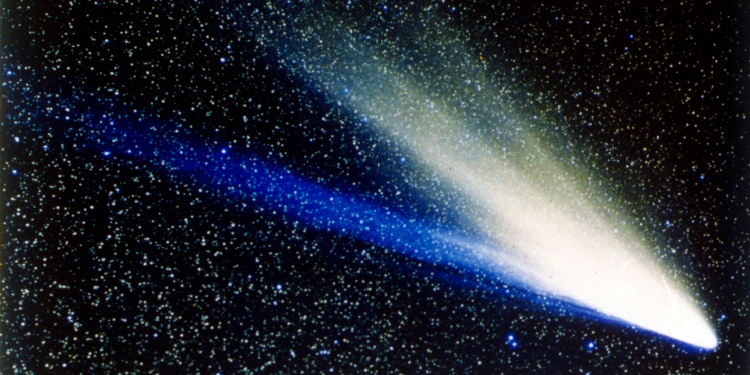
NASA calls it “the third known interstellar object to pass through our solar system,” following Oumuamua and Borisov.
The “I” in its name stands for interstellar, in other words, not bound to the sun gravitationally. It also bears no association to the movie, the kind of hyperbole that NASA is inclined to avoid.
NASA’s data is blunt: 3I/ATLAS is currently 170 million miles away from Earth (that’s around twice the distance from the Earth to the Sun), representing no danger to us whatsoever.
It’s projected to swing by the sun, loop into Mars’ orbit for a bit, and then skidaddle off into deep space forever. Its size is predicted to be anywhere between 440 metres and 5.6 kilometers, and it is full of ice, dust, and nickelMultiple NASA missions are tracking the comet with a myriad of telescopes, and even Mars personnel are delegated with comet-watching responsibility.
The comet's visibility will be better in December (around a week before Christmas), which will either fuel or quell the speculation again, depending on what the scientists say.
Should we listen to Loeb?
Loeb isn’t just some nutjob in a basement. He used to chair Harvard's astronomy department and is the head of the Galileo project, an international scientific project searching for extraterrestrial intelligence.
He’s earned the right to speculate, having published hundreds of papers on the topic, notwithstanding his tendency to veer away from straight science once in a while.
That said, his hyper-inflated 30-40% chance that it’s not a natural mass might be a bit much. And Loeb’s “book your holiday before October 29th” isn’t designed to make you pack sunscreen for the apocalypse – it’s more of a philosophical musing that’s likely designed to tickle the public's curiosity about a rare astronomical event.
Chances are, we’re going to be just fine.
Unlock more exclusive Cybernews content on YouTube.