Aliens might already be listening: are they mapping Earth’s cosmic signals?
Earth’s radio signals may already be reaching alien civilizations, according to new research from Penn State and NASA.
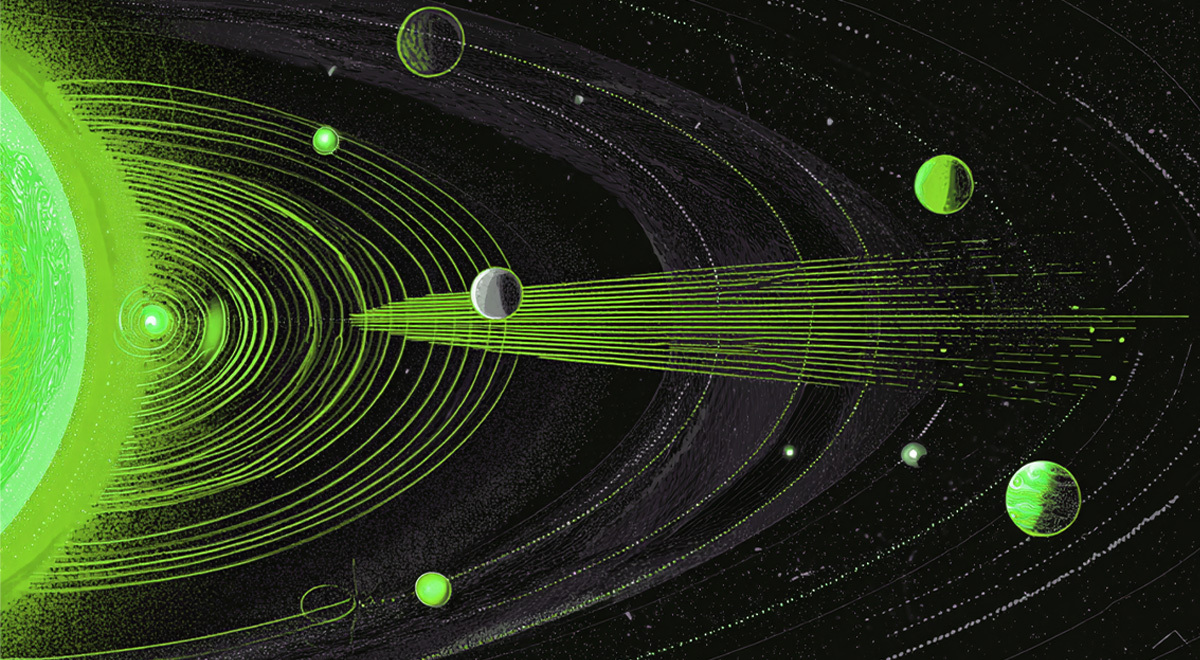
Image by Cybernews

 Follow us
Earth’s radio signals may already be reaching alien civilizations, according to new research from Penn State and NASA.
Our beloved Earth is always leaking radio noise, the kind that, at least in theory, aliens out there could tune into.
Researchers at NASA and Penn State looked at which planetary lineups make our signals stand out the most in space.
Pinchen Fan, a research scientist involved in the study, said, “A distant spacecraft or planet positioned along the path of these interplanetary communications could potentially detect the spillover.”
Basically, our everyday chatter could be giving us away. Imagine your favorite late-night KEXP session drifting out into deep space, picked up by who knows where.






How the signals travel
They lined up NASA’s Deep Space Network transmissions with planetary positions to track how the signals spread out.
They skipped the near-Earth stuff, since orbit-level signals are far too weak for aliens to catch.
Joseph Lazio, senior scientist at NASA’s Jet Propulsion Laboratory, noted, “NASA’s Deep Space Network sends some of humanity's strongest and most persistent radio signals into space.”
Tracing these paths shows where alien watchers might actually have a shot at catching Earth’s broadcasts.

Which aliens could listen?
Alignments with Mars give the highest chance, at around 77%, for Earth signals to be detected by aliens.
Lineups with Venus, Jupiter, or Saturn give only about a 12% chance of our signals being noticed.
Randomly placed exoplanets, meanwhile, have almost no chance of stumbling across our chatter.
SETI (search for extraterrestrial intelligence) could boost its odds by pointing the search along the same routes our signals naturally travel.

Looking out, sending out
The study hands SETI a kind of roadmap for where aliens would most likely spot us first.
Pinchen Fan added, “Considering the direction and frequency of our most common signals gives insights into where we should be looking.”
The more we explore space, the more likely it is that some of our signals end up in front of alien eyes and ears (assuming they have any).
Jason Wright, an astrophysicist at Penn State, explained: “Using our own communications as a baseline quantifies how future searches for intelligent life could be improved.”
So while it’s still early days, perhaps your Spotify playlist is being enjoyed somewhere light years away.