One ape attended “a tea party” and proved they have an imagination
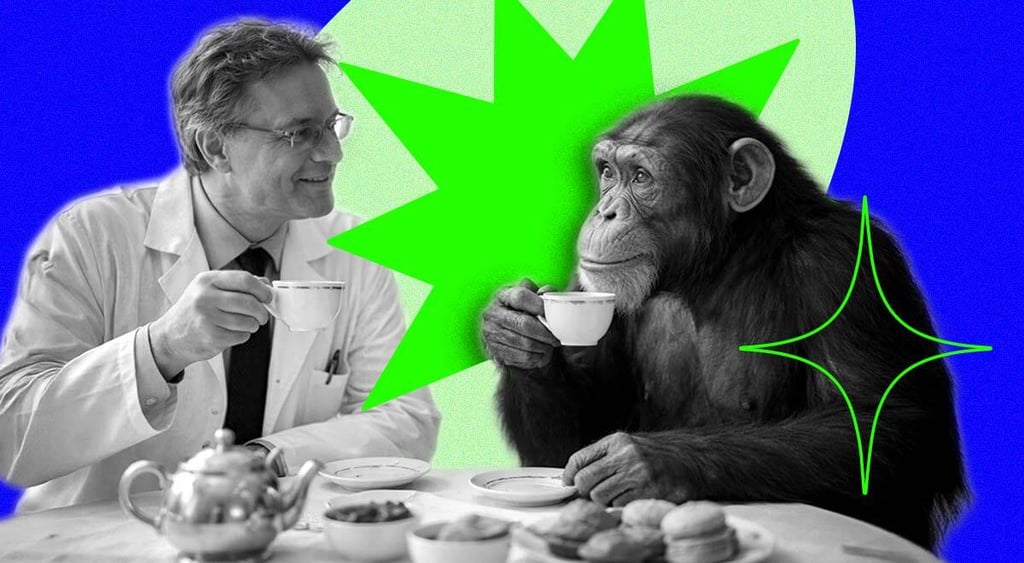
The party attendees included a few US scientists and Kanzi – a 43-year-old bonobo, a species of great ape. One sip led to another, and a remarkable scientific discovery was made.
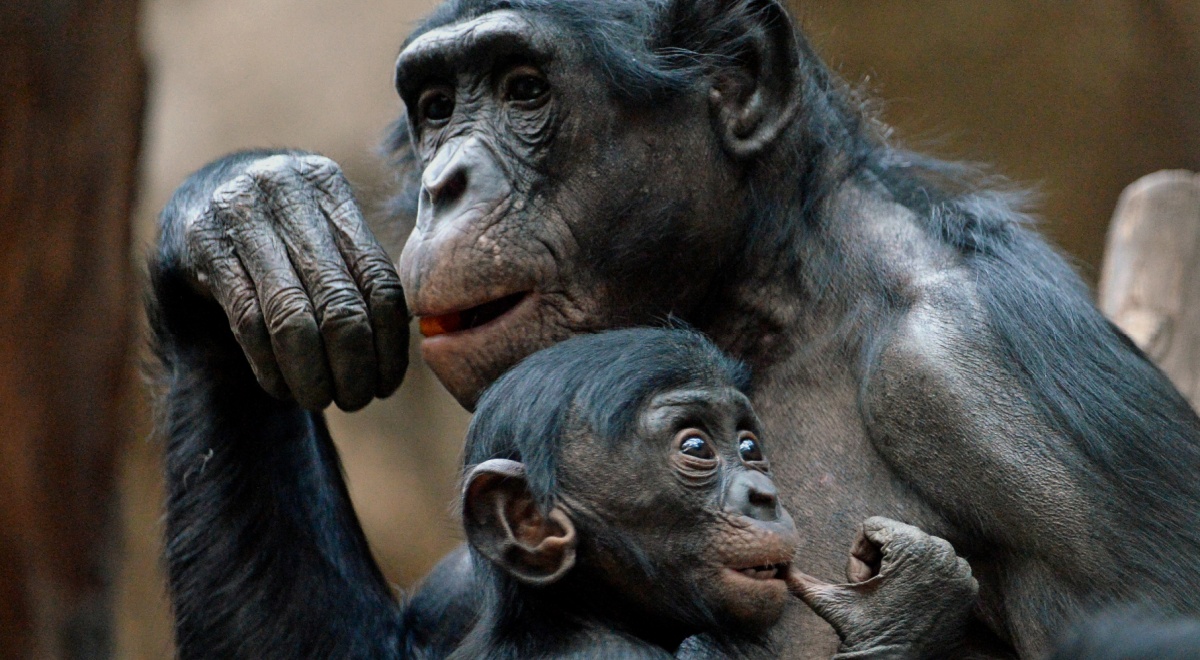
Bonobo baby Kasai in the arms of mother Yasa. Photo by Hendrik Schmidt/picture alliance via Getty

 Follow us
The party attendees included a few US scientists and Kanzi – a 43-year-old bonobo, a species of great ape. One sip led to another, and a remarkable scientific discovery was made.
Being imaginative has long been understood as an ability exclusively attributed to humans. However, a new experiment at Johns Hopkins University in the US has proven this to be wrong.
Scientists have invited Kanzi to three tea party-like experiments, and they didn’t get far from what we imagine in a children’s book.
Kanzi could somewhat “talk” with the scientists, as the ape was trained to use over 300 lexigram symbols to communicate. The goal of the experiment party was to check if he could recognize pretend objects, such as imaginary juice or grapes, and tell them apart from real ones.



It’s what we do as kids – pretend to spin a plate instead of a riving wheel or use sticks for a sword fight. Turns out, we are not alone in this ability.
How did the three parties go?
1. The juice party
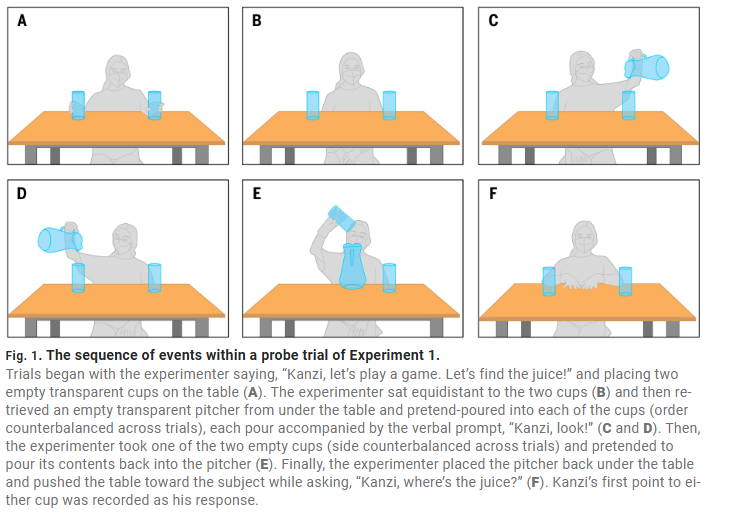
Kanzi was presented with two empty cups. The scientists poured imaginary juice into both and then pretended to change their minds and pour one cup back into the jug.
He was then asked to point out the cup with the juice, and he pointed to the one that wasn’t poured back. Kanzi selected the correct cup in 34 of 50 unreinforced probe trials.
“These data suggest that Kanzi succeeded at this task by successfully representing pretend liquids and tracking their displacement,” claimed the experiment.
2. The reality-check juice party
After the first successful “party”, the scientists needed to rule out the possibility that Kanzi was either very lucky or that perhaps he wasn’t imagining anything at all but simply believed the cups to contain juice.
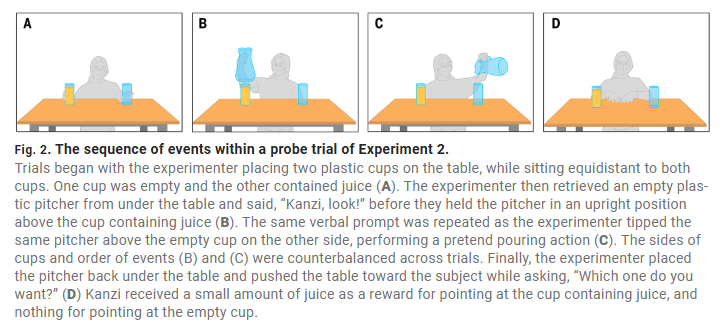
So, this time the ape was again presented with two cups, but only one actually contained juice while the other was empty. Scientists pretended to pour from an empty pitcher over the empty cup, and performed a neutral, non-pouring action over the cup with real juice.
If Kanzi had truly believed that the pretend pouring created real juice, he should have been confused and chosen randomly between the two cups. However, Kanzi consistently pointed to the cup with real juice.
According to the researchers, this showed that Kanzi wasn’t “getting lucky” in the first experiment, and he wasn’t mistaking pretend actions for real ones. He understood that one cup held real juice, while the other only contained make-believe juice, and most importantly, he could keep the two clearly separate in his mind.
As the study puts it, Kanzi demonstrated that “he could distinguish real and pretend juice and that his success in the original experiment did not reflect a mistaken belief that the manipulations involved real juice.”
3. Third party: the grape gala
In a nutshell, the researchers repeated the experiment with grapes instead of juice, placing them in transparent jars. After observing a pretend placement of a grape and a pretend emptying of one jar, Kanzi correctly identified the jar containing the pretend grape 69% of the time.






So what did these experiments prove?
The experiments have proven that some apes are capable of taking part in make-believe activities and, in a way, extend themselves outside of the present.
Psychologists call this “secondary representations” – certain conditions that “we know aren’t “real” but that we nonetheless engage with, like fake drinking in a tea party or lighting off enemies with a piece of cardboard as a heroic shield.

Until now, it’s been unclear whether animals could form these kinds of representations. Kanzi showed that humans are not alone in this ability, the research editor Sacha Vignieri wrote.
It’s important because these experiments were carefully controlled to rule out alternative explanations for a primate’s success, such as guessing, imitation, or responding to cues from the experimenter.
“Our findings suggest that some nonhuman animals can generate secondary representations that are decoupled from reality, and that this capacity was likely within the cognitive potential of our last common ancestor with other apes, which lived 6 to 9 million years ago,“ writes co-author Christopher Krupenye.
Researchers also note that Kanzi’s enculturation and language training may have helped him demonstrate these skills, though evidence suggests that even non-enculturated apes may possess basic secondary representational abilities.
Unlock more exclusive Cybernews content on YouTube.