Astronomers catch a black hole “UFO” in real time – a first-of-its-kind cosmic event
Astronomers have observed an ultrafast outflow (UFO) forming immediately after a black hole for the first time in human history. The outflow reached 19% of the speed of light, revealing extreme physics unfolding on a human timescale.
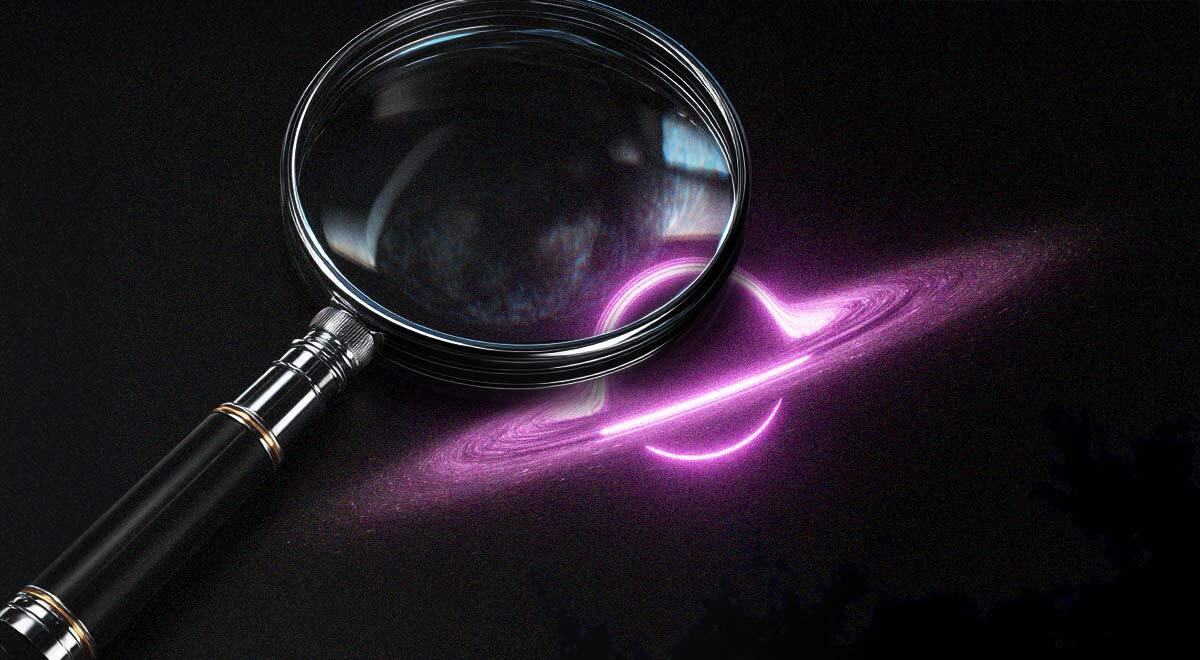
Image by Cybernews

 Follow us
Astronomers have observed an ultrafast outflow (UFO) forming immediately after a black hole for the first time in human history. The outflow reached 19% of the speed of light, revealing extreme physics unfolding on a human timescale.
“We’ve never watched a black hole create winds this quickly before,” says Liyi Gu (SRON – Space Research Organisation Netherlands).
The observations were made using European Space Agency’s (ESA) XMM-Newton and Japan Aerospace Exploration Agency’s (JAXA) XRISM telescopes, with the triggering event a solar-flare-like magnetic reconnection near the black hole.
“It’s the same engine that powers our Sun’s eruptions, just scaled up millions of times,” explains Gu.
The event, which occurred in July 2024 (and is extremely complex, requiring many months to analyze), took place 130 million light-years away. Hard X-rays spiked first, followed by softer X-rays, which matched models of flare-driven eruptions, and the NGC 3783 orientation provided scientists with a direct, face-on view of the black hole.





“It’s astonishing how familiar these processes look across radically different cosmic scales,” says ESA astronomer Erik Kuulkers.
Its central black hole is active and bright.
“This is one of the best galaxies for studying black hole weather,” notes Kuulkers. The galaxy’s structure is well-mapped, making anomaly detection easier.
“This galaxy is basically a training ground for learning how black holes feed and erupt,” says Gu.
The ultrafast wind that was observed appeared 12 hours after the flare, which is essentially instant on the cosmic timescale.
The UFO winds help regulate star formation by ejecting material. This subsequently connects black hole activity with galaxy evolution. Next, the velocity matches predicted limits for magnetically driven winds.






What’s at play here is essentially solar physics at supermassive scales, and what’s thrilling for scientists is that they’re able to consistently probe the vast expanse of the whole nine yards.
“The Universe uses the same playbook everywhere,” notes Kuulkers.
“This will become a benchmark dataset for AGN (Active Galactic Nucleus) simulations in the 2030s,” added another XRISM team member.
Despite the name, this UFO has nothing to do with alien spacecraft. Astronomers use the term “ultrafast outflow” to describe winds of superheated gas expelled by a black hole at extreme speeds.
“Catching an event like this in real time is like seeing lightning and thunder together for the first time,” says Gu.
Unlock more exclusive Cybernews content on YouTube.