Born dry – the cosmic impact that made Earth blue
A violent collision with the hypothetical planet Theia may have delivered Earth’s water and set the stage for life.

Image by Cybernews

 Follow us
A violent collision with the hypothetical planet Theia may have delivered Earth’s water and set the stage for life.
The solar system was formed around 4.6 billion years ago, but our beloved planet Earth developed all its key features relatively quickly, a bit like a fast-track start-up.
In the absolute beginning, it was a dry and barren rocky planet with almost no water or carbon. However, researchers at the University of Bern have found that a potential planetary collision shaped Earth’s composition early and emphatically.
This collision may have been with the hypothetical planet Theia, which has a strong scientific consensus claiming this Mars-sized planet was around at the beginning of the solar system's dawn.
Collision with Theia

It’s still not fully understood how life on Earth started. However, Dr. Pascal Kruttasch, in his research for the Institute of Geological Sciences, supported by the Swiss National Science Foundation, used model calculations to account for different probabilities.
Kruttsasch sounds very sure that the impact with another planet caused the volatile conditions for which water could be formed, as well as other elements like carbon, sulfur, and hydrogen.
"Thanks to our results, we know that proto-Earth was initially a dry rocky planet. It can therefore be assumed that it was only the collision with Theia that brought volatile elements to Earth and ultimately made life possible there," proffered Kruttasch.
This allowed the Earth to become hospitable and also doubled down as a potential reason why the moon was formed, as part of the giant-impact hypothesis, first floated in 1946 by Canadian geologist Reginald Daly.






How can we be so sure?
From time immemorial, scientists have debated how life on Earth began.
As it stands, evidence such as differing variations in Earth's atomic makeup (called isotopes) suggests different events, like variations of atomic ingredients.
To be specific, manganese decaying into chromium deposits leaves a signature that makes it seem as if a collision with a celestial body had happened.
Meteorites that have been found are like time capsules in that they may have come from asteroids or other high-impact collisions.
The scientists at the University of Bonn spent a lengthy process analyzing rocks and utilizing their state-of-the-art labs.
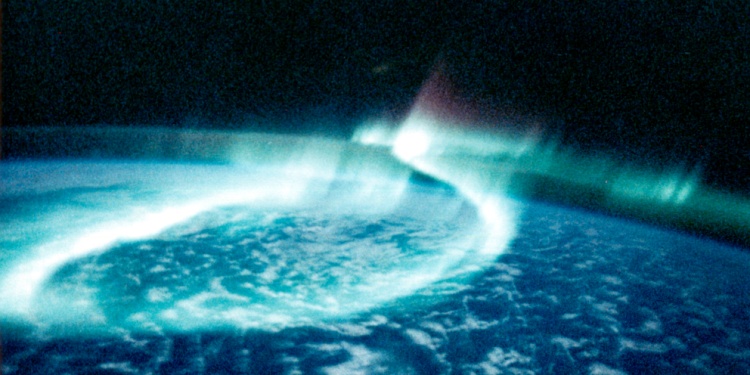
They looked at “before and after" snapshots of collision debris and were highly confident that the Earth's chemistry had changed after a collision.
And though no telescope has ever seen Theia (it’s suspected that the collision with the Earth obliterated the impactor planet), the geological evidence is compelling that a one-off clash happened.
"The Earth does not owe its current life-friendliness to continuous development, but probably to a chance event – the late impact of a foreign, water-rich body. This makes it clear that life-friendliness in the universe is anything but a matter of course,” offered co-author Klaus Mezger.
Despite having clear-cut evidence so far, the team are determined to dig deeper into the collision between Earth and Theia and refine the nuances further.
And if life on Earth depended on such an exceptional event, then perhaps life in the universe is more precious than we often consider.
Unlock more exclusive Cybernews content on YouTube.
.