First human mission to Mars urged to make search for life a priority
The search for past or present life on Mars should be the top priority for the first human mission to the Red Planet, according to the National Academies of Sciences, Engineering, and Medicine.

Image by Cybernews

 Follow us
The search for past or present life on Mars should be the top priority for the first human mission to the Red Planet, according to the National Academies of Sciences, Engineering, and Medicine.
Life on Mars tops the list of 11 priority areas identified by the Washington-based organization, which is largely funded through US government contracts and grants, in its new report.
Other objectives include water and CO2 on Mars, the planet’s geology, the impact of the Martian environment on humans, plants, and animals, the study of dust storms, and resource exploration.
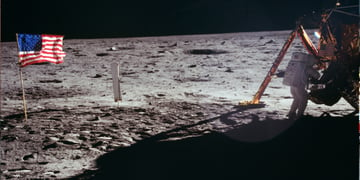
“The first human landing on Mars will be the most significant moment for human space exploration since we first set foot on the moon over 50 years ago,” said Linda T. Elkins-Tanton, director of the University of California, Berkeley Space Sciences Laboratory.




“Our report puts science at the center of what will be a remarkable achievement, and outlines the incredible knowledge we’ll have the opportunity to glean about our place in the universe, the potential habitability of Mars, and so much more,” said Elkins-Tanton, who co-chaired the committee that wrote the document.
The NASA-sponsored study also identifies four possible campaigns for human exploration of Mars. Each encompasses a sequence of three missions linked to specific science objectives.
The top-ranked campaign would meet every science objective named in the report and would require a human landing lasting 30 sols, or Mars days, which are slightly longer than an Earth day.
It would be followed by a longer 300-sol mission and would need an uncrewed cargo delivery consisting of a range of science instruments, with an exploration zone spanning approximately 100 kilometers (62 miles) in diameter.






The second-ranked campaign would focus on maximizing the collection of measurements that are most essential across all the mission’s scientific goals, and it would be more flexible about where exactly the crew lands.
The third-ranked campaign would focus primarily on searching for evidence of life, while the fourth-ranked mission would involve three shorter trips to different locations on Mars in order to meet the goals outlined in the report.
“By imagining different ways that priority science could be pursued during actual human missions, our report shows there are many different options for humans to explore Mars and achieve great scientific breakthroughs,” said committee co-chair and Massachusetts Institute of Technology (MIT) professor Dava Newman.
“Importantly, it also offers a synergistic review of science priorities enhanced by human exploration,” Newman said.
The report also recommends that NASA build a surface laboratory on Mars as part of its mission plans, bring back samples to Earth from every human mission, and make full use of robotic exploration and artificial intelligence (AI) tools to support future missions.
NASA said it wants to send humans to Mars as early as the 2030s. China has set itself a similar timeline, with plans to launch the first crewed mission around 2033. The European Space Agency (ESA) said it wants to send the first Europeans to Mars by 2040.
Unlock more exclusive Cybernews content on YouTube.