The best space images of 2025, from cosmic spiders to interstellar comets
2025 was a colossal year for space photography. Here are the shots that defined the cosmos.

Image by Cybernews

 Follow us
2025 was a colossal year for space photography. Here are the shots that defined the cosmos.
It’s been an eventful year in space. While we on Earth get bogged down in the business of SpaceX and Starlink, or the geopolitical race between the US and China, it is often more wondrous to simply look up. Here are some of the best captures of 2025.
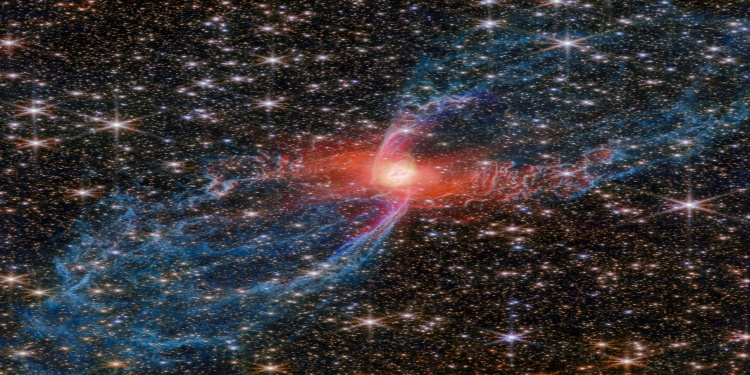
Red Spider Nebula
For the spiritually inclined, it’s a "cosmic creepy-crawly." For the space-initiated, it’s NGC 6537. But whichever name you prefer, the Red Spider Nebula is a masterclass in stellar decay. This planetary nebula was formed by a star shedding its outer layers, representing the same colossal fate awaiting our own sun. It’s in our galaxy, too, just a measly 8000 light-years away.



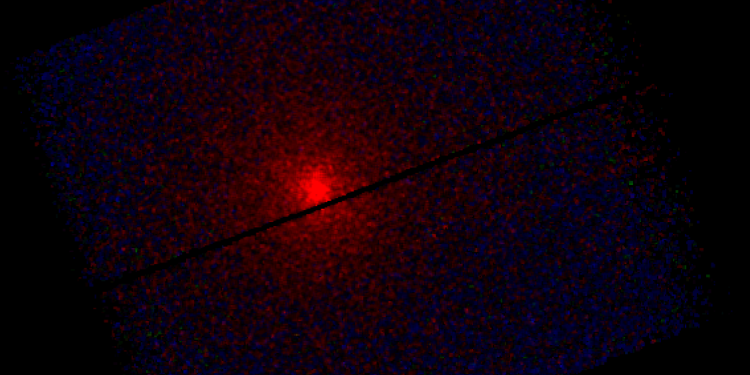
3I/Atlas
No doubt the speculative story of the cosmos for 2025, there was lots of “is it a bird, or a plane, or a spacecraft?” It was a comet. And on an aesthetic level, the ESA’s XMM Newton rocket observed the comet for 20 hours on December 3rd, capturing it here in X-ray light. There might be more saturated space images out there, but this one was chosen for what it represents – and that’s a once-in-a-lifetime comet.
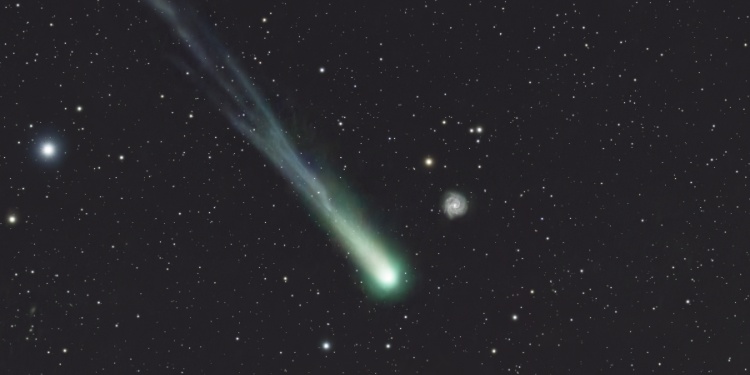
Comet Lemmon
2025 got off to a good start in January, when Comet Lemmon was first discovered, later becoming visible to the naked eye in autumn. Most of the time, comets are in quiet mode, but as they approach the sun, their tails get wider and begin to flare up.
In the background is the “Little Pinwheel Galaxy” (40 million light-years away) that amateur photographer Ela Sen has impressively captured here.
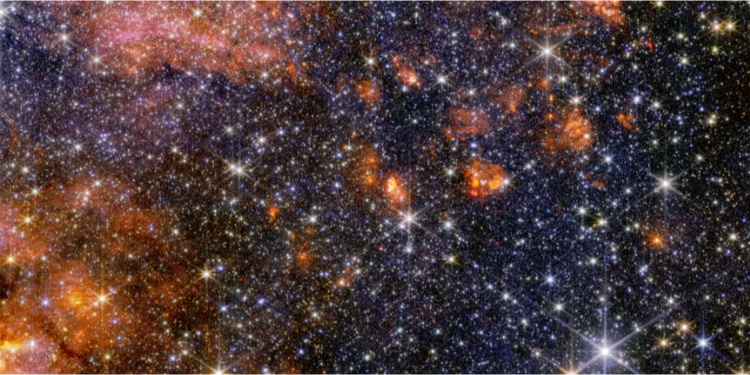
Sagittarius-b2
The engine room of the galaxy. At the centre of the Milky Way, there’s a massive cloud of gas and dust that still sees trickles of new stars forming. And seeing as the Milky Way is kind of middle-aged, it doesn’t happen as quickly as it did before. Still, NASA’s James Webb Telescope unveiled such a diverse structure, from the chemically rich voids to the infrared galactic core.
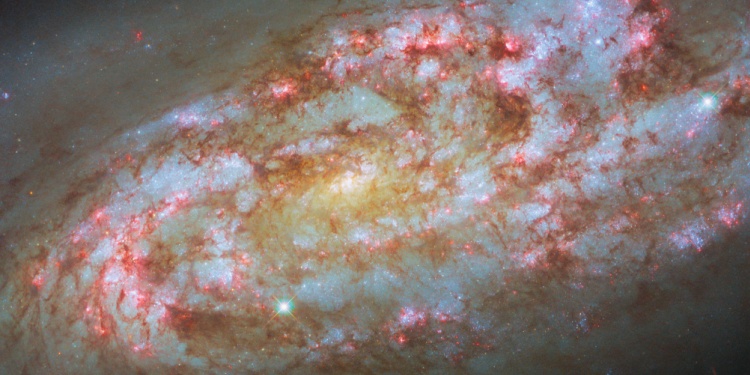
Starburst NGC 1792
If galaxies are star producers, then this starburst galaxy, located 50 million light-years away, is a smooth operator, rapidly forming new stars at a higher rate than our Milky Way (although exact numbers are extremely difficult to predict).
The chaotic makeup shot here is due to a gravitational tug-of-war with its larger neighbor, which put its gas reserves into a frenzy.
Impressively, the Hubble Telescope shoots straight to the current, unveiling blossoms of hydrogen gas and its soaring luminosity.
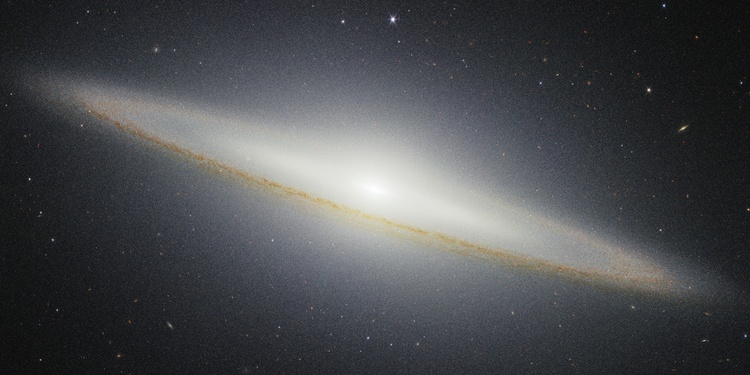
Sombrero galaxy
When you look at the center of the Milky Way, you are looking into the heart of Sagittarius. By contrast, the Sombrero Galaxy lies 30 million light-years away in the Virgo Cluster.
The Sombrero is a hoarder of star clusters, clutching roughly 2,000, ten times the Milky Way’s 200. At its core sits a black hole with a mass of nine billion suns. Tilted just six degrees from our perspective, we see it almost edge-on. NASA’s 2025 deep dive suggests the Sombrero is a cannibal, having collided with and devoured a neighboring galaxy billions of years ago.
Wolf Rayet Apep
A Wolf Rayet star is essentially a galactic time bomb – a star in its final scream phase before exploding. Here, a pair of them are orbiting each other and given the name Apep, with the four coils of dust representing 700 years of activity.
Astoundingly, there’s a third star on the block, a supergiant “slicer” that’s gravitationally locked to the pair, but this isn’t the same category of star (it’s a Blue Supergiant). As the two Wolf Rayets orbit each other every 190 years, the big slice happens every 10,000 years.
The James Webb Telescope was in impressive form here, capturing this close pass and the spewing out of amorphous carbon dust.