Radio technicolor reveals the Milky Way like never before
Astronomers have mapped the Milky Way in stunning radio color, revealing exploding stars, newborn stellar nurseries, and tens of thousands of radio sources orbiting around us.
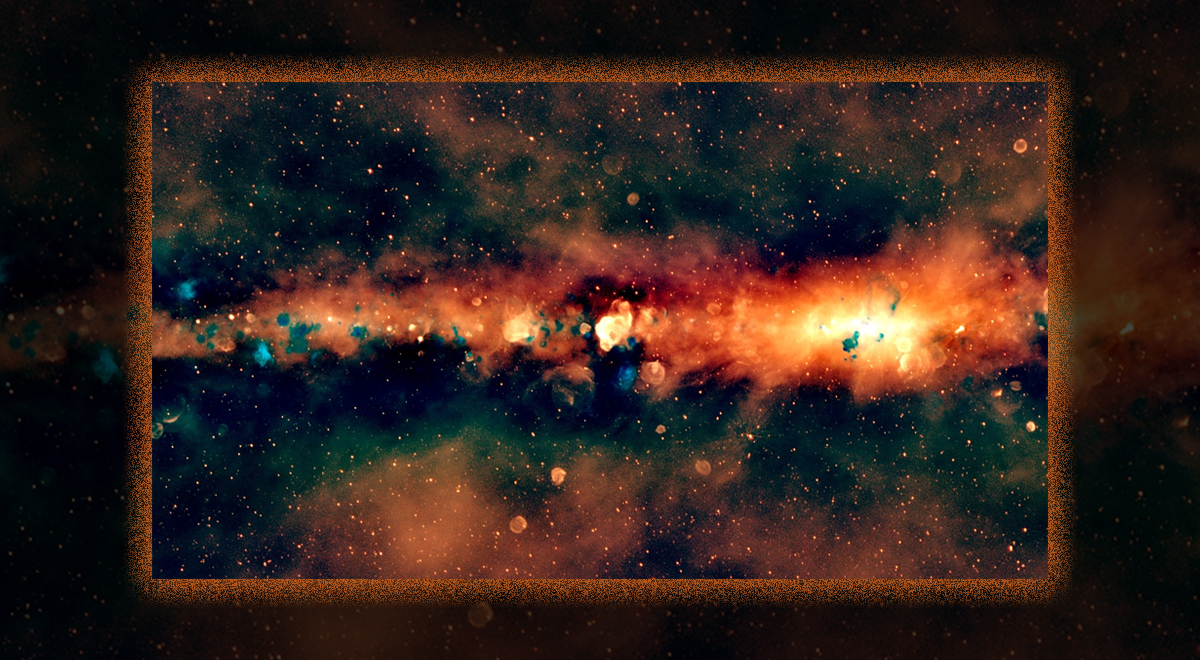
Image by Cybernews

 Follow us
Astronomers have mapped the Milky Way in stunning radio color, revealing exploding stars, newborn stellar nurseries, and tens of thousands of radio sources orbiting around us.
I’ll bet that you know what a map of your city, country, continent and planet looks like, more or less, but how about your galaxy?
Personally, I had only seen it depicted in old schoolbooks as someone’s best guess. Even if it doesn’t impact your commute home, it’s quite important in the grand scheme of things.
Luckily, astronomers from the International Centre of Radio Astronomy Research (ICRAR) have made it a bit easier than heading to the planetarium, by creating the largest and most detailed radio color image of The Milky Way yet (as viewed from The Southern Hemisphere).
“This vibrant image delivers an unparalleled perspective of our Galaxy at low radio frequencies,” says Silvia Mantovanini, a PhD student at Curtin University, in Perth Australia, ICRAR node who led the project.





Hundreds of hours of observation, covering almost a decade, from two major telescopes, were harnessed to create an image of wonder and zeal.
Mantovanini herself worked for 40,000 hours with supercomputers to forge the algorithmic precision that’s key to cosmic mapping.
Revel in the luminescence
The big softie in me always found it kind of beautiful when we’re told that some of the stars you see with the naked eye have virtually disappeared.
But that’s not strictly true, as you need a telescope to see those distant stars that have long gone, as the map reveals, complex, but crisp.
It provides valuable insights into the evolution of stars – their formation, how they interact with other celestial objects, and ultimately their demise.Mantovanini explains.
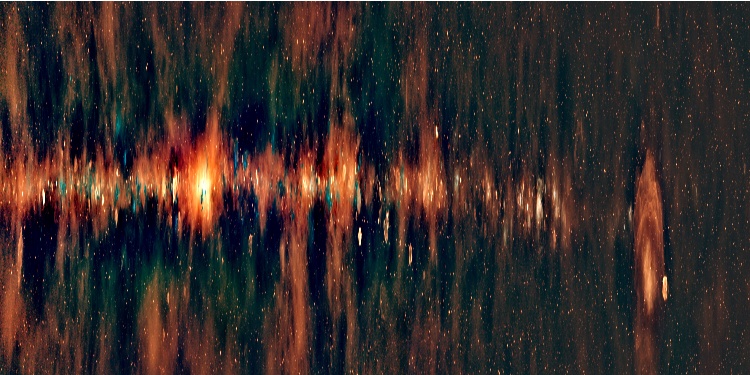
In terms of colors, the red circles signify supernova remnants, the debris remaining when stars explode. And the smaller blue smears are the newbies. This antithesis is convenient for scientists to map what’s old and new simultaneously, as it’s not like a map of Earth where Pangea might as well have never existed.
Over 98,000 radio sources were the catalogues, enabling the scientists to reveal pulsars, planetary nebulae, and distant galaxies.
Essentially a mosaic-form map, the visual has twice the resolution, and ten times more sensitivity than the previous GLEAM (a large-scale sky survey with state-of-the art telescopes) image.
It’s easy to forget that we live inside of this swirl of gas and light, orbiting one of billions of stars. Our home galaxy needn’t be constrained to old textbooks or wild imaginations, especially when you can now revel in its luminescence.






Unlock more exclusive Cybernews content on YouTube.