NASA’s Webb finds a new moon that Voyager missed – expanding Uranus’s chaotic family
NASA’s James Webb Telescope has discovered a tiny new moon orbiting Uranus, revealing fresh clues about the planet’s violent history and its complex system of rings and satellites

Image by Cybernews

 Follow us
NASA’s James Webb Telescope has discovered a tiny new moon orbiting Uranus, revealing fresh clues about the planet’s violent history and complex system of rings and satellites.
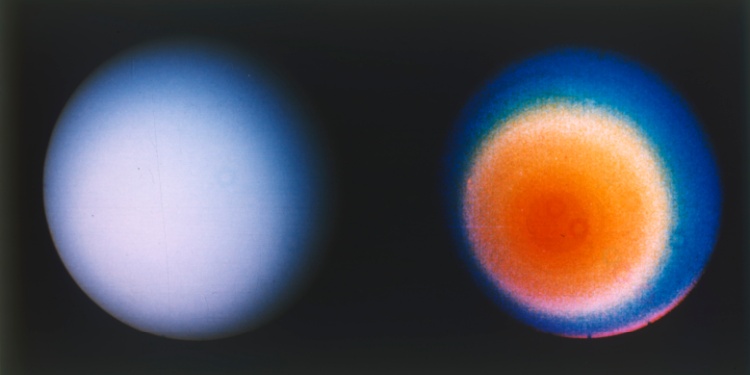
Voyager 2’s 1986 flyby mission to Uranus was a landmark event. The mission discovered 10 moons and two new rings around the planet.
Now, almost 40 years later, NASA scientists have discovered part of the puzzle that the original mission missed – a new moon only six miles wide.
A team led by Southwest Research Institute (SwRI) found the image on February 2nd using a near-infrared camera (NirCAM) on the James Webb telescope.
This moon, with a provisional name of S/2025 U1, hasn’t yet received the same treatment as Uranus’s other moons, which are named after Shakespearean characters such as Oberon, Titania, Puck, and Desdemona.




It orbits Uranus, around 35,000 miles from the planet's center, between the moons of Ophelia and Bianca.
The chaos factor
Uranus now has 29 confirmed moons, giving it fewer total moons than Jupiter or Saturn but a higher number of small inner satellites, which have a complicated orbit.
These inner moons interact closely with the planet’s rings, blurring the line between ring particles and full-fledged moons, making Uranus quite a frenzied place.
S/2025 U1 is smaller and fainter than any of Uranus’ previously known satellites, hinting that there could be more untrodden elements.
Each new find helps scientists refine models of Uranus’s formation and supports theories that its system has a violent, collision-driven history.
Secrets of Uranus
The small, irregular moons like S/2025 U1 may be leftover fragments from massive impacts that shaped Uranus’s current moon system.
These tiny satellites still influence each other and the rings, creating a dynamic and unpredictable orbital environment.
Studying these moons gives scientists clues about how ice giants like Uranus formed and evolved over billions of years.
Thanks to advanced telescopes like JWST, astronomers can now detect moons that were invisible to past missions, expanding our understanding of Uranus’s complex system.