The Cosmic Report: in close proximity
The theme this week is proximity - whether an alien / UFO sighting from the Brazilian archives, NASA returning to the moon again, or the beginning of time itself – sometimes the closest things are the most extraordinary.

Image by Cybernews

 Follow us
The theme this week is proximity - whether an alien / UFO sighting from the Brazilian archives, NASA returning to the moon again, or the beginning of time itself – sometimes the closest things are the most extraordinary.
This week's Cosmic Report investigates a close encounter with a potential alien entity in a Brazilian hospital, the near prospect of finally returning to the Moon with NASA’s “wet dress rehearsal,” and the distance between ourselves and the beginning of time becoming smaller, thanks to the James Webb Telescope.
Ready? Let’s dive into this week’s hottest stories from the celestial expanse.
A forensic shift in Brazilian UFO narrative
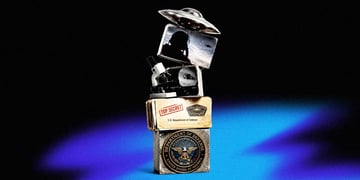
Brazil’s closest equivalent to the Roswell incident unfolded over several days in January 1996 in the small city of Varginha. Long treated as local folklore, the case has recently been reframed as a forensic question, with renewed focus on sequence, testimony, and biology.

That shift was on display at the National Press Club in Washington, DC, on January 20th, where investigative filmmaker James Fox attempted to consolidate what is known and what remains disputed.
Accounts place the initial event between January 13th and 20th, when pilot Carlos de Sousa reported tracking a cigar-shaped object across the Minas Gerais sky before it came down during a violent electrical storm.
One witness, Liliane Silva, later described a creature with arms and legs “like a human being,” but also with horns. Military units were subsequently reported to have retrieved two oily-skinned beings found crouched against a wall.
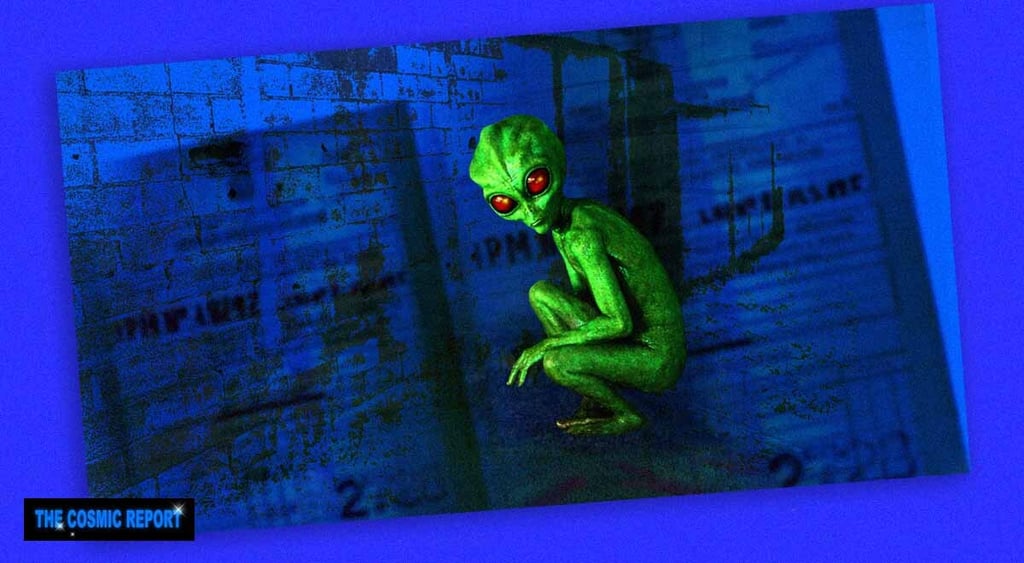
The Brazilian Army’s official response arrived later in the form of a 600-page inquiry, which dismissed the incident as a misinterpretation involving a local resident during a hailstorm. That conclusion has never settled the matter. Soldiers who claimed involvement have continued to describe a rapid, off-the-books transport operation and enforced silence.
Beside Fox at the briefing was Dr Ítalo Venturelli, a neurosurgeon who said he examined a living entity for roughly four minutes in a hospital setting. He described lilac-coloured eyes and a teardrop-shaped skull, and said he remained silent for decades to protect his career before deciding to speak after a near-death experience.
The briefing also returned to the death of Officer Marco Eli Chereze, the young policeman who reportedly came into physical contact with one of the beings and died soon after.
Researchers suggested his immune system did not fail in a conventional way, but collapsed entirely, raising the possibility of exposure to an unknown biological agent, a framing that pulls the Varginha case out of the realm of sightings and into uncomfortable biosecurity territory.
Artemis II – the final countdown
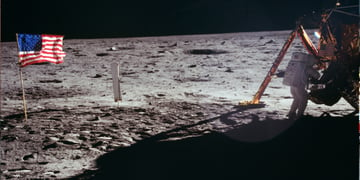
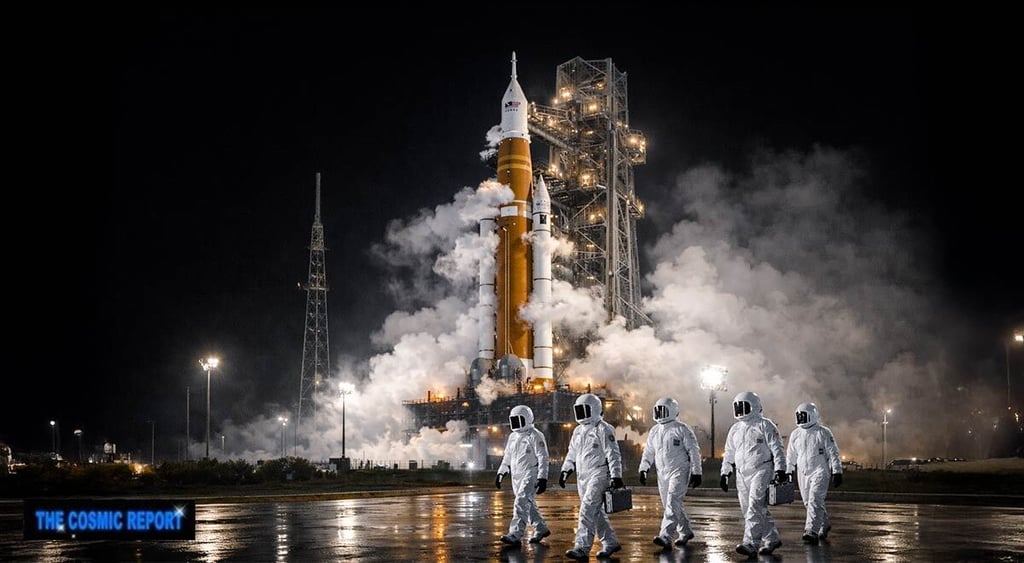
NASA’s Space Launch System (SLS) and the Orion capsule are standing at the threshold of history, with teams preparing for the definitive test of our return to the lunar environment.
On Saturday, January 31st, NASA will initiate the wet dress rehearsal, a high-stakes "dummy run" that involves pumping nearly a million gallons of super-cooled liquid oxygen and hydrogen into the rocket. This will test whether the 2026 hardware can handle the extreme thermal stresses required for a crewed launch on February 6th.
The Artemis II crew, Wiseman, Glover, Koch, and Hansen, are currently in their second week of strict pre-flight quarantine in Houston, a protocol designed to ensure that the first humans to loop around the Moon since 1972 carry no terrestrial illnesses into the isolated environment of the Orion spacecraft.
Following the technical growing pains of the Artemis I campaign, engineers have implemented a complete overhaul of the liquid hydrogen seals at Launch Pad 39B, with NASA leadership expressing "high confidence" that this weekend’s test will be the smoothest fuel-load in the history of the SLS program.
Rewriting the beginning of time
The James Webb Space Telescope has once again outdone itself by capturing the light of MoM-z14, a galaxy that shouldn't exist according to our current understanding of cosmic evolution.
The James Webb Telescope has officially broken the record for the oldest object ever seen. Webb captured light from MoM-z14, a galaxy as it appeared just 280 million years after the Big Bang.
At that age, the universe should have been a chemical desert, yet this galaxy is already packed with nitrogen. This is a chemical impossibility by current standards – it suggests the very first stars were absolute monsters that lived and died at a speed that rewrites our entire timeline of the universe's beginning.






Unlock more exclusive Cybernews content on YouTube