Hackers send fake nuclear attack alerts in Ukraine and Russia
“Don’t worry, Oreshnik is on its way.”
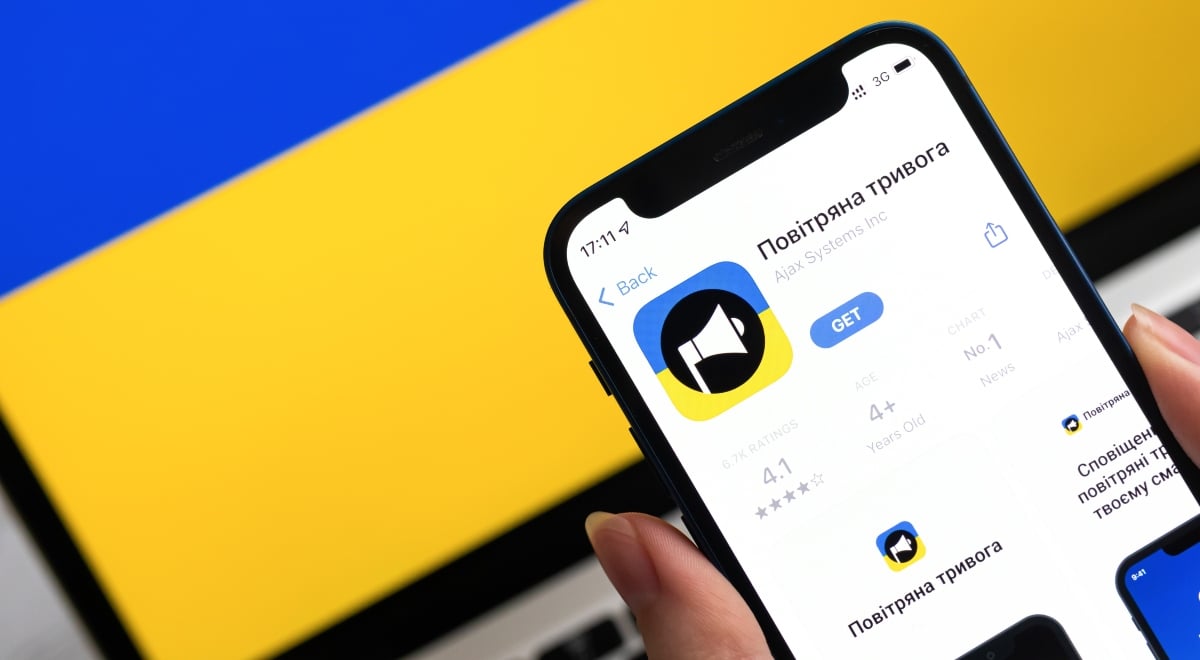
Ukrainian air alert app Povitriana Tryvoha. By Shutterstock.

 Follow us
- Hackers sent 122 fake alerts through Ukraine’s Air Alert app in about seven minutes.
- Russia’s Emergencies Ministry app was breached hours later, sending false nuclear warnings to millions of users.
- Officials in both countries confirmed the hacks, temporarily disabled push notifications, and later restored them.
- It is unclear whether the two incidents were connected or carried out by the same hackers.
Key Takeaways by nexos.ai, reviewed by Cybernews staff.
Unidentified hackers have breached into Ukrainian and Russian air alert apps and sent fake messages warning of attacks – including nuclear – to millions of users. It’s unclear whether the two incidents were connected.
First, users of the Ukrainian app Povitriana Tryvoha (Air Alert) received messages about radiation and chemical hazards, the threat of street fighting in Kyiv, and an allegedly imminent Russian air strike with a ballistic missile.
The first false warnings, clearly designed to sow panic, appeared late in the evening of November 1st. In roughly seven minutes, 122 fake alerts – written in Russian, English, and Ukrainian – were issued across the country.
One message, for instance, proclaimed: “There will be a nuclear threat across Ukraine. Do not worry, the Oreshnik is incoming.” Oreshnik is a Russian intermediate-range ballistic missile.





Around three hours later, similar warnings – also fake – were issued to millions of Russians after the mobile app of Russia’s Ministry of Emergencies was also breached.
The notifications, some of which contained profanities, warned about the supposed launch of nuclear warheads on P1-SUN delivery systems and urged Russians to stock up on three weeks’ worth of food.
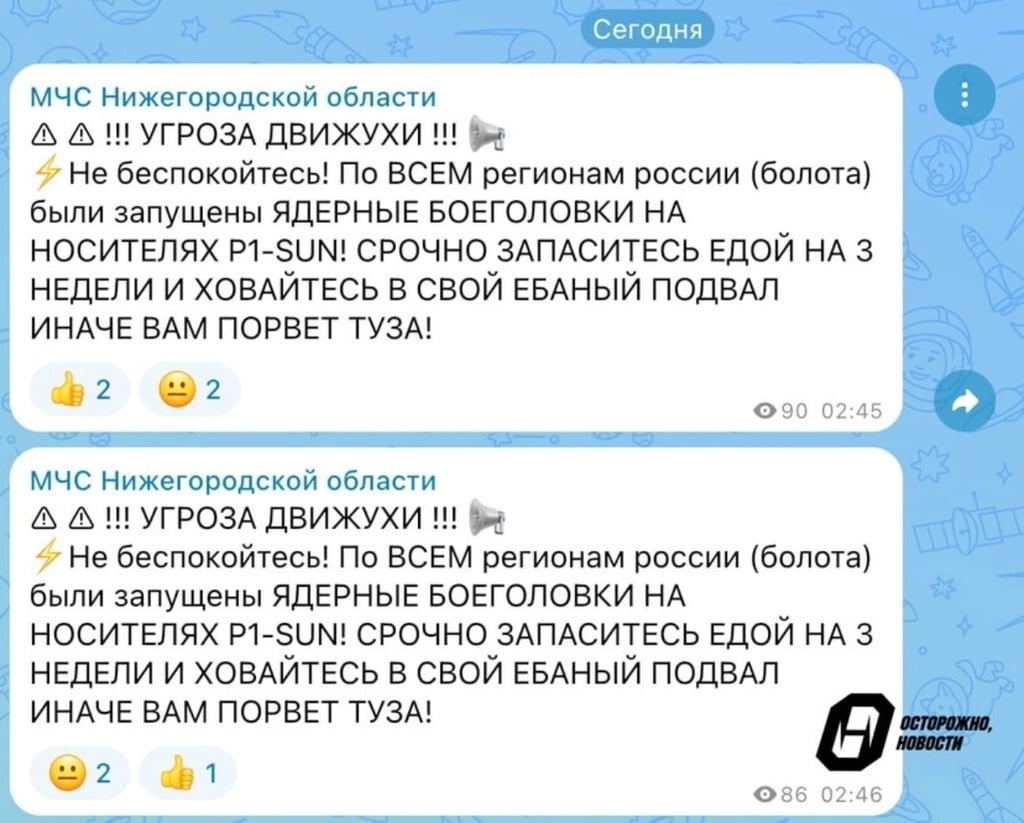
“Don’t worry! NUCLEAR WARHEADS ON P1-SUN DELIVERY SYSTEMS have been launched across ALL regions of Russia (the swamps)! URGENTLY STOCK UP ON FOOD FOR 3 WEEKS AND HIDE IN YOUR F**KING BASEMENT, OR YOUR ASS IS TOAST!" one message reads.
Officials in both countries immediately issued clarifications, confirming the air alert apps were hacked into. Push notifications were temporarily disabled but later restored.
Retaliatory tit-for-tat?
Ukraine’s State Emergency Service said that the nationwide alert system continues to work, and the Russian Ministry of Emergencies announced that specialists were fixing the vulnerability in the mobile app.
The P1-SUN mentioned by the hackers, for example, indeed exists. However, it’s a Ukrainian interceptor drone made by defense firm SkyFall and designed to destroy Russian attack drones.




Stay updated with our latest stories and follow us on social media
Be the first to discover new stories, ideas, and updates from our team.
Despite the similarity of the false alerts and the short interval between the incidents in both countries, it’s far from obvious that the trick was organized by the same groups or people.
It’s possible the attacks were retaliatory tit-for-tat, BBC’s cyber correspondent Joe Tidy has reported, quoting a source in the Ukrainian hacktivist community.
According to this particular hacktivist, breaching into emergency alert systems is a tactic that, until now, had “not been used due to moral and ethical considerations.”
However, back in 2023, hackers already interfered with Russian emergency alert systems when they hacked the Emergencies Ministry and sounded false air raid warnings in several regions of Russia and Crimea.