Silent majority: half the world is clinging to dying Android smartphones
Google ended support for Android 13 in March 2026, yet nearly 15% of users still like their Tiramisu.
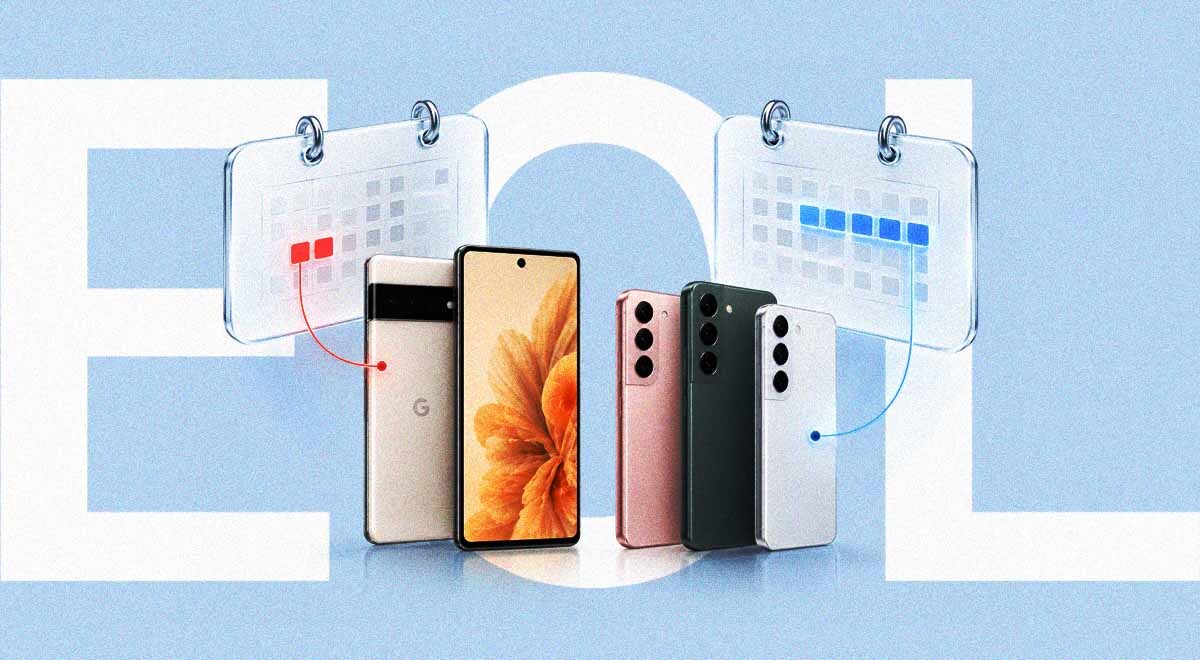
Android devices nearing end of life. Illustration by Cybernews.

 Follow us
- Over 1.5 billion active Android phones no longer receive security updates, leaving users exposed to known exploits.
- Only 56.7% of Android devices run a supported operating system, down from about 65.5% two years earlier.
- Google Pixel 6 devices soon lose support, while Samsung Galaxy S22 support ends in five months.
- Older iPhones have an advantage because Apple typically provides software updates for longer than many Android makers.
Key Takeaways by nexos.ai, reviewed by Cybernews staff.
AI features make smartphones flashier than ever, yet more than 1.5 billion Android users are making a silent choice – sticking with their old devices. A massive share of Android phones is aging out of support, with the Google Pixel 6 family next in line. Samsung’s best-selling Galaxy S22 series has five months of life left.
The share of end-of-life (EOL) Android devices globally is higher than ever.
Unsupported Android phones continue to grow in numbers despite manufacturers extending software support to five years or more and introducing new generative AI features.
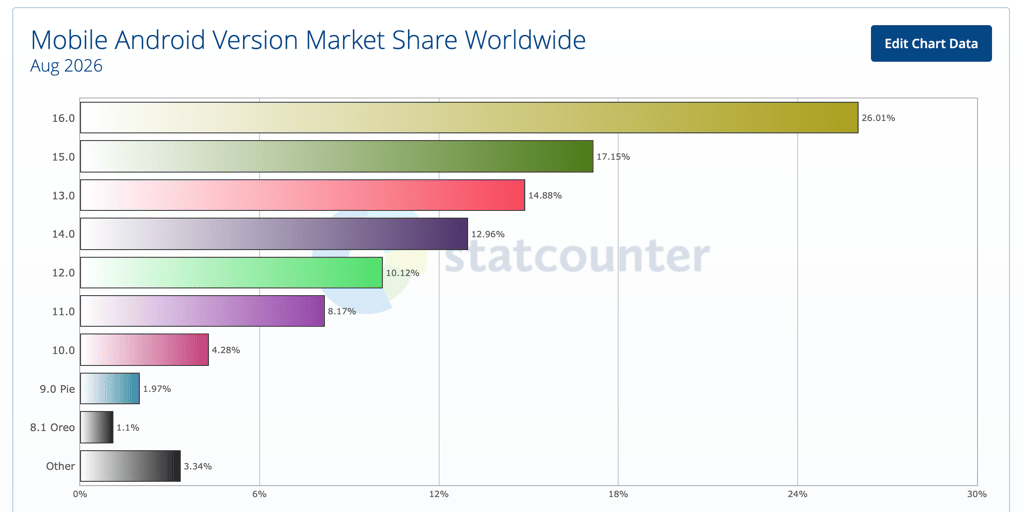
In August 2026, only 56,7% of Android mobile phones were running a still-supported OS version, Android 14 or later, according to StatCounter.com’s data.





For comparison, two years ago, the share of devices running the current Android OS stood at around 65.5%.
This leaves over 1.5 billion active Android devices vulnerable to known exploits and unable to receive updates that protect against future threats. Various estimates put the total global Android user base at around 3.9 billion.
Only a minority of users run the latest software, like Android 17 (around 1%) or Android 16 (nearly 26%).
The old device might seem to be working just fine, but it's at huge risk – unpatched security vulnerabilities can lead to total compromise. Multiple critical remote code execution vulnerabilities have been unveiled over the past few years. Some don’t even require any privileges or user interaction.
Even relatively new devices can become vulnerable if users neglect security updates – cybercriminals are quick to leverage generative AI to exploit known vulnerabilities. As time goes by, the arsenal of exploits continues to grow.
The Google Pixel 6 and Pixel 6 Pro will soon reach end of life – their support ends on the 1st of October, 2026, according to endoflife.date, a website that aggregates device support data. Fairphone 3 and 3+ end shipping security updates on September 30th.
A more significant impact will be when one of 2022’s best-selling flagship families, the Samsung Galaxy S22, S22+, and Ultra, ends support in five months, on February 25th next year.
Samsung has many more devices reaching EOL before that: S21 FE 5G and budget Galaxy F04, and popular A14 5G devices.
iPhones have security advantages compared to Android devices, as Apple tends to provide updates for longer. Apple maintains a list of Supported iPhone models – 7-year-old iPhone 11 family devices are receiving the latest iOS 27, while maintenance for older iPhone XR, XS, and Max ended four months ago.