Boeing data breach allegations put decades of data at risk
Boeing’s military helicopter data allegedly breached.
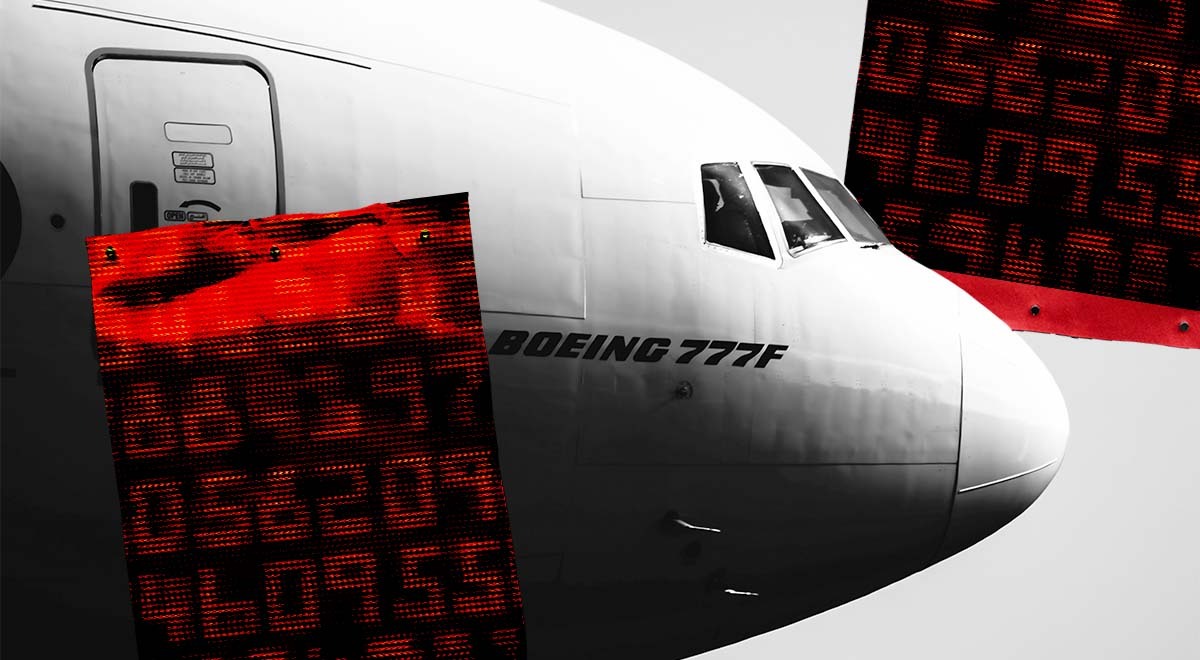
Image by CN. Source: Unsplash (by Luca Cavallin)

 Follow us
- INC Ransomware claims it stole more than 3.6 million Boeing files from seven production servers.
- Cybernews researchers say the alleged breach may involve Boeing Sikorsky Aircraft Support, which services military helicopters.
- The exposed samples include employee emails, meeting participant details, financial file names, and vendor lists.
- Researchers warn the alleged leak could aid espionage, phishing, and attacks on defense suppliers if confirmed.
A hacker cartel claims to have breached Boeing, exfiltrating nearly four million operational files spanning more than three decades.
American aerospace giant Boeing was listed on a dark web victim site run by the notorious INC Ransomware cybergang.
The gang insists that it breached Boeing and exfiltrated the company’s data, threatening to leak it if the company does not negotiate. The attackers say the stolen details include seven production servers with over 3.6 million files and “33 years of operational data.”
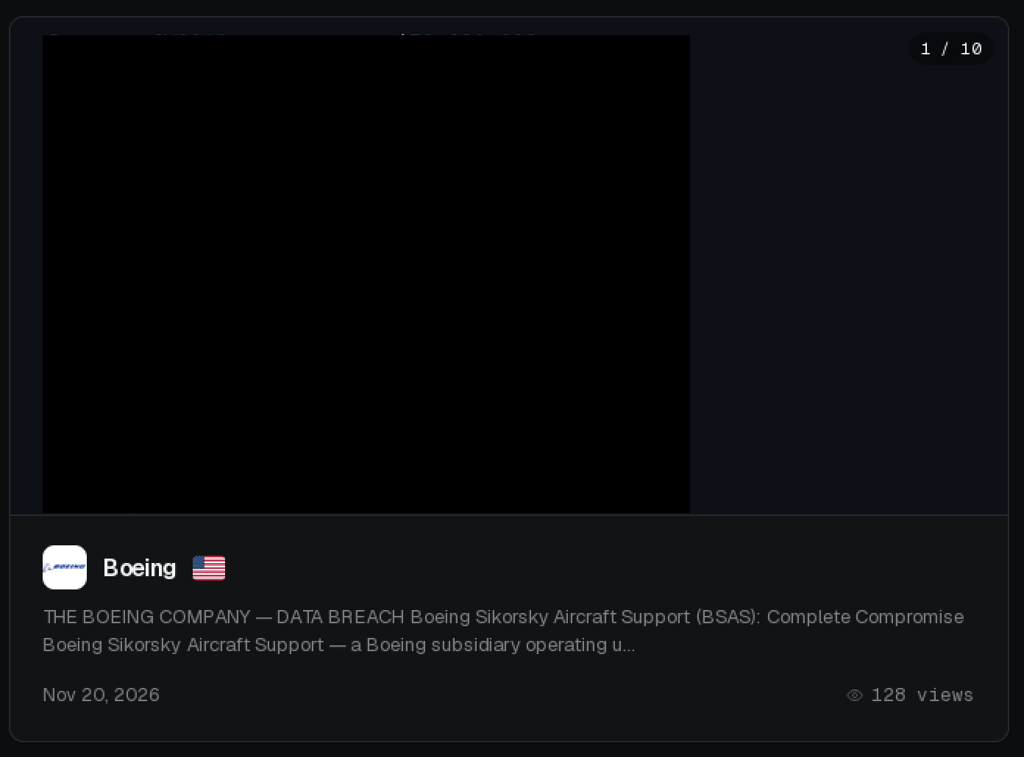
At the time of writing, the attackers have released just 10 screenshots of supposedly stolen data to prove they are not bluffing.






Our research team has analyzed the data samples and determined that the alleged breach may be linked to Boeing’s subsidiary, Boeing Sikorsky Aircraft Support (BSAS). BSAS provides maintenance services for military helicopters.
At this point, it is impossible to independently verify the alleged scope of the breach.
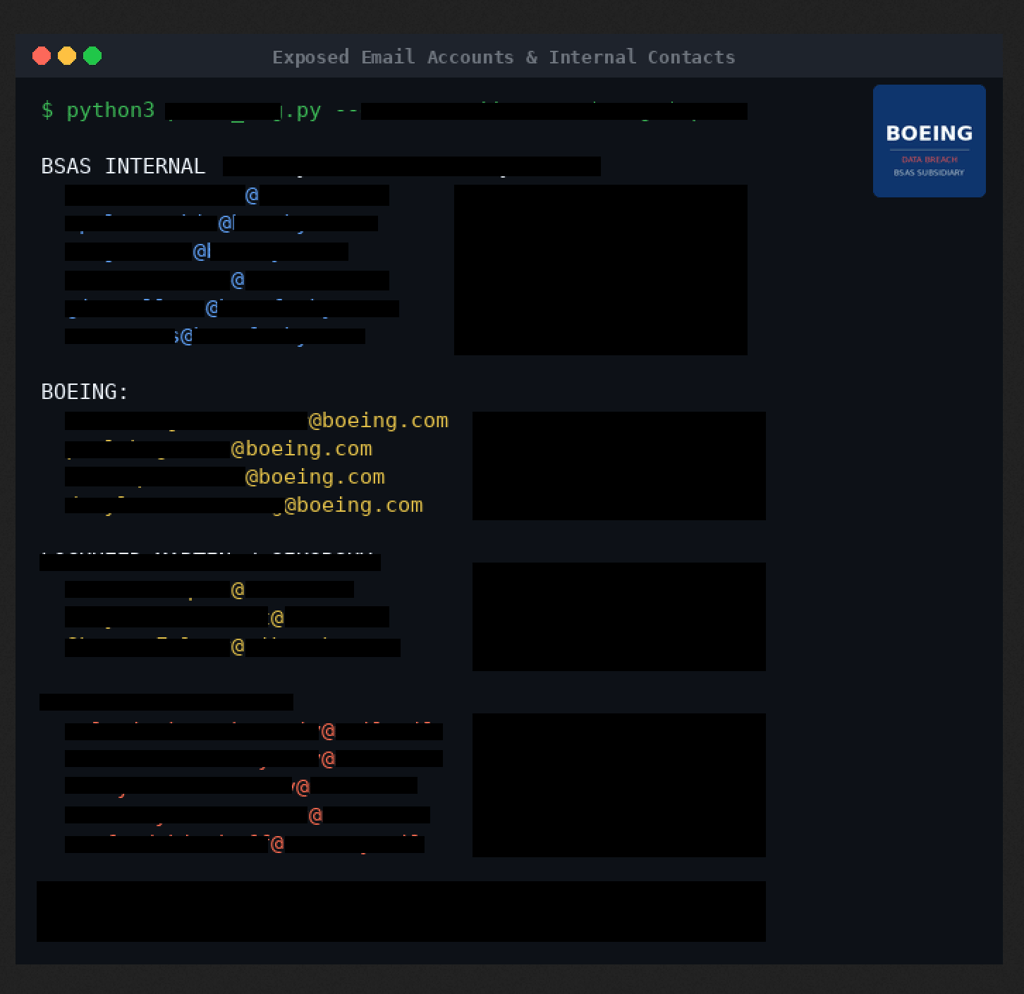
Provided screenshots reveal internal Boeing data has been exposed:
- 18 email addresses of BSAS employees and related organizations
- Personal information of participants from an alleged BSAS board meeting held in 2025, including their full names, the organizations they represent, and their roles.
- File names representing alleged financial forecasts for upcoming years and expense reports
- A list of top vendors and subcontractors
We have reached out to Boeing for comment and will update the article once we receive a response.
Safety risk for military infrastructure
BSAS operates in the military aviation sector, making any operational data breach extremely sensitive.
At the moment, it remains unknown whether any technical data has actually been exfiltrated. However, if the claims turn out to be true, the Boeing data breach could introduce national security risks.
Moreover, detailed aircraft maintenance records or technical specifications could provide valuable intelligence to hostile actors, for example, giving them insight into how the aircraft are operated and where their vulnerabilities lie.
According to our research team, which investigated the leak, exposed records could aid foreign intelligence services in carrying out targeted espionage operations.
Key risks here would be social engineering attacks targeting senior management,the researchers highlighted.
Attackers could focus their sights on executives, engineers, and military personnel. Armed with details about Boeing’s internal operations, suppliers, and customers, threat actors could develop highly convincing phishing campaigns.
Researchers believe that if the stolen information includes details about military customers, contractors, or supply chains, the impact could extend beyond BSAS itself.
Leaked details could help threat actors identify links between defense organizations and their suppliers, giving them a clearer picture of the broader defense supply chain. This means attackers could also pinpoint high-value targets across the defense ecosystem.
Revenue loss for Boeing
In a worst-case scenario, the Boeing data leak could lead to significant financial losses, researchers believe.
“At least in theory, the data breach could provide a competitive advantage to Boeing’s rivals, in turn resulting in client or revenue loss,” Cybernews researchers added.
Exposed contracts, financial records, or supplier agreements could give competitors insight into BSAS's business relationships, revenue streams, and negotiating position.
The information could potentially undermine ongoing deals or expose commercially sensitive details about its military clients.
Last year, Boeing generated $89.46 billion in revenue across its companies.
Boeing providers have been targeted before
This is not the first time cybercriminals have targeted Boeing’s infrastructure. In March, the Russia-linked LISI Group claimed to have breached Boeing’s French supplier.
Last year, Boeing’s supplier of industrial parts for commercial and military aircraft, Jamco Aerospace, was hit by the Storm ransomware.
Attackers also breached Dimensional Control Systems, a company that provides software solutions and services to manufacturing companies globally, including Boeing.


Stay updated with our latest stories and follow us on social media
Be the first to discover new stories, ideas, and updates from our team.