Where cheap game keys come from, and should you buy them in 2026?



 Follow us
You’ve probably seen the ads and the flashy discount banners of brand-new games selling for a fraction of their official price. A $60 release going for $15 sounds like the deal of the year. But behind those tempting numbers lies a bigger question: how can these sites sell keys so cheap, and what’s the catch?
Behind these bargain prices lies a messy and often misunderstood world. Some keys come straight from legitimate sales or bundles, while others are the product of shady reselling tactics, regional price exploitation, or even outright fraud.
In this article, I dig into where these cheap game keys actually come from and how key reselling sites get their stock. I also explain whether buying these keys is worth it, and – if you do take the risk – how to do it safely.
TL;DR
- Game key resellers get their keys from a variety of sources, ranging from official deals to black market keys bought with stolen credit cards
- Companies have taken steps to reduce the number of resales between regions
- If your game key breaks a provider’s terms of service, you may lose access to your game
- By buying games from an unauthorized reseller, you’re stopping the game’s creators from getting their share of the profits
- Stolen credit cards can result in refunds that actively lose developers’ money
- While sites like G2A and Kinguin have taken steps to prevent fraud, it’s still possible to buy an illicit CD key on their markets from various resellers






What are game key sites, and how they work
A CD key (also called a game key or activation code) is a special code made of letters and numbers that unlocks a game. These keys first appeared in the 1990s to prevent people from copying games without buying them. Later, they also became a way to prove you own the game and link it to your account.
Today, when you buy a game from official stores like Steam or Epic Games, you receive a digital license that’s automatically activated on your account using a game key behind the scenes. You usually don’t see or enter this key yourself – the store handles that part for you.
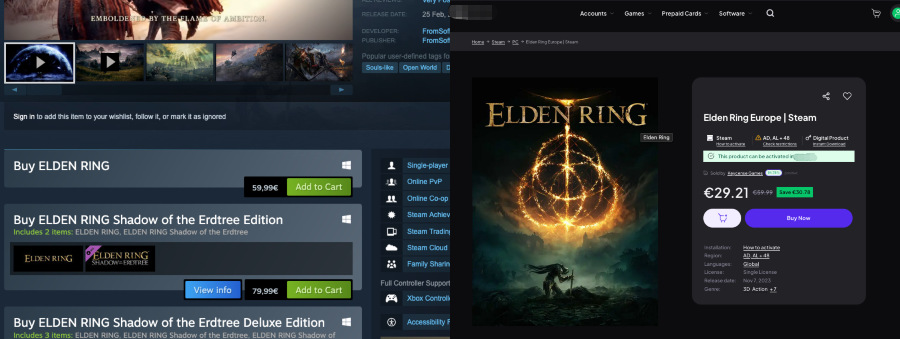
However, some third-party websites sell these game keys separately. You can buy a key from them and activate it on the official platform to unlock the game. Some of these sites buy keys in bulk and sell them directly to customers. Others act as global marketplaces where many different sellers, from individuals to small businesses, list and sell their keys.
Unlike official stores, these marketplaces don’t always get their keys directly from game publishers. Instead, the keys come from various sources around the world. So, further in this article, I dive deeper into where these keys actually come from and how these sites obtain them.
White area – clean way game keys are sold
Not every game key you see for sale online is risky. There are plenty of sellers who get their keys through completely safe and legitimate channels, with full permission from the game’s creators. Buying from these sources means you’re getting the real thing – no shady shortcuts, no risk of losing access, and full support for the people who made the game. In this section, I look at the most common legal ways game keys are obtained and the types of websites you can trust.
One of the most straightforward methods is when developers and publishers create keys themselves and send them to stores, giveaway campaigns, or official partners. Platforms like Steam and Epic Games have systems that allow them to generate these codes for approved purposes. When a seller gets their keys directly from the game’s creators, you can be sure they’re authentic.
Another fully legal route comes from authorized wholesalers. These companies act as middlemen, buying large batches of keys directly from publishers and reselling them to verified businesses. Because they only work with trusted partners, the keys they provide are safe and legitimate.
Lastly, there are official retail partners such as Amazon, Green Man Gaming, Humble Bundle, GOG, and Fanatical. These stores have contracts with publishers or licensed distributors, which means every key they sell is genuine. Not only will your purchase work as expected, but it also ensures the developers are fairly paid for their work.
Gray and black markets – not quite (il)legal
The first major way in which game key sellers obtain their keys is by buying them in different regions. Resellers often buy keys in cheaper regions, like India and Brazil, and sell them in more expensive regions like the US and EU.
Games aren’t property per se, but rather programs that are licensed to you. That’s the reason for the Stop Killing Games initiative existing, but also the reason why regional licensing is a legal gray area. After all, by selling and buying the key, particularly in another region, you’re violating the terms of service. This is unlikely to result in criminal or civil lawsuits, but instead, simply allows the developer to revoke a given key, thus stopping you from playing your game.
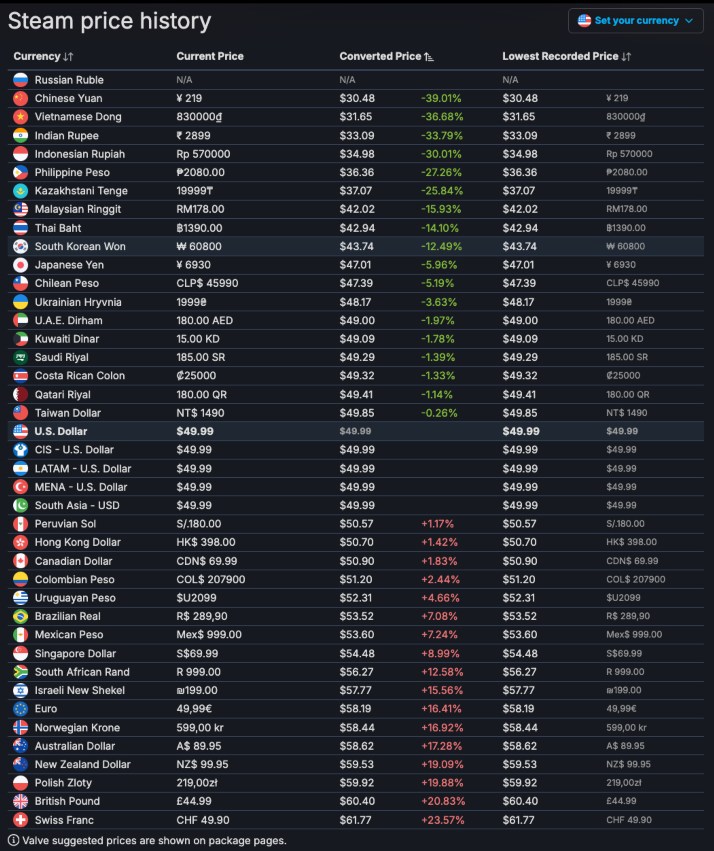
Ethically, however, the whole thing is a bit absurd. If you were to buy a movie or book in another country, it wouldn’t come with restrictions like this. Yet, with games, buying a CD key from a different region is considered a big no-no. It’s very possible, particularly in poorer countries in the EU, that certain games are extremely expensive when compared to average earnings. If publishers are willing to sell a product cheaper elsewhere, they should be ready to bear the consequences of people discovering that workaround.

Reselling keys from bundles, especially charity drives like the Humble Bundle, on the other hand, is more iffy. The keys are meant to be used by end users, and are often given to Humble at a big discount because of its charitable nature. Reselling the keys is not only against the rules, but it also makes companies less willing to participate in charity drives, which affects bundle quality and thus, charity earnings. If you’ve been observing the Humble Bundle for a while, you may have noticed that a lot of the bundles are far less robust than they used to be. You can thank key resellers for that.
Another issue entirely is reselling review keys. After all, these were meant to be free, and the developer isn’t seeing a dime from their sale. The resale, once again, is a licensing violation, but it has far bigger ethical implications than simply getting a key from a different region. After all, these copies of the game were sent out to reviewers or influencers to allow them to check the game out, and perhaps promote it. This way, not only does the company not get the promotion, but the people they sent the codes to are actively taking the profits away from the developers who sent them the game in the first place.
Finally, we get to stolen keys. While websites like G2A, Kinguin, or Eneba aren’t operating illegally per se, they’re sometimes being used by black market dealers to sell their stolen keys. Legally, with the websites creating precautions against these sales, it’s unlikely any will be held liable. That said, in theory, if authorities find proof of tolerance for stolen keys, market owners could be held responsible for fencing and being an accessory to money laundering. Without that proof, they’re about as liable as a landlord is for a dealer selling drugs from a rented apartment.
Ethically, the question’s much broader. G2A and Kinguin both instituted paid customer protection programs. On one hand, you can treat it as an insurance policy. On the other hand, one can argue that the sites indirectly benefit from their lax key verification. After all, it's the reputation of their sellers that makes people more willing to purchase buyer protection. On the other hand, sifting through thousands of sellers is a pretty monumental task that would essentially make the entire business model pointless. What’s more, publishers also lose money on this, as if the person whose credit card was stolen charges back the funds, they’re liable for the chargeback fee.
Unfortunately, the biggest victims of these processes are consumers. With publishers reserving the right to revoke CD keys violating licensing agreements, less knowledgeable gamers may purchase a key and later lose access to the game they bought without even realizing that that’s an option. That’s why I’d suggest avoiding unlicensed key resellers whenever possible. While it’s more expensive, purchasing a game through an official channel is a sure way to keep it for its entire lifecycle, or even forever, if the Stop Killing Games initiative is passed.
Battling against rulebreakers: how are publishers protecting their keys?
With more and more key resellers operating on the internet, publishers have taken steps to avoid their keys being resold. These include regional restrictions, account bans, and consumer education.
Regional restrictions are by far the most popular limitation for game keys. These mean that certain game keys can only be activated in certain regions. While this can be bypassed by a VPN on a new account on a gaming platform like Steam or Epic Games, relocating an existing account is far more difficult, since it can only be done once every few months and requires a payment method from your new country of origin.
In short, these restrictions mean that if you buy an Indian key for a game like GTA V, you will only be able to redeem it in the region it was meant for, usually Southeast Asia. If you live in the US or the EU, you won’t be able to redeem it.
This approach can also lead to frustration. Region locks often limit the choice of languages in the game to further dissuade players from reselling keys. This means that, for example, if you’re an English speaker living in Eastern Europe, in some cases, you might not be able to play the game in a language you speak.
However, if somebody manages to get through the region lock, platforms like Steam and Epic Games often ban accounts that they detect as spoofing their location. Forgetting to use a VPN or logging in to a wildly different account may trigger key revocation, account restrictions, or even full-on account bans.
Some publishers also authorize resellers like Green Man Gaming to sell keys on their website. These keys are sometimes discounted outside of the usual platform discount windows, giving users access to cheap and legitimate games.
Finally, publishers have also taken efforts to educate users about the dangers of key reselling. The biggest proponents of this approach have been indie studios like No More Robots who have been raising awareness about the issue. While for large publishers like EA or Activision, CD key resellers merely cut into profits, for indie developers, chargebacks can actually mean they’ll be operating at a loss.
Despite these steps, marketplaces like G2A and Kinguin are still making millions of dollars reselling keys. This is because at the end of the day, most people consider the financial aspect first and foremost, willing to take the risk if they see a great deal. Gaming companies will continue to look for ways to limit abuse. However, it’s very likely that as long as game keys are sold, they’ll be resold on third-party marketplaces.
Safe gamer’s guide to buying keys
If you decide to buy game keys – whether it’s for a cheaper price or to get a game that’s hard to find – it’s important to do it securely to avoid wasting money. The gray market can be risky, and sometimes something that looks like a good deal can lead to revoked games or even banned accounts. Continue reading to learn how to keep your purchases safe.
Stick to official and authorized sellers
The safest way to buy game keys is from official stores or retailers that have direct agreements with game publishers. These sellers get their keys straight from the source, so you know they’re legitimate. Big platforms like Steam, Epic Games Store, and Ubisoft Store sell their own keys, while trusted authorized retailers such as Amazon, Green Man Gaming, Humble Bundle, GOG, and Fanatical work directly with publishers and distributors. You can also check deal aggregator sites like IsThereAnyDeal or CheapShark, which only list discounts from verified stores.
Learn the red flags
When looking for game keys, keep an eye out for warning signs. If the price is way lower than what you’d see during an official sale, that’s a big red flag – publishers set limits on discounts, so massive drops usually mean something’s not right. Also, be cautious if a seller tells you to use a VPN to activate your game, as that often means the key is from another region and could break platform rules. Additionally, check if the store is listed as an official partner on the publisher’s website. If it’s not, the key might not be legitimate. Finally, stay away from sites that hide their contact info, leave important sections blank, or ask for personal details they don’t need for a digital purchase.
Use safe payment methods
If you’re unsure about a seller, but still choose to buy the key, at least protect yourself with payment methods that offer buyer protection. Credit cards usually have strong fraud safeguards and allow you to dispute unauthorized charges. PayPal is another excellent alternative. It adds an extra layer of safety by hiding your card details from the seller and giving you up to 180 days to open a dispute if something goes wrong. You can also use disposable virtual cards, like those offered by Revolut, to make sure your real card details are never exposed, even if the seller turns out to be shady.
Understand the risks
Even if a gray market key activates without issues, that doesn’t mean it’s safe. If the key was obtained with stolen payment information or through shady methods, the publisher can revoke it at any time. In that case, the game disappears from your account, and you won’t get a refund. In more serious situations, breaking a platform’s rules, like using a VPN for activation, can even lead to a permanent ban on your account.
Conclusion: think twice before buying cheap game keys
Cheap game keys may seem like a great deal, but oftentimes, they can be what is essentially a time bomb for your account. That’s why you should always buy games directly from platforms like Steam, Epic Games, or from authorized resellers like Humble Bundle or Green Man Gaming.
Unfortunately, third-party resellers often sell keys from a different region, which breaks terms of service, or use them to launder money acquired by stealing credit cards. While buying a game key like this won’t result in legal action against you, it may mean that you will lose access to your game or even your entire account.
What’s worse, using them may result in indie developers losing money on chargebacks, and charity shops like Humble Bundle losing access to the top titles. In the end, spending a few extra dollars on safe purchases helps build a better digital world.
FAQ
How do sites get game keys?
Game key sites get their keys from different sources. Trusted sites usually have direct deals with game publishers, work with authorized distributors, or buy in bulk from official wholesalers. Shady sites, on the other hand, might get keys from gray market resellers, exploit regional pricing, or even use fraudulent methods, which can lead to problems for buyers later.
Are sites like G2A legal?
Yes, sites like G2A are generally legal if they sell keys from official sources and have permission from publishers. But some operate in the gray market, where keys aren’t always approved, which can be risky for buyers.
Why are Steam keys so cheap?
Steam keys can be cheap because some sellers buy them in bulk during sales, use regional pricing differences, or get them from bundles and promotions. However, unusually low prices may also mean the keys come from unauthorized or risky sources, so you should be careful.
What game key sites are legit?
Legit game key sites include official stores like Steam, Epic Games Store, and authorized retailers such as Green Man Gaming, Humble Bundle, Amazon, and Fanatical. These sites have direct partnerships with publishers and provide guarantees, customer support, and secure transactions.