NVIDIA: from gaming powerhouse to military tech player


 Follow us
Parents were right after all. Gaming and real-life violence are indeed related, at least by association. NVIDIA’s humble beginnings are long gone as its graphics chips have taken on roles far beyond entertainment.
Today, with a market cap of $4.5 trillion, their GPUs power the largest data centers, artificial intelligence, and, crucially, military tech. Governments around the globe now treat their chips as strategic assets, on par with energy and defense infrastructure.
In this article, I’ll walk through how NVIDIA reached this point. I’ll walk through its history, the good, the bad, the ugly, and what this means for the future of cybersecurity.
- NVIDIA’s graphics cards (GPUs) have become critical infrastructure for AI, cybersecurity, and military research
- Export controls have failed to stop chips from reaching bad actors
- Legal and ethical disputes around AI training data affect users more than the AI developers
- The concentration of power in one company and murky supply chains creates unique security and stability problems
- Targeting software alone is not enough – cybersecurity must cover hardware supply chains
The rise of NVIDIA in big data and AI






NVIDIA was founded in 1993 by three engineers, Jensen Huang, Chris Malachowsky, and Curtis Priem. While personal computers were getting faster, at the time, they were mainly used for work and struggled with graphics. The trio believed they could cash in on this untapped market with a dedicated chip, which led to the birth of the first-ever gaming GPU.
Then, in 2007, a real game-changer happened: NVIDIA released CUDA. Simply put, it’s a toolkit that lets programmers run code on GPUs instead of only graphics. Unlike CPUs, which have only a few powerful cores that handle tasks one at a time, GPUs have thousands of smaller cores that can all perform calculations at the same time.
That ability to run many calculations in parallel suddenly made GPUs perfect for training AI. Teaching a model means repeating the same math millions of times, and with thousands of GPU cores working together, it could be done far faster.
By the late 2010s and into 2026, NVIDIA’s focus had completely shifted from gamers to cloud providers, AI startups, and research labs. Q4 FY2025 shows the change clearly: total revenue was $39.3B, with over 96% of the quarter’s sales coming from data centers, while gaming contributed just $2.5 billion. How could this possibly go wrong, right?

The double-edged sword of NVIDIA’s ecosystem
Suddenly, NVIDIA’s GPUs became central to huge national and global security programs. This rapid growth and the concentration of power created unique risks:
- Security. A major vulnerability in NVIDIA's software could impact a vast portion of global AI infrastructure simultaneously.
- Resilience. Reliance on one supplier makes the tech ecosystem vulnerable to supply chain disruptions, sanctions, or legal battles.
- Scrutiny. This dominance becomes the subject of antitrust investigations by regulators.
And in early 2024, unsurprisingly, this is exactly what’s happened. The US has already opened an antitrust investigation into NVIDIA’s business practices. Europe, including France’s competition authority, is considering similar actions. Their concern? Not that NVIDIA’s tech is too fast, but that the company has too much control.
NVIDIA’s chips as strategic assets in global politics
First, let’s be clear about who actually benefits the most from NVIDIA’s dominance (besides NVIDIA itself, of course). It isn’t gamers, startups, or even most companies using AI. The biggest winner is the United States.
NVIDIA is headquartered in the US, which gives Washington power over who can buy its most advanced chips. That matters a lot in today’s global AI race, where military and intelligence systems depend heavily on GPUs.
This creates clear winners and losers.
Who benefits:
- US defense and intelligence agencies, which maintain access to the most advanced computing hardware
- US cloud providers, since foreign companies are blocked from buying GPUs
Who loses:
- Countries without domestic chip manufacturing
- China’s military and technology sectors
This is exactly what happened when, in 2022, the US restricted exports of high-end NVIDIA GPUs to China. Officials wrote the rules to limit access to the most powerful chips used for advanced AI and military work. However, enforcing those rules proved difficult.
Export controls and enforcement challenges
Investigations and criminal cases showed that restricted chips still reached banned buyers. For example, prosecutors said the Operation Gatekeeper in late 2025 busted a scheme that moved H100 and H200 GPUs through Texas shell companies, allegedly worth about $160 million. Shipments used intermediary routes such as Malaysia, Singapore, and the United Arab Emirates.
Key enforcement problems
- The use of shell companies to hide destinations
- Routing through countries that avoid export controls
- Falsified paperwork and fake contracts
- Inability to track money through several shell companies who paid for the hardware
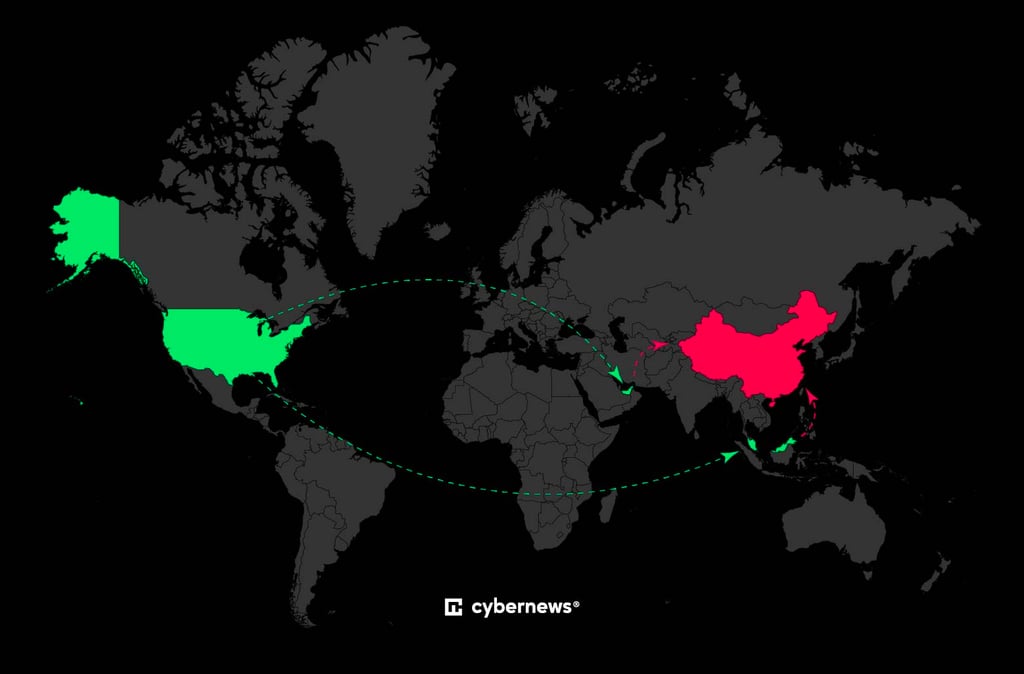
In January 2026, US regulators approved limited exports of H200. This, however, is unlikely to stop gray-market leaks, with some lawmakers criticizing the move as eroding US leverage. However, when demand for advanced chips is so astronomical, and supply chains span the globe, it is only possible to restrict sales on paper.
Legal and ethical challenges around AI training data
We’ve heard about the major lawsuits AI companies have been facing recently, including NVIDIA. The unfortunate reality is that for many of these multi-trillion-dollar firms, the sheer amount of money creates almost a legal loophole because the profits from AI are so large that they outweigh the risks of lawsuits over stealing copyrighted books, videos, and other content without permission to train their models.
So who actually pays the toll? Of course, it's the independent artists and creators who are harmed when AI systems use their work without compensation. However, what people sometimes miss is that companies and individuals who publish or deploy AI-generated content can face legal claims if those outputs reproduce copyrighted material, which happens quite often, and that “the AI made it” is not a guaranteed defense.
What’s most concerning ethically is that NVIDIA’s chips are also widely used in military and surveillance applications, including border security and intelligence.
NVIDIA’s role in military AI and surveillance
NVIDIA’s AI chips are classified as dual-use technologies under US export controls by the Bureau of Industry and Security (BIS). This classification means that they can be used for both civilian and military purposes.
NVIDIA’s AI chips, especially its Jetson processors, are now at the heart of advanced military technology worldwide. For example, Russian drones used in Ukraine rely on NVIDIA-powered chips for autonomous targeting and navigation.
Additionally, NVIDIA GPUs enable real-time video analytics for surveillance applications, including security systems deployed by US agencies. Human rights advocates warn that such AI hardware can support mass surveillance and privacy violations, especially under authoritarian governments like China, as seen in Xinjiang deployments.
Final thoughts
NVIDIA’s rise from gaming GPUs to AI, cloud, and military tech is a stark reminder of how unpredictable innovation can be. Chips that once only mattered to gamers are now central to research, national security, and global tech policy.
This shift brings real challenges. Supply chains, software vulnerabilities, and export rules all matter, and governments now need to treat AI hardware as critical infrastructure. The risks are real, but they can be managed with careful planning, monitoring, and legislation.
NVIDIA’s growth also raises legal and ethical questions. From AI training data to dual-use technology, many of the consequences fall on creators, users, and society. Being aware of these issues and planning for them is now vital for anyone working with AI.