US warns Europe to protect refrigerators as attacks surge
Europe’s refrigerator attacks trigger global cyber warning.
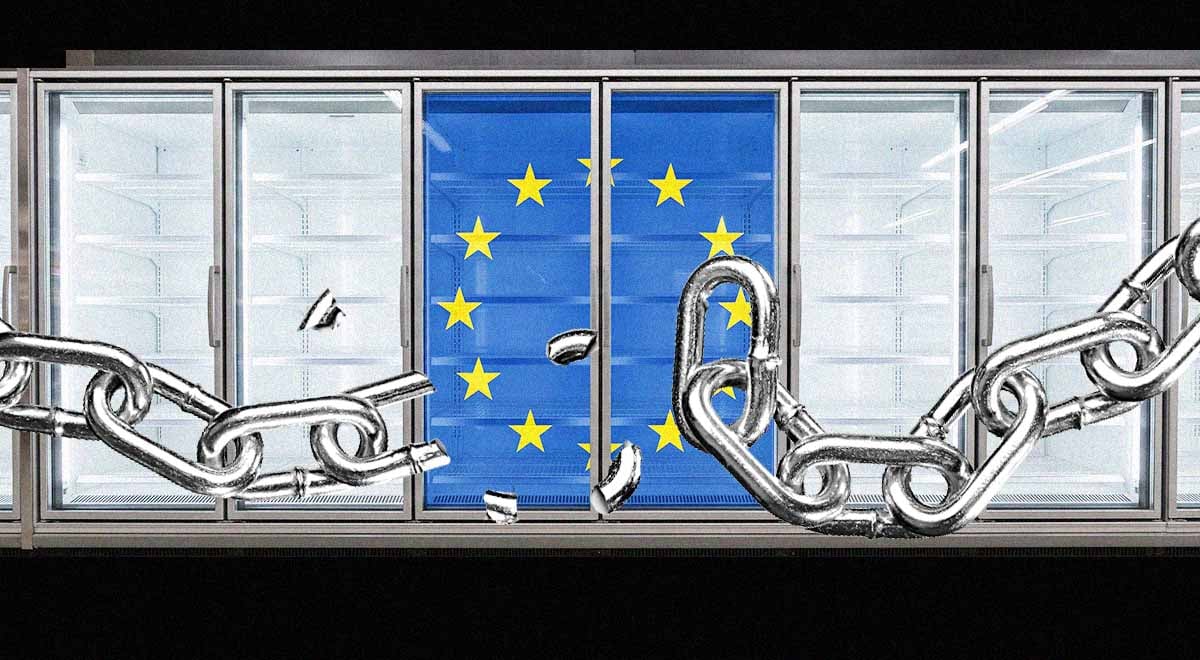
Image by Cybernews

 Follow us
- US agencies warn hackers are targeting refrigeration systems used by food, transport, and healthcare organizations.
- Attackers can alter temperatures, trigger heating cycles, spoil food, damage equipment, and create safety hazards.
- European supermarkets have already lost tons of food after attacks pushed freezer temperatures as high as 50°C.
- CISA urges operators to isolate systems, update firmware, strengthen logins, restrict access, and keep offline backups.
Key Takeaways by nexos.ai, reviewed by Cybernews staff.
Europe has already seen hackers turn refrigerators into weapons against food supplies. The US is sounding the alarm over similar threats targeting industrial cooling systems worldwide.
A joint advisory from five US government agencies warns that hackers are targeting industrial refrigeration systems around the world.
By breaching temperature controls, attackers are creating serious safety risks and spoiling tons of food worth thousands.
According to agencies, the attackers are going after grocery stores, food warehouses, refrigerated transport services, and healthcare facilities, which rely on automated systems to monitor temperatures and keep goods stored under safe conditions.




“The actors may exploit vulnerabilities or weaknesses in unpatched or internet-accessible controllers to remotely alter settings and force units into continuous heating and defrost cycles, which can cause widespread inventory loss and equipment hazards,” the US Cybersecurity and Infrastructure Security Agency (CISA) wrote.
Other organizations that signed the advisory include the FBI, the Department of Health and Human Services (HHS), the Department of Agriculture (USDA), and the Department of Transportation (DOT).


Stay updated with our latest stories and follow us on social media
Be the first to discover new stories, ideas, and updates from our team.
Serious health and safety risks
The CISA’s warning adds to growing concerns about cyberattacks that reach beyond digital networks and disrupt the services people rely on every day.
The advisory highlights that attacks against refrigeration systems cause serious risks, as attackers could change temperature settings or force refrigeration units into continuous heating and defrost cycles.
This could spoil large quantities of food, damage equipment, shorten system lifespans, and even create fire hazards.
The agencies also warn that attackers could disable temperature visibility, leaving operators unable to see the actual conditions inside refrigeration units. Such a denial-of-view attack could allow unsafe storage conditions to go unnoticed.
Such attacks not only may result in loss of food supply, but also indirectly harm consumers if products are consumed after unsafe storage, according to CISA.
Agencies mention the following main attack vectors:
- Authentication bypass
- Arbitrary code injection
- Weak configurations
This means that attackers may not need sophisticated tools or malware to compromise these systems. Poorly secured controllers, outdated firmware, and devices exposed directly to the internet can provide an easy entry point.
Europe was already hit
Just this week, a wave of cyberattacks has struck supermarket refrigeration systems across Europe, causing freezer temperatures to rise to 50°C.
Supermarkets in Belgium, Estonia, Ireland, Luxembourg, the Netherlands, Denmark, Sweden, and Finland were forced to throw away tons of spoiled food. The previous month, hundreds of French supermarkets reported similar attacks.
Cybersecurity analysts had previously warned that many refrigeration systems are running outdated firmware affected by known vulnerabilities. Around 13,000 refrigerator systems remain vulnerable across Europe.
How to protect the fridge
CISA recommends taking these steps to secure the refrigeration systems:
- Keep refrigeration systems off the public internet: Avoid connecting controllers and control panels directly to the internet. If remote access is needed, secure the connection with a firewall and make sure it is regularly updated.
- Keep refrigeration controls separate from office networks: Put operational technology (OT) devices on their own network. This makes it harder for attackers to reach refrigeration systems through compromised office computers.
- Strengthen passwords and login security: Change default passwords, enforce strong password requirements, and use phishing-resistant multifactor authentication (MFA) wherever possible.
- Install updates and replace outdated equipment: Keep device firmware up to date to close known security gaps. Replace equipment that has reached the end of its supported life and no longer receives security updates.
- Restrict access to authorized users and devices: Allow only approved devices and IP addresses to connect to refrigeration controllers or change their settings.
- Keep backups safe and accessible: Store recent backups offline and away from the main systems. Test them regularly to ensure they can be restored if an attack disrupts operations.