Apple Maps denies removing Southern Lebanon towns amid viral claims
Users on social media platform X have pointed out that Apple Maps provides much less detail about the southern region of war-torn Lebanon.
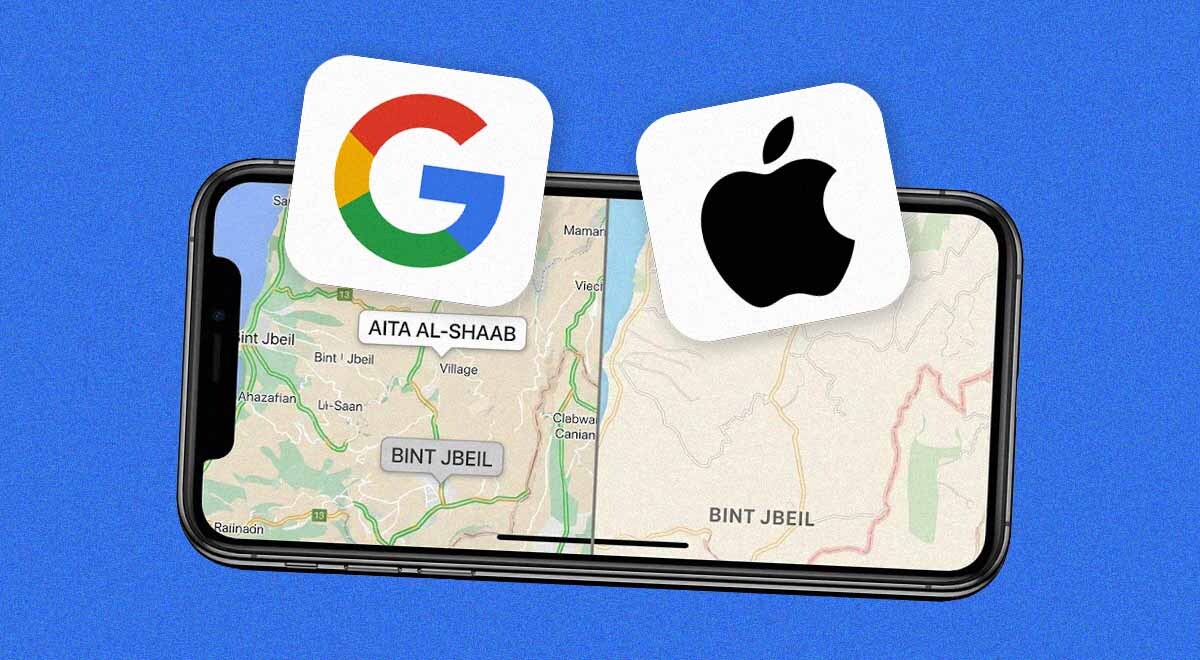
Mapping inaccuracies. Image by Cybernews.

 Follow us
Users on social media platform X have pointed out that Apple Maps provides much less detail about the southern region of war-torn Lebanon.
Locations such as Ayta al-Shaab and Bint Jbeil appear more clearly only when zooming in on the area, leading some netizens to speculate that they may have been purposefully erased.
Independent journalist Ethan Levins boldly proclaimed that Apple is “purposefully erasing Lebanon's history,” and the tweet opened up a deluge of comments, with clusters of territorial accusations leveled both against and in defense of Israel.
Photos were uploaded comparing a more comprehensive version on the Google Maps platform, although some local businesses were visible in Southern Lebanon, according to reports.
So you’re telling me a $3,200,000,000,000 company cannot place verified and known town names in southern Lebanon?
undefined Ethan Levins 🇺🇸 (@EthanLevins2) April 12, 2026
They purposely are erasing Lebanon’s history. They can add these towns in 5 minutes. pic.twitter.com/ye65mZJcFl






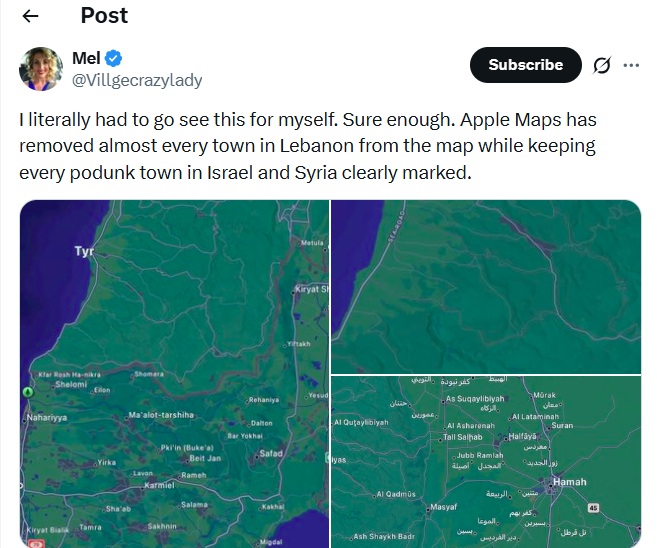
Other users wanted to get to the bottom of the discrepancy, with another X poster claiming that Apple Maps “removed almost every town in Lebanon from the map while keeping every podunk town in Israel and Syria clearly marked.”
Meanwhile, Apple has denied removing the Lebanese locations, sharing with WIRED Middle East, “We are aware that some outlets have incorrectly reported that certain village and town names in Lebanon were removed from Apple Maps. These locations have never been featured.”
These social media accusations happen amid ongoing conflict in southern Lebanon, in which over 1.2 million people have been displaced as a result of military strikes from Israel.






Mapping locations is a highly sensitive topic, especially in wartime, and, according to some interpretations, not being included is tantamount to not existing at all.
Another example of previous mapping controversy concerned Apple, Google, and Microsoft, in that they renamed “the Gulf of Mexico" “the Gulf of America,” following an executive order from President Trump in February 2025.