What is fearmaxxing? Experts question the self-improvement trend
Fearmaxxing, a viral self-improvement trend that encourages people to confront their biggest fears, is gaining traction online, but experts warn that treating fear as a universal signal for action can lead to impulsive decisions and costly mistakes.
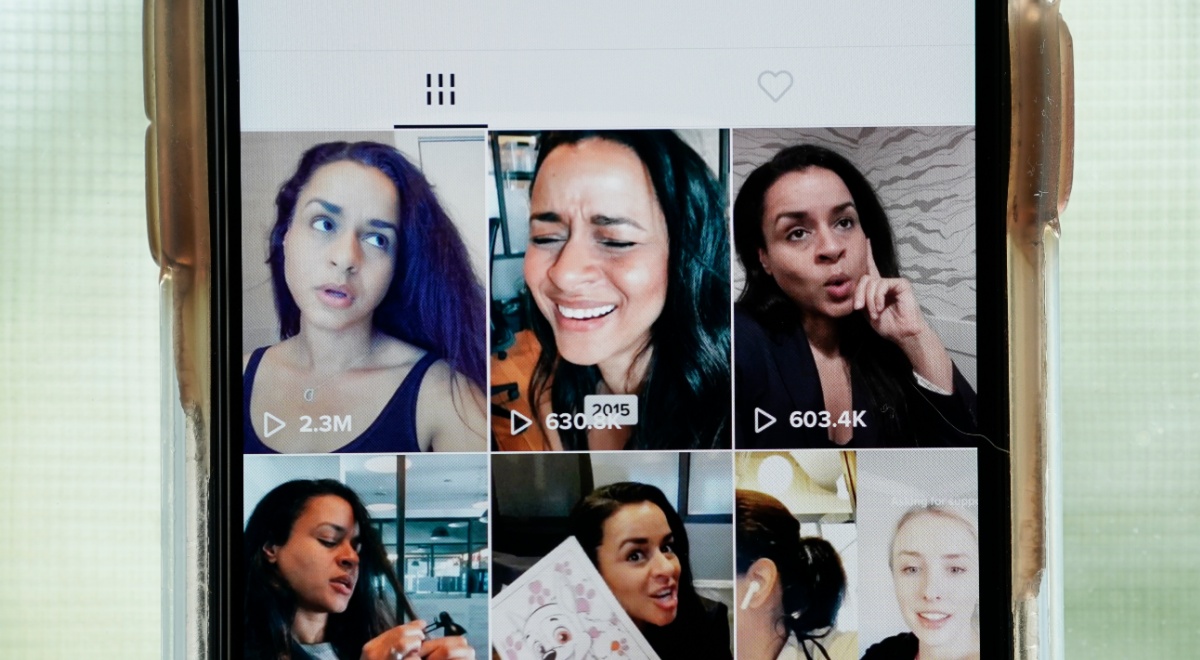
Going viral. Drew Angerer via Getty Images.

 Follow us
Fearmaxxing, a viral self-improvement trend that encourages people to confront their biggest fears, is gaining traction online, but experts warn that treating fear as a universal signal for action can lead to impulsive decisions and costly mistakes.
- Fear isn't always a sign you should take action. Experts say fearmaxxing oversimplifies complex decisions.
- Social media rewards dramatic success stories. The risks and failures behind life-changing decisions are often left out.
- What works for one person may harm another. Psychologists warn that one-size-fits-all self-improvement advice can backfire.
Key Takeaways by nexos.ai, reviewed by Cybernews staff.
With all the wellness trends flooding social media channels, another has recently come to light: Fearmaxxing. Sometimes there are so many trends that it's hard to keep up.
Fearmaxxing can basically be described as intentionally seeking out the most fear, ramping up high-stakes discomfort, and using a massive rush of adrenaline to make big decisions.
Leaving a partner or quitting a job could result from this, much like in the recently reported case of influencer Vicki Antsey, who champions the fearmaxxing cause.






However, it can be limiting to follow a one-size-fits-all narrative, especially when you could end up losing everything.
Is thinking things through carefully really so bad?
Distorted reality
In cases like Antsey's, there is a problem of narrative distortion. According to relationship strategist Katarin Polonska, saying “I quit everything, and it worked out” is far more compelling than the reality of “I quit everything, lost my house, and my kids spent 3 years in instability.”
Fearmaxxing, as in the case of the lucky few, can be the ultimate success story, but it doesn’t seem realistic or advisable for most people, especially when it feels like history is repeating its marketing tricks.
Neuro-linguistic programming was a trend in the 1970’s that felt like a parallel, where verbal techniques from a therapist could prompt a patient into confronting the worst-case scenarios. Revisionist views saw it as a pseudo-science without much evidence-based credibility.
Polonska sees this as “a bit damaging since it took real psychological concepts, and stripped out the complexity” – a bit like analog clickbait back then.
And as humans chase validation, often in high-stakes situations, we find ourselves in “avoidance loops” around tough conversations or public speaking, meaning that deep introspection is sacrificed for an instant answer.
Framing something like hesitation as weakness and action as courage is perpetuating the problem.

Gamifying wellness
Similar to how someone might gamify self-improvement, like with dopamine spikes, fasting, or even entering monk mode (isolation mode), the payoff of fearmaxxing is all about getting clicks.
The danger is that the public is told that being average is not desirable. They search for one specific truth and then deep-dive into that particular trend, especially the broader self-help books.
Flip it over, and surely confronting your fears is a healthy strategy.
“I sometimes make a recommendation to one person, and then make the exact opposite recommendation to another person,” says psychologist Johanna Wood, showing how approaches can be subjective.
While fearmaxxing may be beneficial, in some ways, to those prone to letting fear hold them back, the same advice to someone who is more impulsive is harmful.
And while all ages may be prone to taking up a wellness trend, it’s the younger crowd that Wood is most concerned about.
“I know a lot of people, especially younger people such as teenagers, whose brains are still developing, who may be more vulnerable to adverse consequences of taking on this lifestyle.”
Healthy discomfort should be sat with for a while – whether being comfortable in silence or sitting without your phone. The boat can rock a bit sometimes: it’s all part of being at sea.