Beware of Google: Why are more countries looking for Google Maps alternatives?
While Google Maps introduces new, AI-powered features, more countries are thinking of introducing local mapping systems. Countries claim it’s due to security measures, and Google Maps is only one part of the issue.

Image by Cybernews

 Follow us
While Google Maps introduces new, AI-powered features, more countries are thinking of introducing local mapping systems. Countries claim it’s due to security measures, and Google Maps is only one part of the issue.
More countries are aiming to utilize technologies developed in their own lands as a means to achieve technological independence from the US.
That’s because the US tech giants, being so dominant in the market, have actual influence on how countries introduce tech policies, especially when they become dependent on tech companies such as Nvidia or Google.
One example of this emerging trend is the shift by European countries away from US-based proprietary software to Linux.
Now, some countries are aiming to replace well-known and widely used applications, such as Google Maps.






For example, South Korea has once again postponed Google’s request to allow it to export map data.
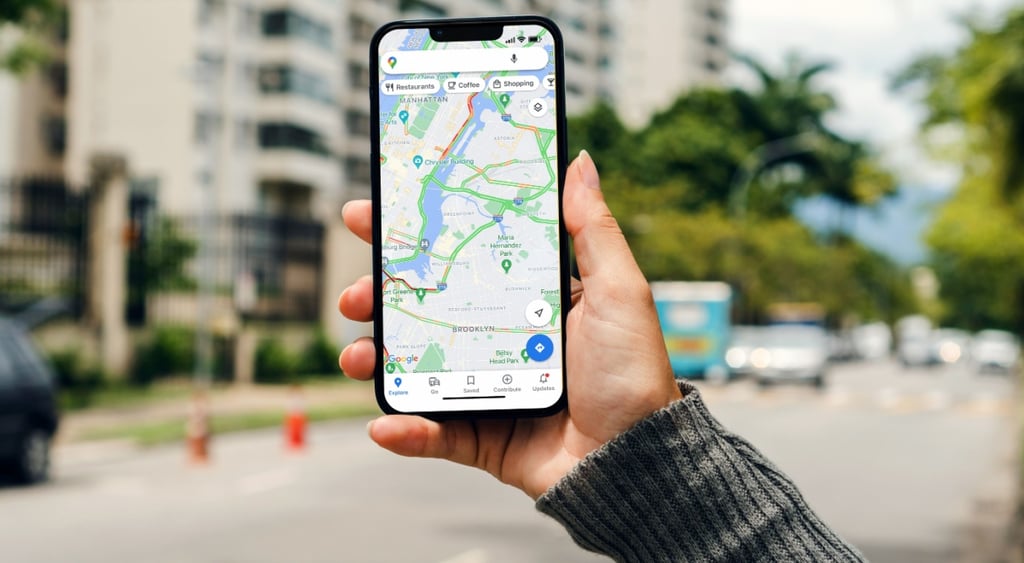
This isn’t the first time that South Korea’s Ministry of Land, Infrastructure, and Transport has refused to give Google permission to use map data on servers outside South Korea due to security concerns.
The South Korean government may reconsider its decision if the company submits the necessary documentation within 60 days, or by February 5th, 2026.
Back in September, Google agreed to the country’s safety request to ensure that South Korea’s location information is not revealed to users within or outside the country. The company also agreed to conceal images of the country’s security facilities.
However, South Korea has already noted that the company has been making it difficult to approve the application, as it doesn’t align with previous statements about keeping sensitive information secure.
The issue may lie in Google’s desire to obtain approval to use the same detailed maps that local map services, such as Naver Map and Kakao Map, utilize.
The company wants to export 1:5,000-scale map data, which means that 1 centimetre on the map equals 50 meters in reality. Currently, Google works with 1:25,000-scale data, which is not as accurate.






Local Google Maps alternatives for the win?
South Korea isn’t the only country that’s trying to shun Google Maps.
MapmyIndia, an Indian company that developed digital mapping technology in the country, released a local alternative for Google Maps, called Mappls.
One of the reasons residents might want to use Mappls instead of Google Maps is that it was created with the intention of storing the country’s internal mapping data locally, rather than on overseas servers, notes Sify.
Mappls is also privacy-oriented, meaning that it doesn’t track user location for advertising purposes.
The application also serves as a representation of India’s ambition not to be impacted by US-owned businesses.

Google Maps presents new features
While some parts of the world are already considering ways to distance themselves from corporations like Google, this hasn’t stopped the company from releasing new AI-powered tools.
It has recently been reported that Google Maps is introducing new AI features to help users and developers create interactive mapping projects faster.
The new tools include a builder agent, a coding tool that can create an interactive map based on the user’s text description. The tool also includes a styling agent that lets users create customized maps.
Google has also introduced Grounding Lite, a feature that allows developers to set their own AI models using the Model Context Protocol (MCP).
This feature enables an AI assistant to answer questions similar to “How far is the nearest restaurant, grocery store, restaurant, etc.”, notes TechCrunch, providing the answer with visual information such as a list or a map.
Unlock more exclusive Cybernews content on YouTube.