Bon Appétit: researchers create a robot that can be eaten
The edible robot was developed with environmental safety in mind.

Image Donald Iain Smith | Getty Images

 Follow us
The edible robot was developed with environmental safety in mind.
The evolving technology has enabled the creation of various robots that can move, clean, and assist with tasks. So far, so normal.
However, scientists in Switzerland have now developed another type of robot that can be consumed. That’s right, eaten. The soft robot that not only moves but can be chewed and swallowed, including its components, such as the battery.
But who needs an edible robot, and where can it be used?
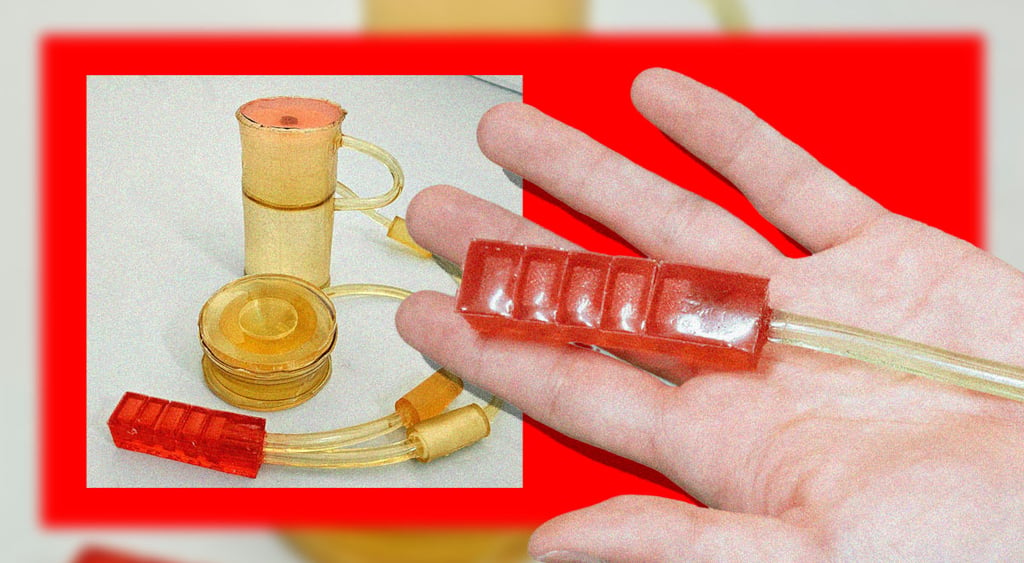






What’s an edible robot?
Researchers at the Intelligent Systems Laboratory at EPFL University developed the robot entirely from materials that are safe for consumption. They achieved this by replacing plastic and metal, the regular components of its power source and structure, with natural materials such as wax and gelatin.
Soft robots move by pumping air in and out of little chambers. The same applies to this soft robot, except that its pumps and tubes are made from edible materials.
One of the components that the researchers had to consider was how to replace a normal battery with a chemical power source.
Since it can’t use a normal battery, the researchers made an edible chemical power source. They used baking soda and liquid citric acid to store the chemical energy, with carbon dioxide being pumped into the chambers as a propellant.
To activate the battery, pressure is applied to the membrane of the acid chamber. When the pressure is high enough, the acid passes through the membrane, mixing with the baking soda, and triggers an acid-based reaction that releases carbon dioxide and sodium citrate, a substance used in the food industry, according to Notebook Check.
Where can an edible robot be used?
The primary purpose of the edible robot is to provide nutrients, vaccines, or medication to wild animals, such as wild boars, as noted in the research on the Edible Pneumatic Battery for Sustained and Repeated Robot Actuation, without human intervention.
Such a solution is considered a helpful, cheaper, and safer option in cases of swine flu or other diseases, as it facilitates the administration of the vaccine to animals.






Robot-powered future
Years ago, robots were considered something out of science fiction. But now, we get to see them being developed into devices that are meant to make our lives easier.
The soft robot is just one example of how robotics can be applied in real-life situations.
Recently, Figure AI, a robotics company specializing in AI-powered robots, announced that it has completed development on a humanoid robot, Figure 03, designed to assist with household chores and perform manual tasks.
Several viral videos showing robots’ first steps or attempts to accomplish various tasks, which are not always successful, reveal that people seem to be very interested in (humanoid) robotics.
Robotics is also expanding into other markets, with Honor, a Chinese consumer electronics company, developing a robot phone that features a camera that constantly monitors its surroundings.
Unlock more exclusive Cybernews content on YouTube.