The longest night: Y2K, the millennium bug, and the lessons we’ll carry into 2026
As December 31st, 1999, was ticking away its last minutes, some engineers practically glued themselves to monitors. By then, everyone had heard of the rumour – once midnight struck, the unrolling scenario would be far more grim than Cinderella losing her shoe.
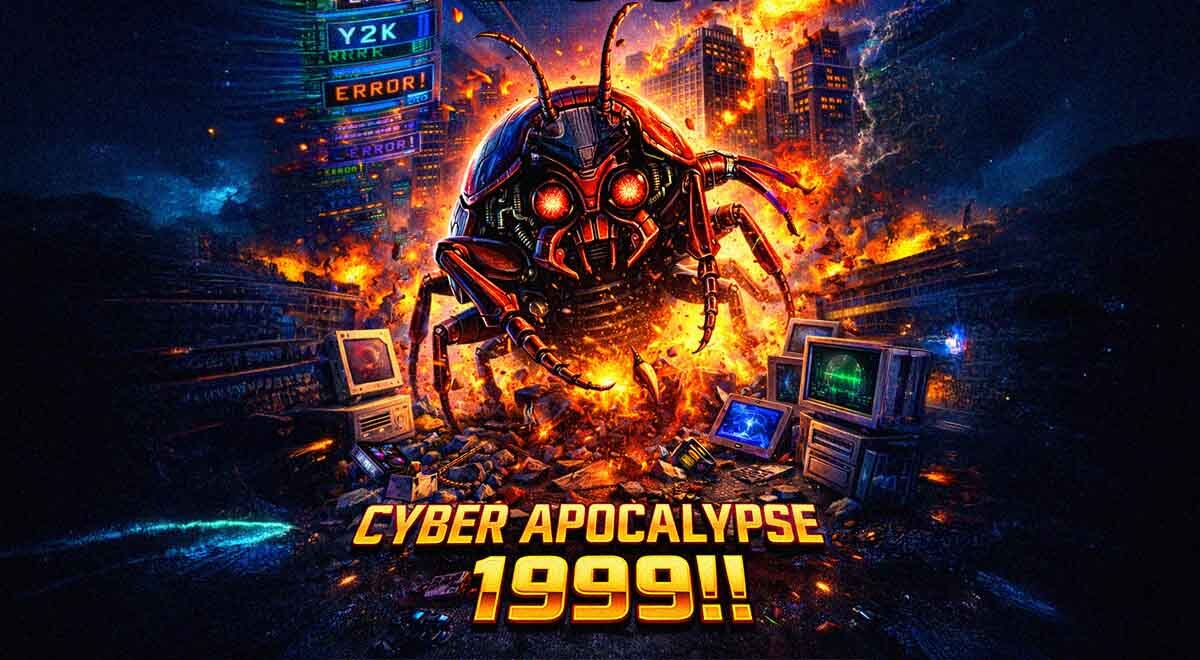
Image by Cybernews.

 Follow us
As December 31st, 1999, was ticking away its last minutes, some engineers practically glued themselves to monitors. By then, everyone had heard of the rumour – once midnight struck, the unrolling scenario would be far more grim than Cinderella losing her shoe.
Systems would shut down, power grids would fail, banks would lose records, and planes would fall from the sky. The IT apocalypse-like event was called Y2K.
For those unfamiliar with the world of technology, it sparked some paranoia at the time, which made its way to prime-time television news and front-page newspapers.
However, insiders, such as Shakel Ahmed, now founder of CyberDesserts, recognize that it was an event that has been a precursor to the issues the industry struggles with 25 years later – technology remembers everything, especially the shortcuts we take.
In 1999, Ahmed’s New Year’s Eve started in July.




Was there really something to be afraid of?
The Y2K bug, also called the Millennium Bug, wasn’t born from science fiction – there was a lot of programming logic to it.

The end of the 20th century was a period when memory was expensive – it’s as if 25 years later, the world has come full circle, with ever-growing RAM prices increasing the costs of gadgets.
At the time, programmers were storing years as we normally saw on calendars – in four digits, such as 1995, 1912, etc., they stored them as two, for instance, 99. That means that systems relied on two-digit entities. At the time, it made perfect sense. No one expected that software written in the 1960s, 70s, and 80s would still be running critical infrastructure at the turn of the new millennium.
That is, until it became a problem.
“And then when we got to 2000, it would go back to zero zero. And so the zero zero was a concern. It's like, isn't that going to confuse computer systems because they're not going to know what zero zero is, right? Could it be 1900? Or could it be 2000 because we weren't accounting for the first two digits of the year? And I think this was, perhaps over-exaggerated concern because computer systems would just carry on with that digit,” Ahmed recalls.
This became a big problem for him.
At the time, Ahmed was working in an insurance company and was supporting systems where dates weren’t just a technicality.
All policies start on specific dates. Claims are validated if they meet certain insurance coverage periods. That determines payouts, and they all depend on a single piece of information – when did something happen?






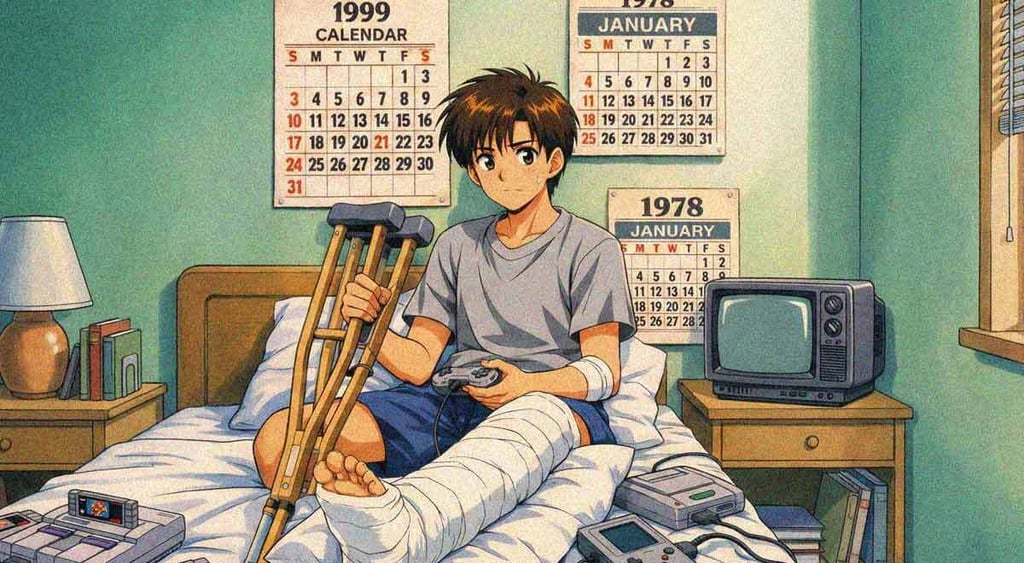
For example, if a person who had broken his leg and wanted some compensation, chances are he would have taken at least more to do so, because the system would have said that the leg had been broken any time in the 20th century.
“Yes, 100 years ago, so it would have been the wrong date. Either we would have pushed out letters that just had the wrong date. That didn't make sense. Or the worst case, the system just wouldn't have created the claim for the person. And so it would have added delays. So I think the consequences here would have added significant delays to anybody who was waiting for, you know, any kind of appointment to see a doctor. They just never would have received the letter,” explains Ahmed.
Therefore, in practice and looking at this hypothetical situation only legally, a person’s insurance policy would have appeared to have started after a claim date, which would make it invalid – something that looks nonsense to a human, but perfectly logical to a machine.
A generation defined by legacy code
Looking back, Y2K stands out not as a single bug, but as a moment when the industry was forced to face the consequences of its too-long-ignored legacy systems.
By the late 90s, organizations were still heavily relying on entire decades of accumulated technical debt – that’s software written by teams that no longer existed, and still basing their decisions on assumptions that nobody had revised for decades.
“Because the people and the skill set that originally put that code together might not be available anymore. So somebody developed it five, ten years ago. And now we have a whole new bunch of programmers or developers, or technology experts who don’t understand that code because they never built it. They don’t know what the original thinking or process was. And so it never gets touched. And the cost of fixing it over time becomes more and more expensive,” explains Ahmed.
For months leading up to the millennium, teams audited systems line by line. They rewrote date logic. They tested scenarios no one had ever tested before. In many cases, they discovered software still running critical operations that executives didn’t even know existed.
Then midnight came – fireworks were coloring the dark sky across the globe, champagne corks were flying into the air, and nothing catastrophic had happened. At least not in Ahmed’s team.
For months leading up to the supposedly tragic event, Ahmed and his colleagues fixed legacy insurance systems.
The quiet work that saves the world. And what about the year 3000?
One of the most uncomfortable truths Ahmed points out is that fixing legacy systems rarely gets rewarded. Innovation sells, but maintenance doesn’t.
Yet cybersecurity, stability, and trust depend on what he calls basic tech hygiene: reviewing code regularly, retiring systems that are no longer fit for purpose, and acknowledging that not everything needs to live forever.
“I've been in the software industry for a long time, so I could say that we are always pushing for innovation for new tech. I work in cybersecurity, and we're also responsible for making sure that we replace things that are no longer fit for purpose. Right. And I think, you know, there is an attitude certainly in many other organizations to adopt, that it's important to retire stuff that is no longer fit for purpose,” thinks Ahmed.
According to him, the real success of a worrying night from 1999 to 2000 wasn’t that nothing happened. It was that people prepared for something they hoped would never come.
So, what about our future, given what has happened before?
Ahmed says that “a paradigm shift” of how we consume data, knowledge, and information has taken place, and he would like to think that in the future, people will be interacting with them at a human level.
Perhaps, a day will come when software is created purely by having an intention to do so: “We’re going to be sending instructions, even writing code or envisaging an idea. And that idea comes to life.”
However, he sees risks in the ever-growing human dependency on technology and predicts that “in 900 years it’s going to be at a scale that’s just unforeseeable.”
Unlock more exclusive Cybernews content on YouTube.