First fully AI-guided Russian drone kills 3 people in Ukraine
The drone was equipped with an Nvidia module.
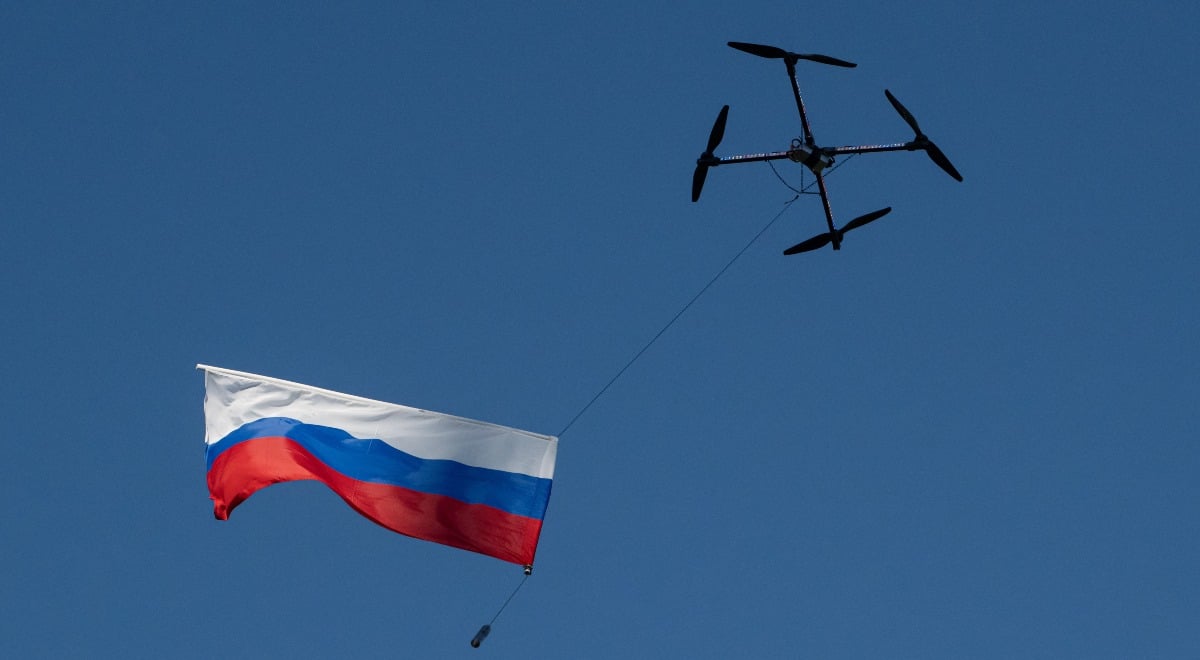
Image by Andrei Bok/SOPA Images/LightRocket via Getty Images

 Follow us
- A Russian AI-guided drone attack killed three civilians at a petrol station in Zaporizhzhia, Ukraine.
- Ukrainian experts say the drone chose a propane tank after humans programmed its route.
- Investigators found an Nvidia Jetson Orin module, which Nvidia says Russia cannot buy directly.
- The strike renewed warnings that autonomous weapons may kill civilians without direct human control.
Key Takeaways by nexos.ai, reviewed by Cybernews staff.
The world may be entering a dystopian future where wars are fully automated.
A Russian drone attack, which took place in early July and targeted a petrol station in Zaporizhzhia, southern Ukraine, killed 3 civilians.
It was also the first time Russia used a fully autonomous drone that selects targets using AI, since Moscow launched a full-scale invasion in Ukraine in 2022, The New York Times reports.
Russia’s Molniya drone was programmed by human operators to fly towards a local petrol station, and selected a propane tank as its target independently, according to Ukrainian experts.






However, the drone crashed into a wall and exploded, resulting in the deaths of the civilians.
An Nvidia Jetson Orin computer module was found in the wreckage. As it was unencrypted, Ukrainian authorities got access to its communications.




Stay updated with our latest stories and follow us on social media
Be the first to discover new stories, ideas, and updates from our team.
Ukraine’s military intelligence has identified the same type of Nvidia module inside Russia's new S-71 Monochrome air-launched cruise missile, suggesting integration of AI.
The company then told Cybernews that Jetson Orin modules are consumer-grade products and are not available in Russia. However, pre-owned Jetsons are available through many reseller channels, which Nvidia has no control over.
US sanctions imposed on Moscow after the 2022 ban the exports of advanced and dual-use technology and any equipment needed to support its war machine.
The bleak future of automated war
Ukrainian authorities and experts told the NYT that Russia’s breakthrough could be the warning sign of “a dystopian future of weaponry untethered to humans.”
International conflicts are indeed becoming increasingly automated, and the Russia-Ukraine war is the major testing ground for new military technologies, where drones account for roughly 70-80% of battlefield casualties, according to 2025 data.
For a country like Ukraine, defending itself from a much larger power, AI can help save lives by collecting intelligence and deploying machines into kill zones before human soldiers, among other uses.
However, AI use in conflicts raises serious ethical questions and concerns. Experts warn that autonomous weapon systems cannot distinguish between combatants and civilians, resulting in accelerated and maximized destruction.
The United Nations has recently renewed calls for stricter global controls of fully autonomous and AI-guided drones.
“We are now dangerously close to crossing a moral red line: the autonomous targeting of humans by machines,” UN Secretary-General Guterres said.