The Swiss Army is replacing Microsoft 365 with OpenDesk
Even neutral Switzerland has fallen out of love with Microsoft.
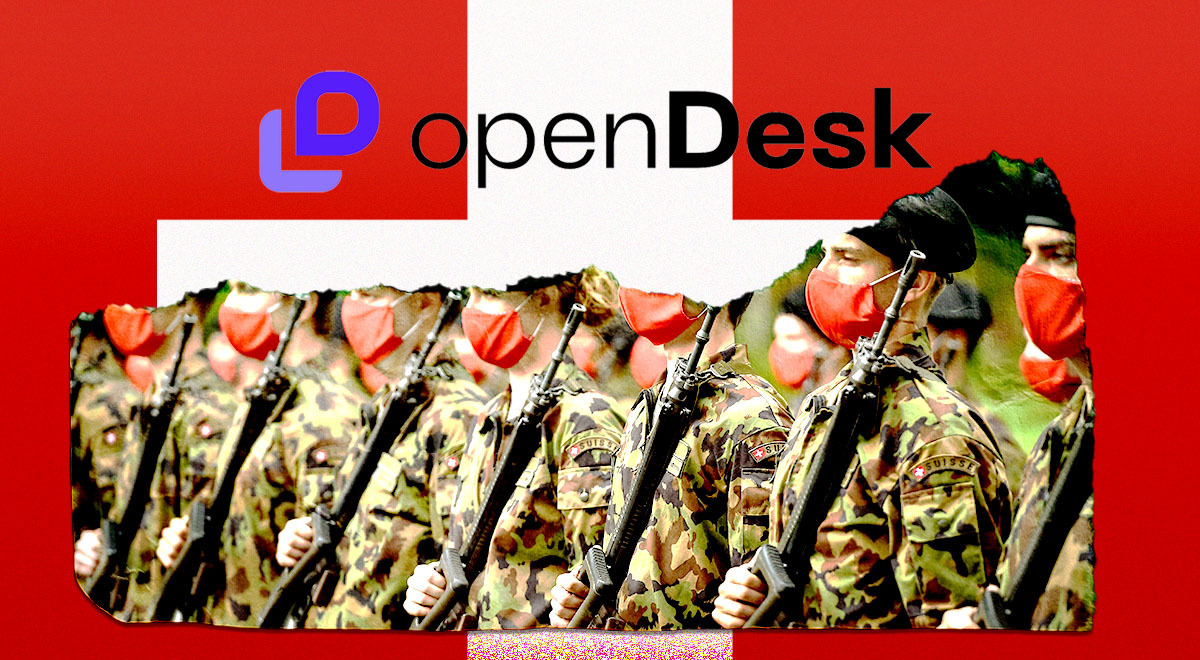
Image by Cybernews

 Follow us
- The Swiss Armed Forces will replace Microsoft 365 with OpenDesk for cyber units by October 2026.
- Officials cite Microsoft’s push toward US cloud services and concerns over foreign access to sensitive data.
- The move supports Switzerland’s wider effort to reduce dependence on Microsoft and strengthen digital sovereignty.
- Other European governments are also moving away from US tech, though OpenDesk may not fully replace Microsoft 365 yet.
Key Takeaways by nexos.ai, reviewed by Cybernews staff.
The Swiss Armed Forces are migrating from Microsoft products to the open-source platform OpenDesk, citing the forced push toward American cloud services.
The Swiss army’s cybersecurity experts, primarily the Cyber Command and the subunit for Cyber and Electromagnetic Actions, are planning to complete the migration by October 2026, according to Republik.
The workplaces of all these units’ employees will be required to be equipped with OpenDesk, a free, open-source office and collaboration suite developed by the German Center for Digital Sovereignty in Public Administration (ZenDiS).






The migration marks a strategic shift from years-long cooperation between the Swiss military and the American tech giant.
Simon Müller, head of the Cyber Command, says Microsoft’s Office 365 can no longer be considered a suitable solution for military requirements, partly due to the company’s push toward mandatory cloud usage.
Microsoft increasingly sets its cloud services as the default, meaning that in the future, emails, documents, and other data will only be accessible via the US company’s servers.




Stay updated with our latest stories and follow us on social media
Be the first to discover new stories, ideas, and updates from our team.
US laws like the 2018 Cloud Act compel American companies to hand over data requested by US law enforcement agencies, including data of citizens of other countries.
Republik writes that the goal of the Swiss army’s migration is to regain full control over its data and the software environment.
The migration is part of a broader Swiss government push towards greater transparency and the strengthening of its digital sovereignty. In 2024, it passed a law mandating the disclosure of the source code for software developed by federal authorities or third parties.
Earlier this year, the Swiss Federal Chancellery said that the federal administration aims to reduce its dependence on Microsoft, despite its software having recently been installed on 54,000 workstations.
The wave of European digital sovereignty
Switzerland joins the growing number of European countries aiming to cut their reliance on US technologies.
While the concept of “European digital sovereignty” isn’t new, efforts to break ties with American tech giants intensified under the Donald Trump administration, whose policy toward Europe has become increasingly hostile.
The Austrian Armed Forces switched from Microsoft 365 to LibreOffice in 2025, citing efforts to strengthen their digital sovereignty and ensure that data is processed only in-house.
Similar movements are seen in Germany, France, the Netherlands, and Denmark.
Data privacy concerns play a major role in the abandonment of US tech. For instance, Microsoft was recently accused of leaking data of Dutch civil servants working on the implementation of EU digital regulators.
According to Dutch media, the American giant shared employees’ emails, minutes, and invitations with the US House of Representatives without redacting their names.
However, it remains to be seen whether the migration can be successful in the long term.
A recent study by Swiss experts suggests that OpenDesk cannot yet fully replace Microsoft 365. They noted, however, that some missing functionalities can be compensated for with open-source software, such as LibreOffice and Thunderbird.