Is TikTok’s data privacy update bad news for immigrants and LGBTQ+?
TikTok has finally become a US entity, but users worry that the updated privacy policy may endanger vulnerable users, such as members of the LGBTQ+ community and undocumented immigrants.

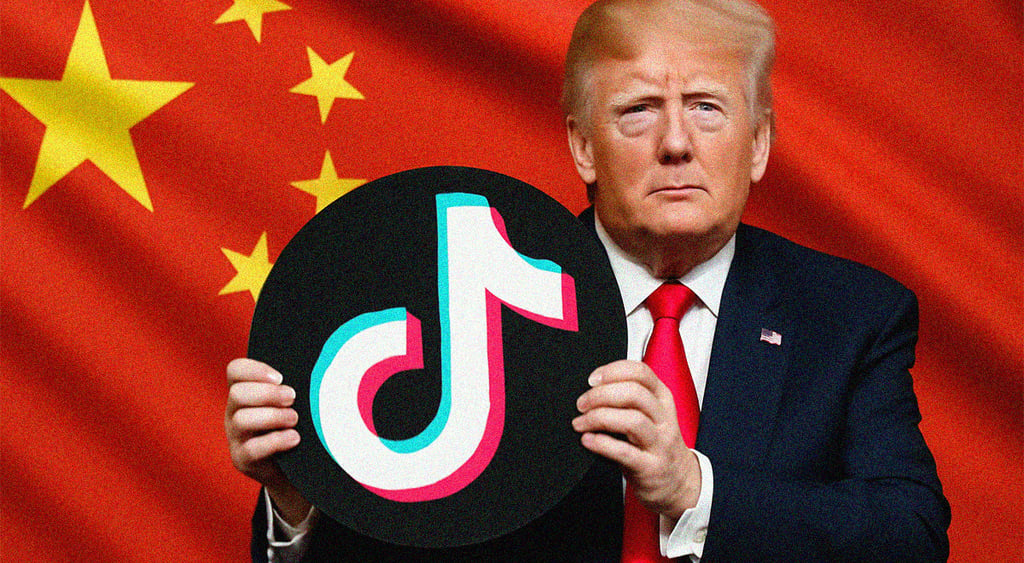
Image by Cybernews.

 Follow us
TikTok has finally become a US entity, but users worry that the updated privacy policy may endanger vulnerable users, such as members of the LGBTQ+ community and undocumented immigrants.
ByteDance, the parent company of TikTok, secured a deal on January 23rd that allows it to continue operating the platform in the US. Most of the new entity will be owned by American and Emirati investors, while China’s ByteDance will now hold less than 20%.
The deal comes after Washington repeatedly claimed that TikTok, owned by a Chinese firm, poses a threat to national security, with the company’s handling of the data of millions of American users among the major concerns.
While President Donald Trump triumphantly declared that he had saved the platform, the TikTok privacy policy update following the US acquisition sparked concern among users.












The new policy states that the platform collects sensitive user information, which they disclose in survey responses or in their content. It includes racial origin, religious beliefs, sexual orientation, mental health diagnosis, and immigration status, among others.
The update comes amid a charged political climate, where the Immigration Enforcement Agency’s (ICE) raids resulted in killings of unarmed protestors and detaining US citizens, while right groups warn about the deteriorating rights of LGBTQ+ people.
Much of the data was already collected by the platform when it was still China-owned. However, TikTok’s 2024 privacy policy update didn’t specify sensitive information like immigration status.
Did TikTok actually change its privacy policy?
Marta Hovanesian, a privacy and data protection attorney at Nor Law, says the update to the privacy policy does not mark a significant change in the actual data collecting practices.
She points out that people already share personal information on TikTok every day, including details about their medical conditions, relationships, and even children.
“They may think that they have nothing to hide, but everyone should live as if they do,” Hovanesian tells Cybernews.
Have thoughts about this topic? Others do, too. Join them in the discussion.
However, she warns that governments could be using TikTok to identify illegal immigrants or women who have had miscarriages.
Thirteen US states have a total abortion ban, raising the risk of miscarriage criminalization.
They may think that they have nothing to hide, but everyone should live as if they do.Marta Hovanesian
For instance, a South Carolina woman who experienced a miscarriage in 2023 was charged with homicide and spent 22 days in jail before being cleared by a grand jury.
TikTok quietly altered its law enforcement guidelines back in October, allowing “regulatory authorities,” such as ICE, to submit data requests to the platform, while relaxing user notification rules.
According to the platform, authorities can request information such as IP addresses, direct message content, and payment information.
No regulation protects against oversharing
Ericka Watson, the founder of Data Strategy Advisors, says she is glad to see explicit call-outs for the different categories of information TikTok will process.
However, whenever sensitive data is collected about a person, they should automatically assume an increased risk, including disclosures that can result in real harm to people, such as discrimination, surveillance, and impacts on freedoms.
“Users should always keep in mind that even when a platform like TikTok says it will not use information directly, there are ways in which they can infer from patterns and the way you interact with content,” Watson says.
Hovanesian says people’s willingness to share their complete lives on social media and platforms’ ability to infer sensitive information and personality traits from just a few interactions make for a dangerous combination.
She tells Cybernews, “The EU tries to regulate social media platforms through the Digital Services Act, but the Act does not provide sufficient protection against people's own willingness to overshare.”
Users are leaving TikTok for UpScrolled
Days after the privacy policy was revised, some users reported no longer seeing political content recommendations on their feeds or content about ICE being censored.
Such claims are hard to verify. However, some users reported deleting TikTok and downloading UpScrolled instead.
The app, founded by Palestinian Australian technologist Issam Hijazi, is marketed as an alternative to mainstream media platforms that “prioritizes real conversations and meaningful interactions.”
Hijaz has previously spoken against what he called big technological companies’ shadow-banning of pro-Palestinian content and spreading propaganda.
Unlock more exclusive Cybernews content on YouTube.