Ultra-high-definition TVs aren’t worth the money: human eyes have a resolution limit, research shows
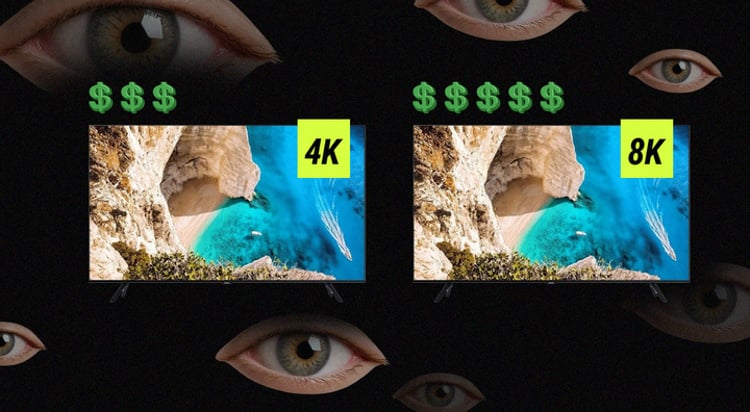
For many tech enthusiasts, the sweet feeling of upgrading to ultra-high-definition screens is an absolute must. However, new research suggests that for the average person, a 4K or even 8K resolution television may offer little to no difference in TV show or movie quality. As a matter of fact, it makes more sense to stick to a standard 2K (QHD) screen resolution.

 Follow us
For many tech enthusiasts, the sweet feeling of upgrading to ultra-high-definition screens is an absolute must. However, new research suggests that for the average person, a 4K or even 8K resolution television may offer little to no difference in TV show or movie quality. As a matter of fact, it makes more sense to stick to a standard 2K (QHD) screen resolution.
Imagine a typical UK living room. Researchers at the University of Cambridge and Meta Reality Labs have defined it as a sofa facing a 44-inch television that is roughly 8 feet (or 2.5 metres) away.
For this experiment, scientists used a 27-inch 4K monitor that delivered roughly 90-100 pixels per degree (PPD). It was attached to a movable frame, which allowed for experimentation on 18 participants’ vision at different distances.
All the people in the experiment had either normal or corrected vision, which means they could see more than 60 pixels per degree.
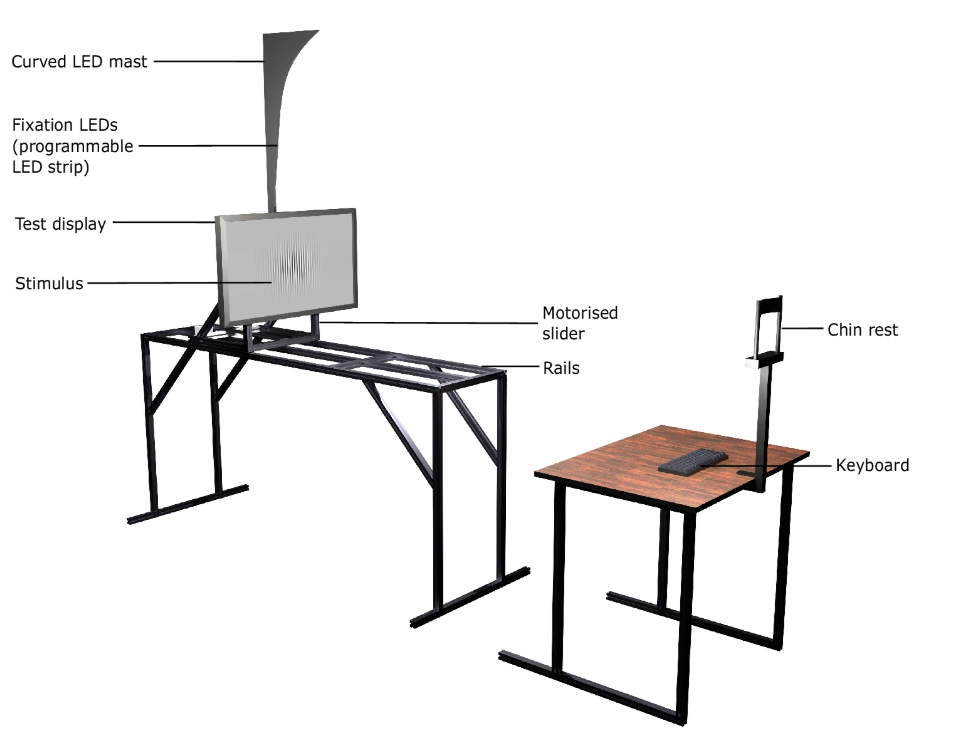






The experiment continued as people were shown two types of images: one containing one-pixel-wide vertical lines in various colours and another with a plain grey block. Then, they were asked to indicate which contained the lines. When participants could no longer tell the two images apart, that point defined the eye’s “resolution limit.”

As the researchers put it, measuring PPD “helps answer a more useful question than ‘how high is the resolution of this screen?’ Instead, it answers the question 'how does this screen look from where I’m sitting?”
“If you have more pixels in your display, it's less efficient, it costs more, and it requires more processing power to drive it,” said co-author Professor Rafał Mantiuk, also from Cambridge’s Department of Computer Science and Technology.
“So we wanted to know the point at which it makes no sense to further improve the resolution of the display.”
The conversation on this topic is live. Join in the discussion.
It turns out that when greyscale images are viewed straight on, the human eye can detect up to 94 PPD for greyscale images, 89 PPD for red and green, and 53 PPD for yellow and violet. The typical PPD is 60.
This means that in a typical UK living room, a 4K or 8K display offers no visible advantage over a lower resolution QHD screen of the same size and does not pick up on extra details once a screen exceeds a certain threshold. In comparison, an 8K screen can push the PPD to 180-200.

“As engineering efforts push towards higher resolutions for mobile, AR, and VR displays, it’s vital to understand the point at which further improvements offer no tangible benefit to viewers,” said Dr. Maliha Ashraf, first author from Cambridge’s Department of Computer Science and Technology.
You too can measure if an ultra-high-definition works for your living room, specifically
The research has also resulted in this new free online calculator, where users can input their room and screen dimensions to see what resolution is truly appropriate for them. The research has been published in the journal Nature Communications.
With the rise of ever-higher resolutions across TVs, laptops, phones, and even in-car displays, these findings could influence not only consumer decisions but also the development of future display technologies.
Unlock more exclusive Cybernews content on YouTube.