Why the “Office Is Dead” panic actually matters
Although Microsoft Office was never dead, we explore why Microsoft’s clarity problem is very real.

Miniature figures holding a banner with the Microsoft logo. Axel Heimken/picture alliance/Getty.

 Follow us
Although Microsoft Office was never dead, we explore why Microsoft’s clarity problem is very real.
From school days to getting your first job. Microsoft Office has probably been by your side. Word, Excel, Outlook, and PowerPoint are not niche tools. They are a daily infrastructure for work, education, government, and life on a computer.
So when headlines and screenshots started circulating last month suggesting that "Microsoft Office is dead," the confusion was not irrational. It was predictable. In fact, it was almost inevitable.

If more than 400 million people walked away unsure what Office even is anymore, that is not a failure of reading comprehension. That is a branding problem that has been building for years, finally detonating under the weight of AI hype.






Microsoft was technically correct when it rushed to clarify things. The Office still exists. Sort of. Sometimes. Depending on which version you mean, which page you landed on, and how closely you follow Microsoft's internal logic.
But when your own website greets users with "The Microsoft 365 Copilot app (formerly Office)," you lose the right to act surprised if people think Office has been renamed.
Office is not dead, but Microsoft made sure it looked that way
Visit Office.com, and you are not greeted by reassurance. Instead, you are presented with a sentence that feels like it was written by a committee that forgot normal humans exist.
In many ways, this has always been the tech giants' biggest problem. Microsoft's products are often brilliant, but they are spoken in a language meant for engineers, not humans. The technology works. The translation rarely does.
"The Microsoft 365 Copilot app lets you create, share, and collaborate all in one place."
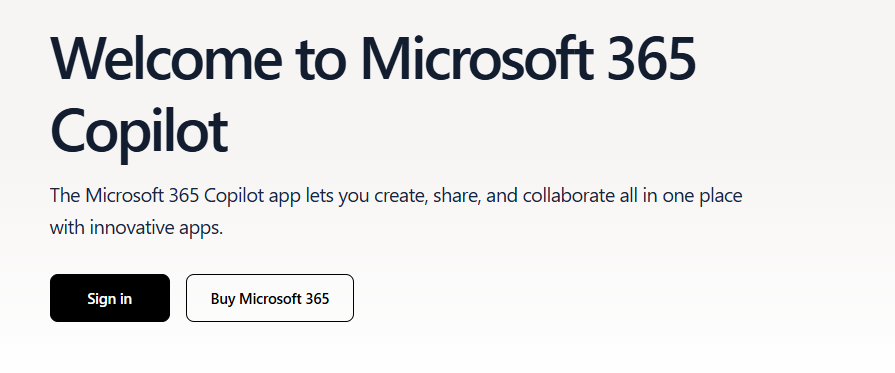
I laughed. Then I reread it. And realized this is precisely how you end up with millions of people thinking the most familiar productivity suite on Earth has been swallowed whole by an AI chatbot.
Microsoft insists this only applies to the web app. Office, the desktop version, is still Office. Microsoft 365 is a subscription service. Microsoft 365 Copilot is something else. But Microsoft 365 Copilot, the product, is different from Copilot, the chatbot, which is embedded everywhere, including places you did not ask for. If this explanation already feels exhausting, that is the point.
The Copilot optics problem
The Copilot push is not subtle. Microsoft has placed it front and center across its ecosystem, even adding dedicated Copilot buttons to keyboards. The message is clear. AI is now the starting point for work, whether you asked for it or not.
The problem is that adoption optics are not the same thing as genuine demand. Only 3.3% of Microsoft 365 users currently pay for Copilot, a stat that feels like the Bing experience repeating itself all over again.
Microsoft is talking confidently about the number of seats being added and how it will eventually pay off, but it’s hard to ignore the chasm between what people are willing to spend on AI and the money they have actually paid for AI/ML products.
Calling something the "Microsoft 365 Copilot app" does not mean people suddenly wanted Copilot. It just means they opened Word. You can claim millions of AI users overnight that way.
Renaming Office-adjacent experiences around Copilot allows Microsoft to claim massive AI usage overnight. It is as technically accurate as believing that changing your name to "A Millionaire" makes you one. The label exists. The reality does not.
This is not new behavior
If this all feels familiar, that is because Microsoft has been here before. There was an era when everything became ".NET": Products, services, and strategies all wore the same suffix, whether it made sense or not.
The problems began when Microsoft's website could not find the programming language C# because of the character. Then came the .NET Framework, which later became .NET – a different thing from the deprecated .NET Framework. Finding information required visiting dot net dot microsoft dot com, which somehow felt both futuristic and absurd.
Then there was Zune, a genuinely interesting music player with a clever song-sharing feature that allowed limited plays. A smart compromise between sharing and piracy, undermined almost immediately by branding decisions that made people cringe. Watching ads where people proudly said "squirt it" was not exactly the way to build mainstream appeal.
Finally, Skype and Skype for Business existed as separate products that could not talk to each other. That sentence alone should have ended a few meetings early.
Xbox and the art of naming yourself into a corner
Xbox is the purest case study in how Microsoft repeatedly confuses its customers. First came the Xbox, followed by the Xbox 360. Retailers informally labeled the original as Xbox One to differentiate it.
Microsoft then officially launched the Xbox One, followed by the Xbox One S and Xbox One X, which sound nearly identical in many accents. Then, to escape the hole, Microsoft introduced the Xbox Series X and Series S.

This was still better than the original internal name, reportedly the Microsoft Interactive Network Device. MIND. So the slogan could be "Do you MIND?"
Microsoft would go on to name its Windows game store Xbox. This meant that PC users had an app called Xbox that had nothing to do with the Xbox console. None of this stopped Xbox from succeeding. But it did ensure that every explanation required extra words.
Which brings us back to the Office. Forget Windows. The Office suite kept enterprises anchored to Microsoft. It was boring, dependable, and universally understood. You did not need to explain what it was. You just needed it to work.
Suddenly, even opening Outlook meant being greeted by a large empty Copilot panel demanding attention. Collapsing menus, shrinking margins, and re-centering the interface around a chat box when most users want their office suite to work.
AI was supposed to improve workflows quietly. Instead, it is shouting for attention like Clippy, occupying space and interrupting habits.
The real lesson Microsoft keeps missing
The irony of this situation is that Copilot is an incredibly useful tool when you use all the available file, meeting, and workflow integration capabilities. However, making AI the centerpiece of every user interface could be perceived as invasive.
The infamous "Microslop" meme was not born of users hating technology or change, but of their resentment at being told that confusion is progress. If AI genuinely makes work better, it does not need branding. It disappears into the experience.
All consumers want is for things to work faster and with less friction. Until Microsoft understands this, I expect to see a never-ending stream of product name changes, followed by explanations about those products and continued frustration.

Check if your data was exposed
Find out if your email and related personal information have appeared in known data breaches.
Unlock more exclusive Cybernews content on YouTube.