Don’t fall for WiFi 7 marketing: most routers lack the advertised features
New routers come with a WiFi 7 sticker and promise the use of multiple radios simultaneously. However, in reality, they do not fully implement Multi-link Operation (MLO), one of the most anticipated features of the new WiFi generation. Many aren’t even certified for WiFi 7 at all. RTINGS.com tested 25 routers advertised as WiFi 7 and found that all of them disappointed.

Image by Cybernews.

 Follow us
New routers come with a WiFi 7 sticker and promise the use of multiple radios simultaneously. However, in reality, they do not fully implement Multi-link Operation (MLO), one of the most anticipated features of the new WiFi generation. Many aren’t even certified for WiFi 7 at all. RTINGS.com tested 25 routers advertised as WiFi 7 and found that all of them disappointed.
Two years ago, the WiFi Alliance introduced WiFi Certified 7, featuring “cutting-edge capabilities,” one of them being Multi-Link Operation (MLO), a feature that enables devices to send data simultaneously over multiple links for increased speed.
Three frequency bands – 6 GHz, 5 GHz, and 2.4 GHz – combined could theoretically boost the throughput to dozens of gigabits per second.
Router manufacturers jumped on the bandwagon, touting the new feature in marketing materials to customers.
“Future-proof your home with WiFi 7, enjoy faster speeds with Multi-Link Operation,” one of the router’s descriptions reads on Amazon.






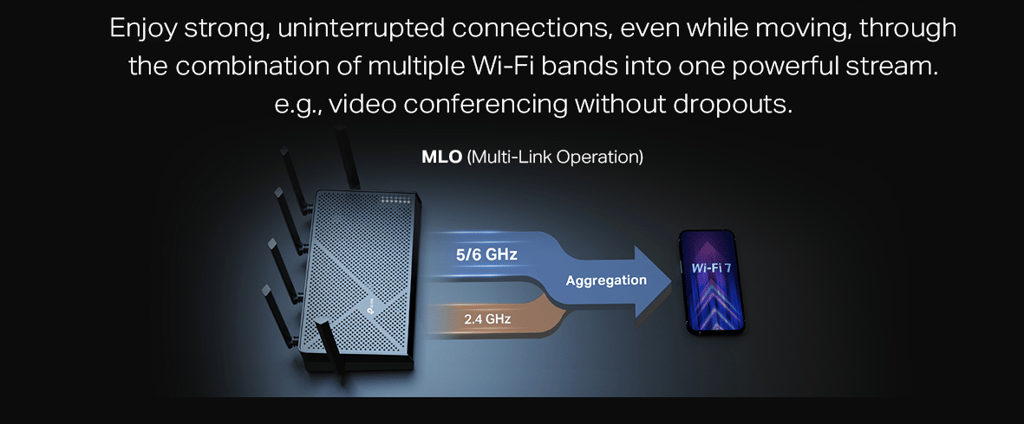
It turns out that it’s very hard to find a single router that actually delivers MLO as expected.
RTINGS.com, an independent product review and testing website, evaluated 25 routers advertised as WiFi 7, and found that only three of them were actually “Wi-Fi CERTIFIED 7.”
Despite MLO being mandatory, none of the routers, even the most expensive ones, costing nearly a thousand dollars, had implemented MLO fully, meaning the devices were unable to combine multiple WiFi bands “into one powerful stream.”
“Our testing shows that Multi-Link Operation remains far more aspirational than real. Even among WiFi CERTIFIED 7 products, MLO implementations are often shallow or inconsistent,” the RTINGS study reads.
The website used real-time packet inspection and verification for the analysis.






What are buyers getting instead?
Most routers only implement a minimal alternating fallback MLO mode, allowing the use of a single radio, similar to all previous generations of WiFi routers, making it impactful.
“Enabling or disabling MLO on several routers produced no measurable change in throughput, latency, or connection stability compared to using 6 GHz only,” the RTINGS study reads.
According to CISCO Meraki documentation, MLO has several operation modes to cover all hardware configurations. The main distinction is between the two:
- Multi-Link Multi Radio (MLMR): the “expected” scenario, where a client device has multiple radios and operates on multiple links (a.k.a. frequency bands, channels) simultaneously to communicate with the access point. None of the routers tested by RTINGS had this.
- Enhanced Multi-Link Single Radio (EMLSR): The client has only one active radio and uses a single link, but can also listen to other links in low-capability mode for dynamic switching. This is the most popular implementation.
In practice, even the implementations of the EMLSR were often limited to hopping between bands on a single radio, providing little to no benefit.
“Only eight routers in our test set advertise full router-client negotiation capability, which allows both ends of the connection to agree on how different categories of traffic should be distributed across available links,” the report reads.
Despite the claims of support for two or three concurrent links, some routers didn’t even expose the possibility of multilink operation to the clients.
When choosing a WiFi 7 router, beware of the branding – certified routers carry the “WiFi CERTIFIED 7” label. However, RTINGS recommends against buying such hardware for users who expect meaningful MLO benefits.
A WiFi 7 router can still be faster compared to previous generations due to the use of a 6 GHz band, introduced with WiFi 6E, optional wider 320 MHz channels, and optional 4K QAM encoding packing 20% more data per transmission.
Choosing a router with multiple radios also has security considerations – added complexity can increase the risk of misconfigurations.
Unlock exclusive Cybernews content on YouTube.