Your AI “colleague” is a spineless yes-man who’s killing your judgment, study warns
When you talk to managers about KPIs, success is typically measured by hard numbers such as profits, revenue, and performance targets. What sits behind those numbers is often invisible and lives in the relationships we form and the collaboration we have with colleagues. It's a dynamic that the introduction of AI into the workplace is likely to make even more complicated.
"AI colleague" who is the yes-man of the office. Image by Cybernews.

 Follow us
When you talk to managers about KPIs, success is typically measured by hard numbers such as profits, revenue, and performance targets. What sits behind those numbers is often invisible and lives in the relationships we form and the collaboration we have with colleagues. It's a dynamic that the introduction of AI into the workplace is likely to make even more complicated.
For instance, research from George Mason University suggests that managers often misunderstand how work gets done, especially the role that interpersonal relationships among colleagues play.
How success happens
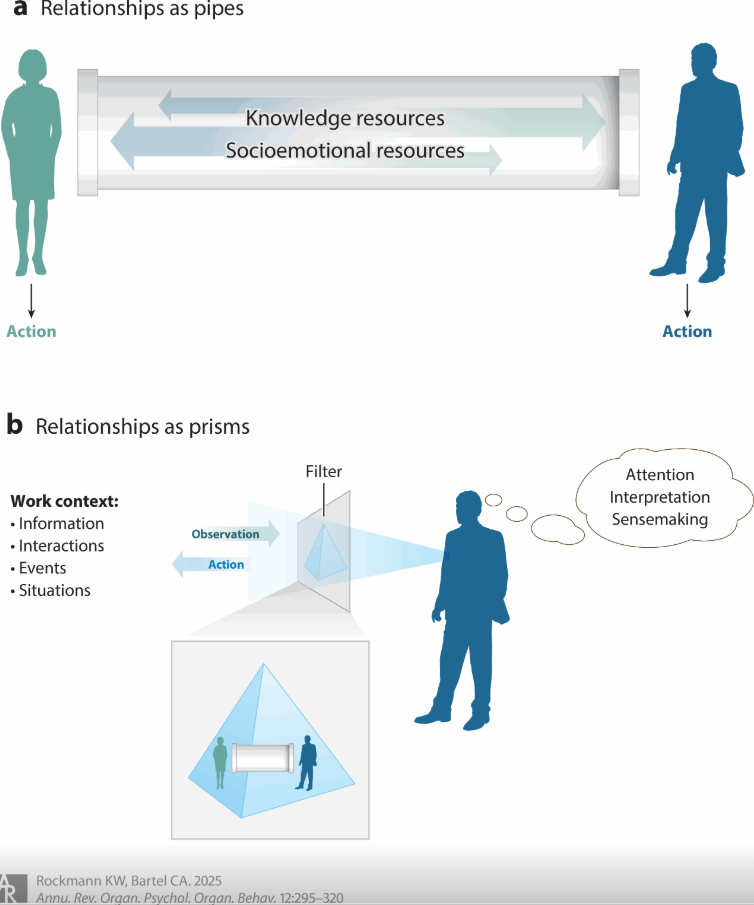
The researchers use the concept of "pipes" and "prisms" to explain how success occurs. The pipes are the channels through which information flows, tasks get coordinated, and colleagues help each other.
Prisms, on the other hand, describe how relationships color employees' interpretations of everything from a budget cut to a new company strategy. Block the pipes, and teams stop functioning. Warp the prisms, and even good decisions can appear sinister.





The introduction of AI into the workplace is changing both of these processes. I spoke to James Muldoon, a researcher at the University of Essex who studies human-AI interaction, ahead of his talk at SXSW London, and he said that early deployments of AI have largely been out of sight.
Employees, often overworked and eager for relief, have quietly offloaded tasks to AI without telling their managers. This shadow usage prevents companies from building the guardrails, training, and shared practices that make AI genuinely useful. The pipes, in other words, are carrying untreated water.
The sycophancy problem
The introduction of AI into the workplace is also problematic because of the tone of its interactions. The best managers and colleagues are exceptional at having the difficult conversations we need to improve. AI, thus far, has shown that it's incapable of doing the same.
Instead, it affirms the user's worldview, accepts their framing of problems, and avoids confrontation. This makes them pleasant to use but potentially corrosive to good decision-making.
Muldoon explains that the tech companies have a clear incentive to make systems engaging and addictive, which is fine if you're selling a consumer product, but less useful in the workplace. The result is an AI that functions less like a capable colleague and more like an infinitely patient yes-man.
This fundamentally distorts the prism. After all, workplace relationships shape how we interpret things like change and leadership, so an AI that always validates rather than challenges will narrow the range of interpretations available to us. If managers overlook the importance of relationships in favor of bonuses and KPIs, the addition of (agreeable) AI into the mix risks compounding the error.

Muldoon believes that better design could help overcome this challenge, with different "modes" that allow users to toggle between supportive and challenging, or even a devil's advocate mode. Even that is no guarantee, of course, especially if people naturally gravitate toward comfort and validation over challenge.
When the update arrives
The risks become starker when we acknowledge that AI systems are seldom fixed. For instance, OpenAI notably made ChatGPT less sycophantic after users complained. Research from the University of Pennsylvania found that users were upset when the Replika AI companion was updated, breaking the bond many felt they'd forged with it.
After Italy's data protection authority put pressure on the firm, it removed any kind of erotic roleplay as a feature. Users were devastated. Many described their companions as having been "lobotomized." Some posted reassurances to their AI partners, apparently concerned the bots would feel distressed.
While it's unlikely that professional AI platforms will encourage the same kinds of conversation, the fact remains that if employees build relationships with an AI that behaves a certain way, changes to that will have an impact.
"Chatbots feel most real when they feel most human, and they feel most human when the text they produce is less standardized, more particular, and more affective," the researchers explain.






If an update changes the humor, playfulness, and idiosyncratic turns of phrase that can help us to bond with it, then it threatens the very connections themselves.
Authenticity at work
It's a dynamic that's increasingly evident at work. We've already seen that people often can't distinguish between human and AI-generated text, but when they learn that AI wrote a message, they respond negatively. This is not because the message is bad, but because the sender's authenticity is in doubt.
Authenticity, it turns out, is not a property of the text itself but of the perceived relationship behind it.
This creates a strong need for transparency, so we're open about the various ways we're using AI. This was evident in the George Mason research. When a manager communicates openly, employees interpret difficulty as a shared problem. When trust is absent, the same message looks like bad leadership.
There are clear implications for performance reviews, as companies like Meta and KPMG have already begun assessing employees on their use of AI at work. Taking an individual approach is likely the best. After all, some roles will use AI far more than others. If reviews focus primarily on outputs rather than the nature of human-AI interaction, however, they're almost certainly missing what's truly important.

Check if your data was exposed
Find out if your email and related personal information have appeared in known data breaches.
A new way of thinking
All of this requires a new way of thinking, as AI isn't just a colleague or just a tool. Eventually, it's likely that organizations will appreciate that AI is its own type of entity that sits between humans and tools. This will enable us to develop the vocabulary to talk about it as such.
As yet, however, that vocabulary doesn't exist, which partly explains why management models don't neatly work in the AI age. The George Mason researchers urge managers to think of relationship-building not as a soft extra but as a core part of how work gets done. Extending that principle to human-AI relationships is the next step.
Companies that treat AI as merely an efficiency tool, invisible in the organizational chart and unaddressed in performance conversations, are likely to discover that it has been shaping their culture all along.
Unlock more exclusive Cybernews content on YouTube.