With AI increasingly difficult to detect, is it time to cancel homework?
After finding that Nano Banana Pro, Google Gemini’s new image generation and editing model, can solve exam questions straight in the exam page image, AI researcher Andrej Karpathy says this might be the end of homework in education.

Image by Cybernews.

 Follow us
After finding that Nano Banana Pro, Google Gemini’s new image generation and editing model, can solve exam questions straight in the exam page image, AI researcher Andrej Karpathy says this might be the end of homework in education.
Nano Banana Pro, a new model from Google DeepMind built on Gemini 3, has been going viral – and causing concern – in recent days.
As claimed by Karpathy, the model can solve questions of a school assignment right on the page image, “with doodles, diagrams, all that.” He only saw a couple of spelling mistakes.
Gemini Nano Banana Pro can solve exam questions *in* the exam page image. With doodles, diagrams, all that.
undefined Andrej Karpathy (@karpathy) November 23, 2025
ChatGPT thinks these solutions are all correct except Se_2P_2 should be undefineddiselenium diphosphideundefined and a spelling mistake (should be undefinedthiocyanic acidundefined not undefinedthoicyanicundefined)
:O pic.twitter.com/15oUx8FIqJ
Additionally, an X user showed that the Nano Banana Pro solved a math assignment by replicating his handwriting. “Students are going to love this,” he added.


Google’s Nano Banana Pro is by far the best image generation AI out there.
undefined sid (@immasiddx) November 21, 2025
I gave it a picture of a question and it solved it correctly in my actual handwriting.
Students are going to love this. 😂 pic.twitter.com/GXd6PbZYxn
Unsurprisingly, since AI seems to have already passed the Turing Test for homework, the conclusion of many is that most students will now simply turn to AI to do their at-home assignments for them.
Karpathy, who formerly worked at OpenAI and Tesla but is now leading a new AI education company, Eureka Labs, agrees. But these developments don’t need to be terrifying for educators, he adds.
“You will never be able to detect the use of AI in homework. Full stop. All ‘detectors’ of AI don’t really work, can be defeated in various ways, and are in principle doomed to fail. You have to assume that any work done outside the classroom has used AI,” Karpathy wrote on X.
The Slovak researcher thus thinks that the majority of grading has to shift to in-class work instead of at-home assignments. Teachers need to be able to physically monitor their students who in turn have to learn how to solve problems without the help of ever smarter AI tools.
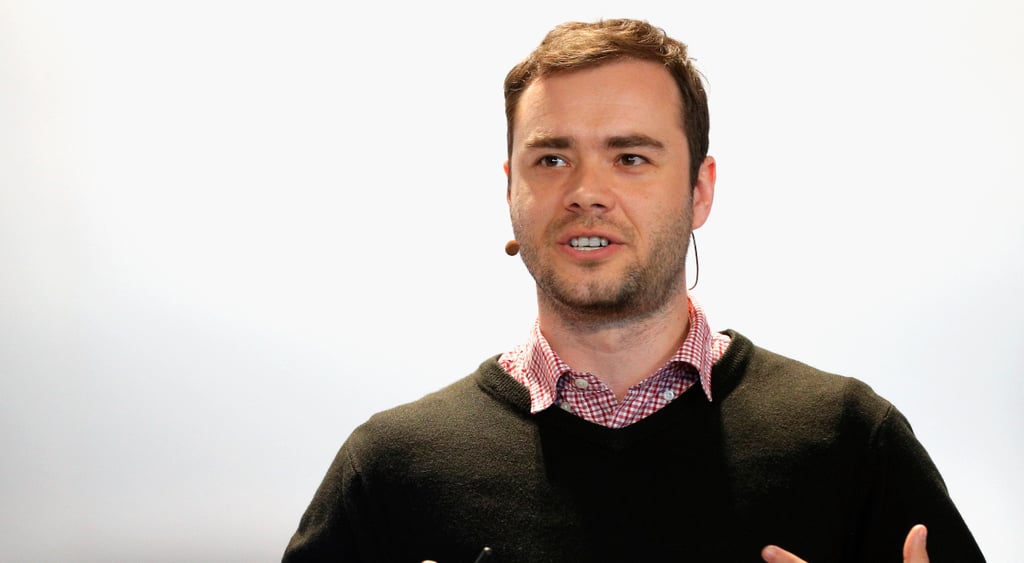
“We want students to be able to use AI, it is here to stay, and it is extremely powerful, but we also don’t want students to be naked in the world without it,” said Karpathy.
The calculator is a great comparative example. Historically, it can be considered a disruptive technology as it speeds up work in practical settings but students are still taught math and arithmetic so that they can in principle still complete tasks for you.
AI’s the same, Karpathy explains. We should learn to use it – and the sooner the better – but we should also be capable of doing work without it.






The growing capabilities of AI models are indeed transforming education as we know it. Even Pope Leo told US youth last week that AI shouldn’t be used for homework, and various educators are updating their curriculums accordingly.
Twenty-six percent of teenagers aged 13 to 17 said they had used ChatGPT for their schoolwork in a 2024 Pew Research Center survey. AI chatbots have become more prevalent – and better – since, so the number may be higher now.
“The goal is that the students are proficient in the use of AI, but can also exist without it, and the only way to get there is to flip classes around and move the majority of testing to in-class settings,” said Karpathy.
Unlock more exclusive Cybernews content on YouTube.